A 1941 WPA Art Deco courthouse restored with preservation-grade cast stone — matching six decades of weathered Texas masonry while bringing a historic landmark back into modern public service.
Location
Rockwall, Texas
Original Build
1941 (WPA Era)
Restoration Architect
Hendricks & Brontner Architects
Materials
Cast Stone
Building Type
Civic / Historic Preservation
Scope
ADA Renovation + Restoration
1941
WPA-era Art Deco / Moderne courthouse — active civic landmark
60yr
Age of masonry that restoration cast stone had to match
4-story
Landmark government building returned to full public use
Project Overview
The Rockwall County Courthouse has been the civic anchor of Rockwall, Texas since it opened in 1941 as part of the Works Progress Administration's New Deal public buildings program. Built in the Art Deco / Moderne style by Voelcker & Dixon, the four-story structure served as courthouse, county seat, and community gathering hub for decades — hosting homecomings, pep rallies, and public assemblies in addition to its governmental functions.
By 1994, ADA compliance requirements had become the building's critical issue: the courthouse closed its doors because it could no longer meet modern accessibility standards. Eight years later, a renovation program led by Hendricks & Brontner Architects restored the building to full operational use — housing the Commissioners Court, Administrative County Judge, and Tax Assessor's Office — while bringing it into ADA compliance.
Restoring a WPA building is not the same as matching a 60-year-old color swatch. The original masonry has been weathered by six decades of North Texas climate — UV, freeze-thaw cycles, and the mineral surface changes that come with time. AAS developed the cast stone formulation against physical samples of the existing courthouse masonry, not against a manufacturer's historical specification.
Products Specified
Preservation-Grade Cast Stone
Art Deco Profile Restoration
Sill & Cornice Replacement Units
ADA Ramp & Entry Detailing
The Challenge
Historic preservation cast stone sits at the hardest intersection of what the material can do: the target is defined by the existing building, which has been changing for sixty years, and the new units must disappear into that reference — not stand out as obviously new.
Art Deco / Moderne buildings present a specific profile challenge. The style's characteristic horizontal banding, stepped setbacks, and smooth-faced pilasters require cast stone profiles that are clean and precisely dimensioned — not the textured or rusticated profiles that hide imprecision. The courthouse's existing stone had developed a soft surface patina; new units that were too bright or too sharp in profile would read immediately as replacements.
Weathered color target: The formulation was developed against cores and samples from the existing building — six decades of weathering had shifted the original color in ways no historical specification captures
Art Deco profile precision: The style's clean horizontal profiles and smooth faces require tight dimensional tolerances — imprecision reads immediately at this scale
ADA integration: New ramp and entry elements had to meet modern accessibility standards while maintaining the building's historic character — a design challenge for the architect, a fabrication challenge for the stone supplier
Civic landmark sensitivity: This building is the institutional memory of Rockwall County — community standards for its appearance are high and unapologetically subjective
The Solution
Advanced Architectural Stone approached the color development as a reverse-engineering problem. Physical samples from the courthouse — taken from areas protected from UV to establish the closest possible original color, and from exposed faces to understand the weathering trajectory — were used as the formulation targets. The custom batch was developed in multiple test runs, measured against the physical samples under both daylight and overcast conditions before production was approved.
The Art Deco profiles required mold engineering that prioritized clean, sharp edges — the opposite of the profile approach used for traditional residential or decorative cast stone. The mold geometry and release process were tuned to deliver the dimensional precision the Moderne style demands.
The courthouse reopened to the public it had been closed to for eight years. The restored building now houses three county government offices and serves its original civic purpose — a landmark returned to use rather than converted or demolished. The cast stone restoration work is the material evidence that it belongs to the same building that opened in 1941.
Why Cast Stone for Historic Preservation
Natural stone restoration for a WPA building sounds like the obvious approach, but it presents a sourcing problem that cast stone doesn't: matching a specific regional quarry's stone from the 1930s and 1940s requires finding and opening a source that may no longer exist. The original courthouse stone's color and texture came from a specific place and a specific era of quarrying practice.
Cast stone's advantage in historic preservation is that the formulation can be tuned to match any target — aggregate type, gradation, cement ratio, pigment load — without depending on a quarry match. The material is what the formula makes it, and the formula can be made to match a 60-year-old weathered reference precisely enough to disappear into the existing building.
Project Gallery
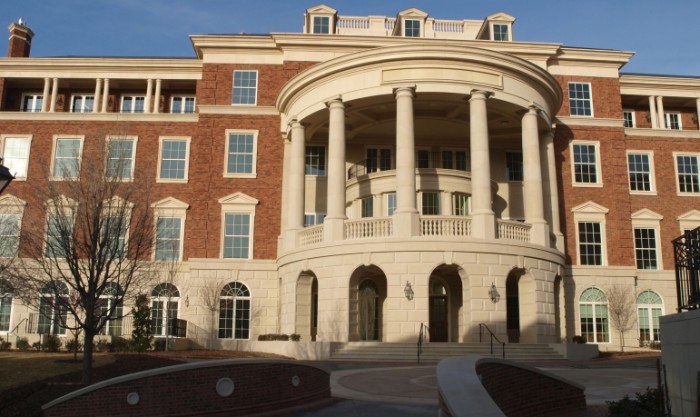
Cast stone restoration — matching the original 1941 masonry profile
Art Deco profile details in preservation-grade cast stone
Civic-scale architectural stone craftsmanship
Sill, lintel, and band course restoration units
Working on a historic preservation or renovation project?
Matching existing masonry — whether it's 20 years old or 80 — is one of our specialties. We develop custom formulations against physical samples of your building's existing stone. Tell us what you're working with.