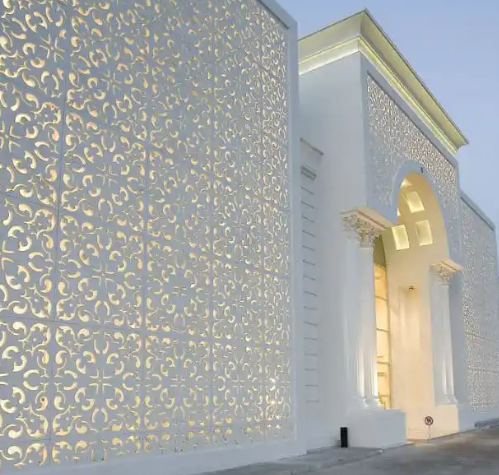
The Specification Decision
The question comes up in every preconstruction meeting for a project with stone cladding: cast stone or natural stone? Contractors want a number. Architects want design integrity. Owners want both without paying for either one twice.
The comparison isn’t as simple as cost alone. Cast stone and natural stone perform differently in freeze-thaw cycles, respond differently to custom profiles, arrive on different schedules, and put different demands on structural systems. Knowing where each material wins — and where it loses — is what separates a well-specified project from one that ends up with cost overruns or material substitutions mid-construction.
What is cast stone? Cast stone is a manufactured architectural concrete product that replicates the appearance, texture, and profile of quarried natural stone. It’s cast in precision molds from a fine aggregate concrete mix, then finished (sandblasted, acid-washed, or tooled) to achieve the surface character of limestone, travertine, or other natural stone. Mesa Precast manufactures cast stone and GFRC at Arizona and Texas facilities, shipping nationwide.
Cost Comparison: Price Per Square Foot
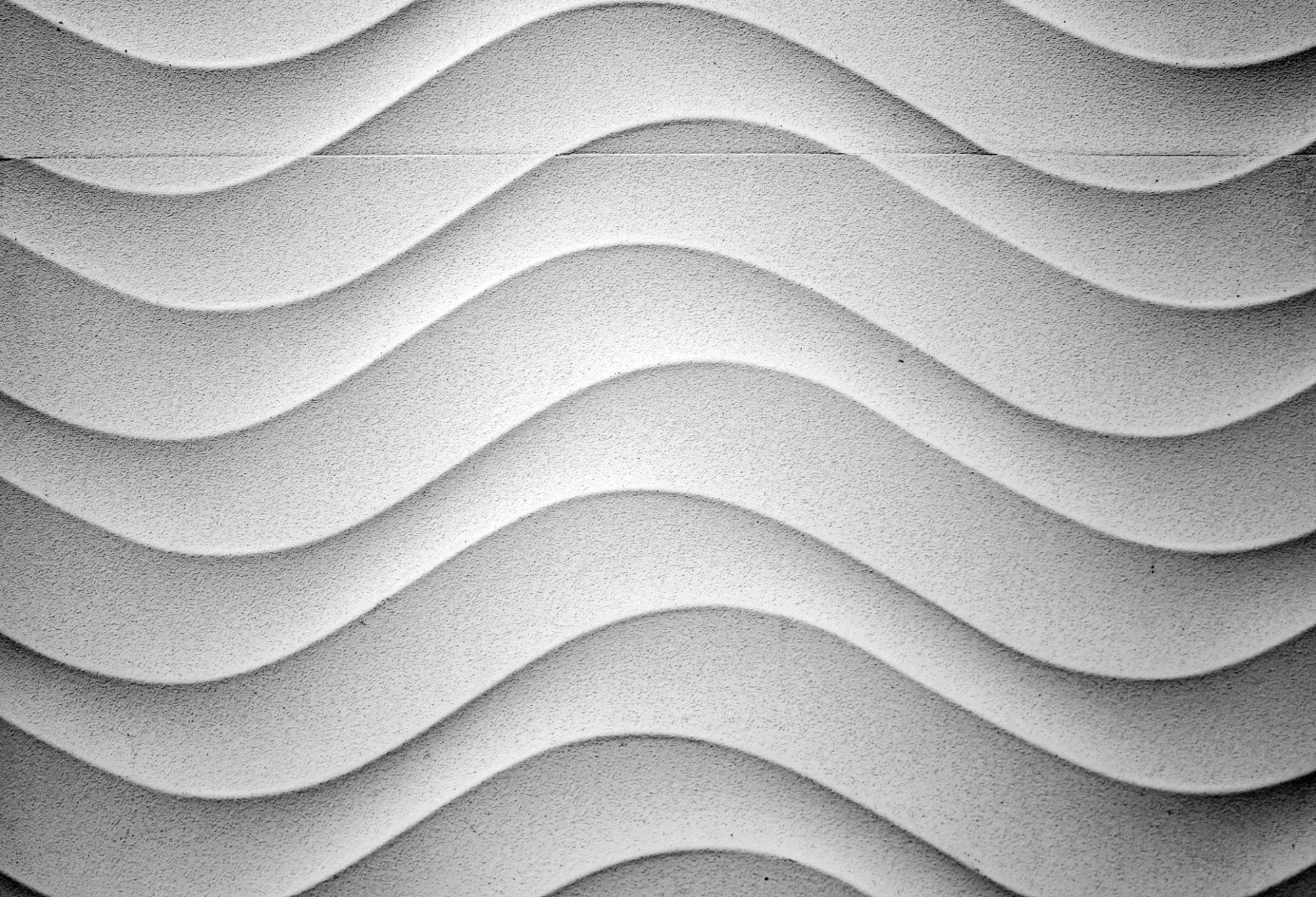
Precision-cast architectural stone panels — cast stone achieves the visual depth of natural stone at 30–50% lower cost. Photo: Mesa Precast.
Cast stone typically costs 30–50% less than equivalent natural stone for exterior cladding applications. The gap varies by stone species, profile complexity, finish type, and project volume. Here are representative installed cost ranges for common architectural applications:
| Application | Cast Stone (installed) | Natural Limestone (installed) | Natural Granite (installed) |
|---|---|---|---|
| Flat wall cladding | $18–$32 / SF | $38–$65 / SF | $55–$95 / SF |
| Columns & pilasters | $22–$45 / SF | $55–$110 / SF | $75–$140 / SF |
| Cornices & belt courses | $28–$55 / LF | $65–$130 / LF | Rarely specified |
| Window & door surrounds | $20–$40 / LF | $50–$95 / LF | $70–$120 / LF |
| Balustrades | $35–$65 / LF | $90–$175 / LF | $120–$220 / LF |
| Custom carved elements | $65–$120 / SF | $180–$450+ / SF | $250–$600+ / SF |
Installed costs include material, fabrication, freight, and standard installation. Ranges reflect 2025–2026 market pricing for projects in the Southwest and Southeast U.S.
Where the Cost Gap Widens Most
The cast stone cost advantage grows significantly for repetitive custom profiles. A cast stone cornice requires a one-time mold investment, then produces unlimited identical pieces at low per-unit cost. The same profile in natural stone requires CNC or hand-carving on every single piece — labor multiplies directly with quantity.
For a project with 500 linear feet of cornice, 80 columns, and 200 window surrounds, cast stone savings on material and fabrication alone typically range from $150,000 to $400,000 depending on profile complexity. That number is worth presenting to an owner before the material decision is made.
Durability & Maintenance
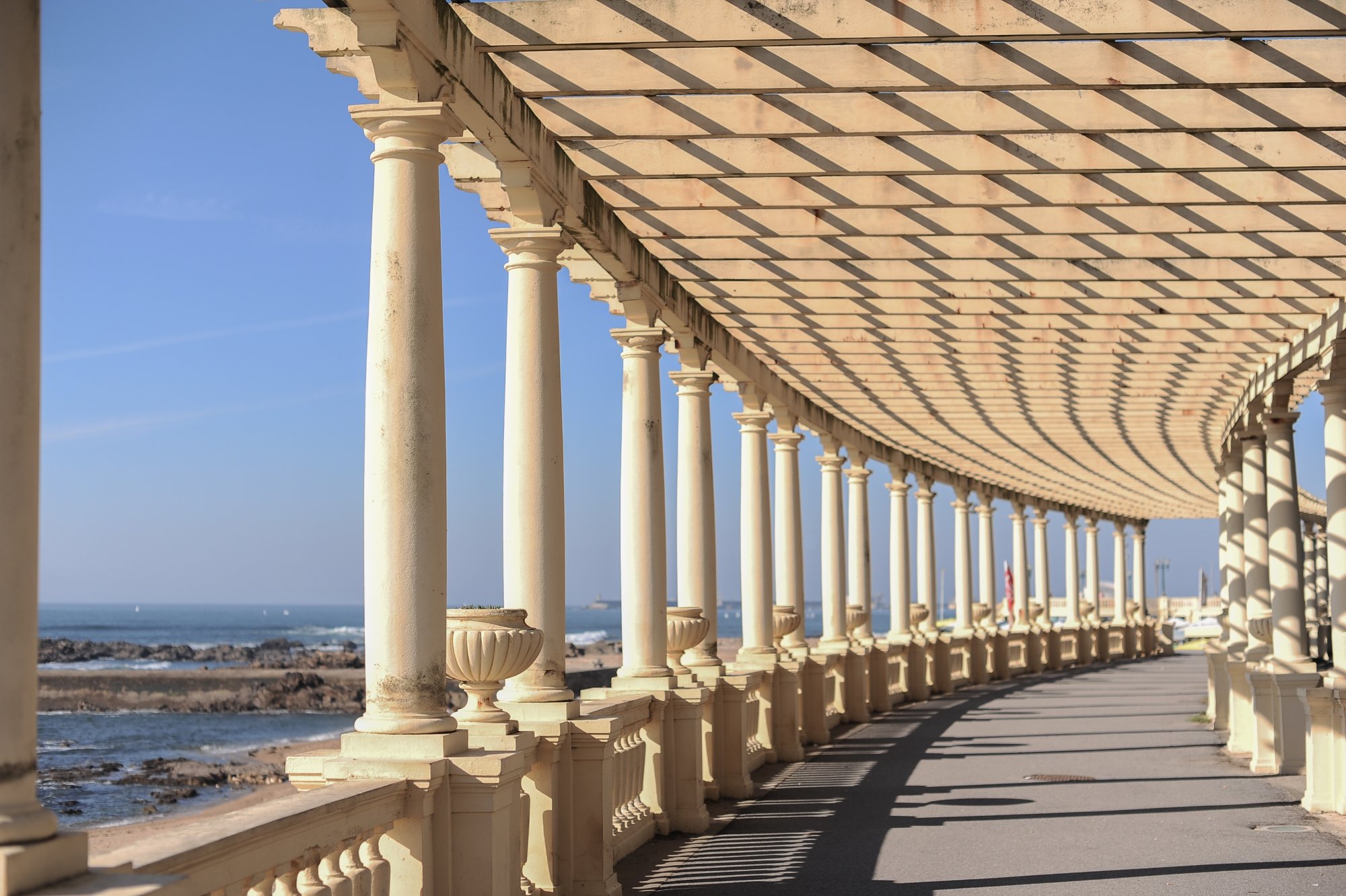
Every piece undergoes dimensional and quality inspection before shipping from Mesa Precast’s Arizona facility. Photo: Mesa Precast.
Cast Stone Performance
Modern cast stone is manufactured to ASTM C1364 (Standard Specification for Architectural Cast Stone), which establishes minimum compressive strength, water absorption limits, and freeze-thaw cycling performance. A properly specified cast stone achieves:
- Compressive strength of 6,500–12,000+ psi — comparable to or exceeding high-strength dimensional stone
- Water absorption below 6% — the ASTM C1364 limit that prevents freeze-thaw spalling in cold climates
- Consistent density throughout the cross-section, unlike natural stone where internal fractures and porosity vary unpredictably
The key durability advantage of cast stone is predictability. Natural stone’s porosity and internal structure vary piece to piece, even within the same quarry lot. Cast stone is manufactured under controlled conditions with a specified mix design — every piece performs identically.
Natural Stone Performance
Natural stone durability varies significantly by stone type and source. The real-world issues experienced architects encounter:
- Spalling in freeze-thaw climates. Porous limestone absorbs water; when that water freezes and expands, it fractures the surface. This is particularly problematic in climates with 50+ annual freeze-thaw cycles (Midwest, Northeast, Mountain West). Cast stone’s controlled low absorption eliminates this failure mode.
- Quarry lot variation. Even from the same quarry, stone from different beds has different mineral content, porosity, and color. Long projects or phased buildings are vulnerable to visible color mismatch between early and late deliveries.
- Staining. Natural stone’s open pore structure absorbs oils, minerals, and biological material more readily than sealed cast stone. Iron-bearing stones develop rust streaks. Porous limestones develop biological patina in humid climates.
| Maintenance Factor | Cast Stone | Natural Stone |
|---|---|---|
| Sealant schedule | Every 10–15 years | Every 3–7 years (varies by stone) |
| Freeze-thaw spalling risk | Low (controlled absorption) | Moderate to high (porosity varies by source) |
| Iron staining | None | Possible in some limestone and sandstone types |
| Crack repair | Color-matched mortar patch | Difficult to match; often requires piece replacement |
| Piece replacement | Recast from original mold; exact match | Quarry may be depleted; color match not guaranteed |
| Cleaning protocol | Pressure wash; mild detergent | Stone-specific; acid cleaners prohibited on most limestones |
The replacement scenario matters more than it looks. A building with natural stone specified in 2005 from a specific quarry may face an impossible match problem in 2030 when a damaged piece needs replacement — the quarry may be depleted or decades removed. Cast stone from the original mold is reproducible on demand. That’s a lifecycle asset that doesn’t show up in a per-SF comparison but matters enormously over a building’s lifespan.
Design Flexibility: Profiles, Colors & Geometry
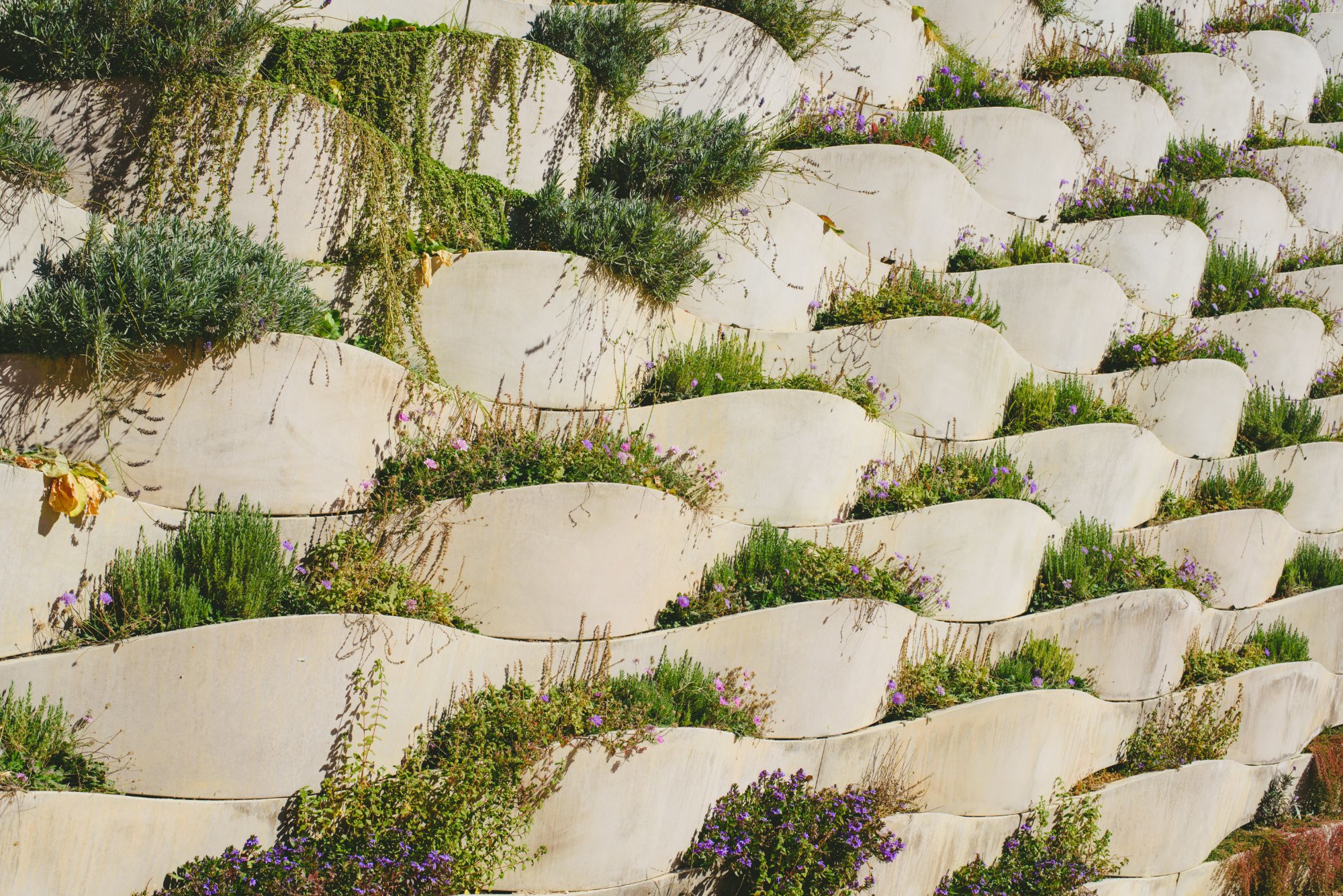
Any profile that can be drawn can be manufactured in cast stone — the mold-based production process imposes no geometric limits. Photo: Mesa Precast.
Cast Stone: Any Profile, Any Color
Cast stone’s design flexibility is its clearest structural advantage over natural stone. Any profile that can be drawn can be manufactured. Ogee cornices, quirk miters, ovolo moldings, dentil courses, compound arch voussoirs — all achievable via custom molds without the hand-carving premium that natural stone requires for complex profiles.
Color flexibility is equally strong. Integral pigmentation allows any color within the natural stone palette: warm buff, gray limestone, charcoal, cream, tan, and custom blends matched to project-specific requirements. Multiple aggregates — quartz, limestone chips, crushed granite — can be introduced to the mix to vary surface texture and color depth of acid-washed or sandblasted finishes.
Natural Stone: Quarry-Constrained
Natural stone design flexibility is limited by what the quarry produces and what the fabricator can cut:
- Profile depth is limited by bed height. Natural stone is sawn from quarry blocks of finite dimension. Deep profiles, large cross-sections, or curved elements are either impossible or extremely expensive.
- Color comes from geology, not a formula. If your project requires a specific warm buff tone and the Indiana limestone quarry running that season is running grayer, there’s no adjustment.
- Custom carved elements multiply cost. Every complex profile requires CNC machining (with hand finishing) or hand carving. Labor cost compounds at every quantity increment.
GFRC: Even More Flexible Than Cast Stone
For projects requiring complex curved geometry, thin profiles, or structural cladding panels at large scale, GFRC (Glass Fiber Reinforced Concrete) extends cast stone’s design envelope further. See our GFRC vs Cast Stone decision guide for a detailed comparison of these two manufactured options.
Complex Curved Forms
Barrel vaults, dome segments, compound curves — mold-cast without the structural penalty of solid stone.
Thin-Section Profiles
Wall thicknesses as thin as 1/2” with full structural integrity from the glass fiber matrix.
Large-Format Panels
Single GFRC panels up to 20×10 feet for curtain wall applications without natural stone’s weight penalty.
Embedded Hardware
Anchors, inserts, and connection hardware cast directly into the panel — no field drilling, no weakened sections.
Weight & Structural Considerations
Weight is where the three materials diverge most sharply. For large-scale cladding, the structural implications of material weight are often a bigger cost driver than the material itself.
| Material | Approx. Weight (per CF) | Typical 2” Panel (per SF) | Structural Implication |
|---|---|---|---|
| Natural limestone | 140–165 lbs | 23–27 lbs | Heavy backup structure required; limits panel size |
| Cast stone | 135–150 lbs | 22–25 lbs | Similar to natural stone; standard anchor systems |
| GFRC panels | 90–110 lbs (face mix) | 5–9 lbs | 75% weight reduction; lighter steel, reduced seismic loads |
For standard cast stone applications — columns, sills, cornices, balustrades — weight is comparable to natural stone and structural systems account for it the same way. Where GFRC becomes a structural argument is in large panel cladding systems where weight drives the entire structural steel budget.
A 15-story building clad in 2” natural limestone might carry 2.5 million pounds of cladding. The same building clad in GFRC panels carries under 700,000 pounds — a reduction that flows through to lighter structural steel, smaller foundations, and reduced seismic design loads in earthquake zones. Weight savings often pay for the GFRC premium several times over when structural costs are totaled.
Seismic zones: GFRC is increasingly the preferred specification in California, Nevada, and the Pacific Northwest. The combination of lightweight panels with embedded seismic connection hardware (cast into the panel at manufacturing) provides superior performance compared to heavy stone cladding on standard anchors. For high-rise projects in Zone 3 or 4, GFRC weight savings can reduce lateral force design loads meaningfully.
Project Timeline & Lead Times
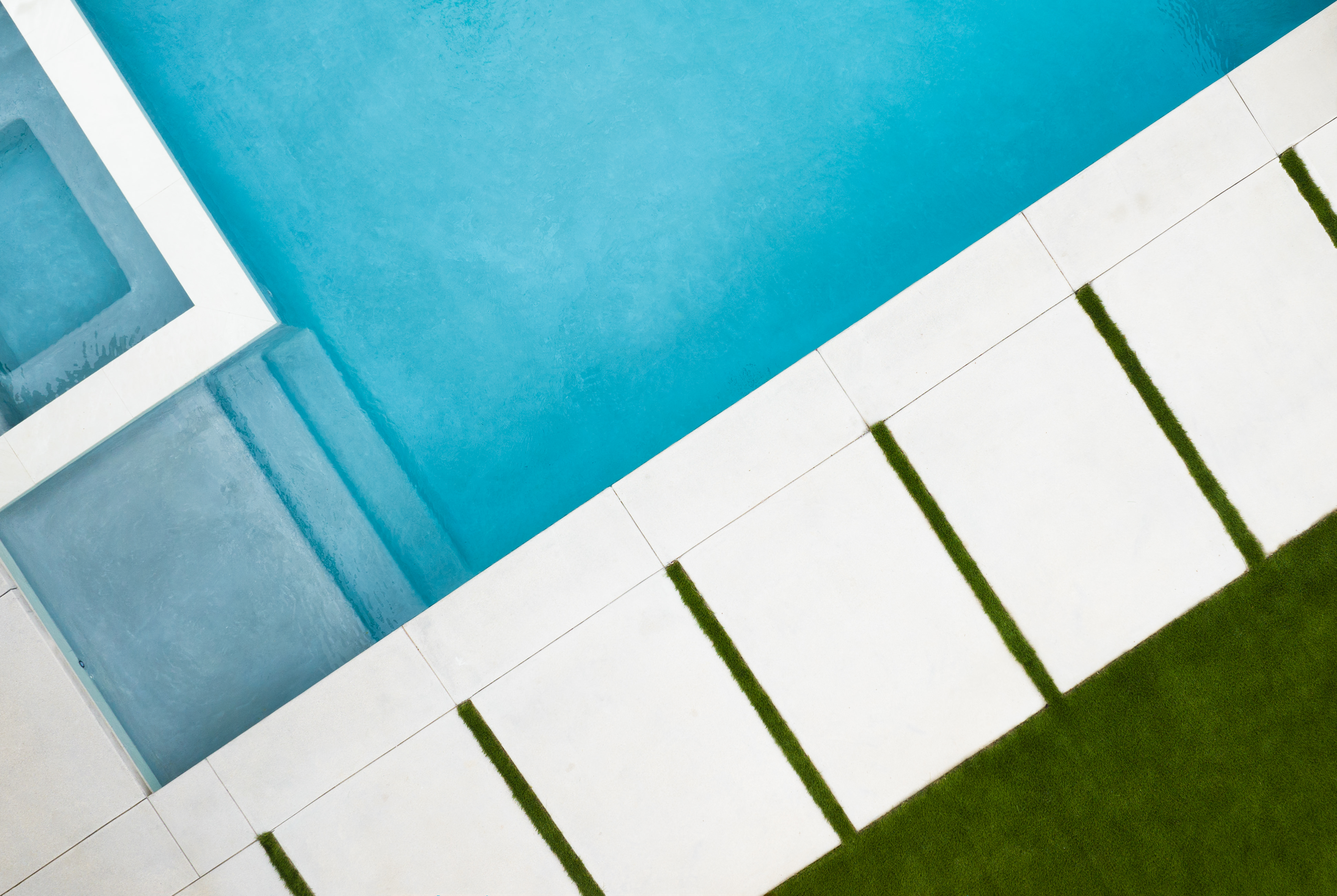
Cast stone elements manufactured to spec and ready for delivery — Mesa Precast standard residential lead times run 6–8 weeks. Photo: Mesa Precast.
Cast Stone Lead Times
Cast stone is manufactured to specification from drawings — production starts after shop drawing approval and mold fabrication. Typical Mesa Precast lead times:
- Standard profiles (from existing mold library): 4–6 weeks from order to delivery
- Custom profiles (new mold required): 6–10 weeks from shop drawing approval
- Large commercial GFRC panel systems: 10–16 weeks depending on panel count and complexity
- Rush production: Available for select projects; contact us for schedule feasibility
Natural Stone Lead Times
Natural stone supply chains are longer and less predictable. Realistic planning lead times:
- Domestic limestone (Indiana, Texas): 8–14 weeks from order to job site
- Imported limestone (French, Italian, Turkish): 14–22 weeks including ocean freight and customs clearance
- Custom carved elements: Add 4–8 weeks for carving queue on top of standard lead times
- Phased projects: Color match to earlier deliveries requires sourcing from same quarry block inventory — availability not guaranteed months later
For projects with compressed schedules, cast stone’s manufacturing flexibility is a significant advantage. Mesa Precast can coordinate phased deliveries that align with your erection sequence — specific elevations first based on your construction schedule. Natural stone lead times can’t compress the same way because you’re constrained by quarry extraction rate and fabrication queue.
When to Choose Each: Honest Guidance
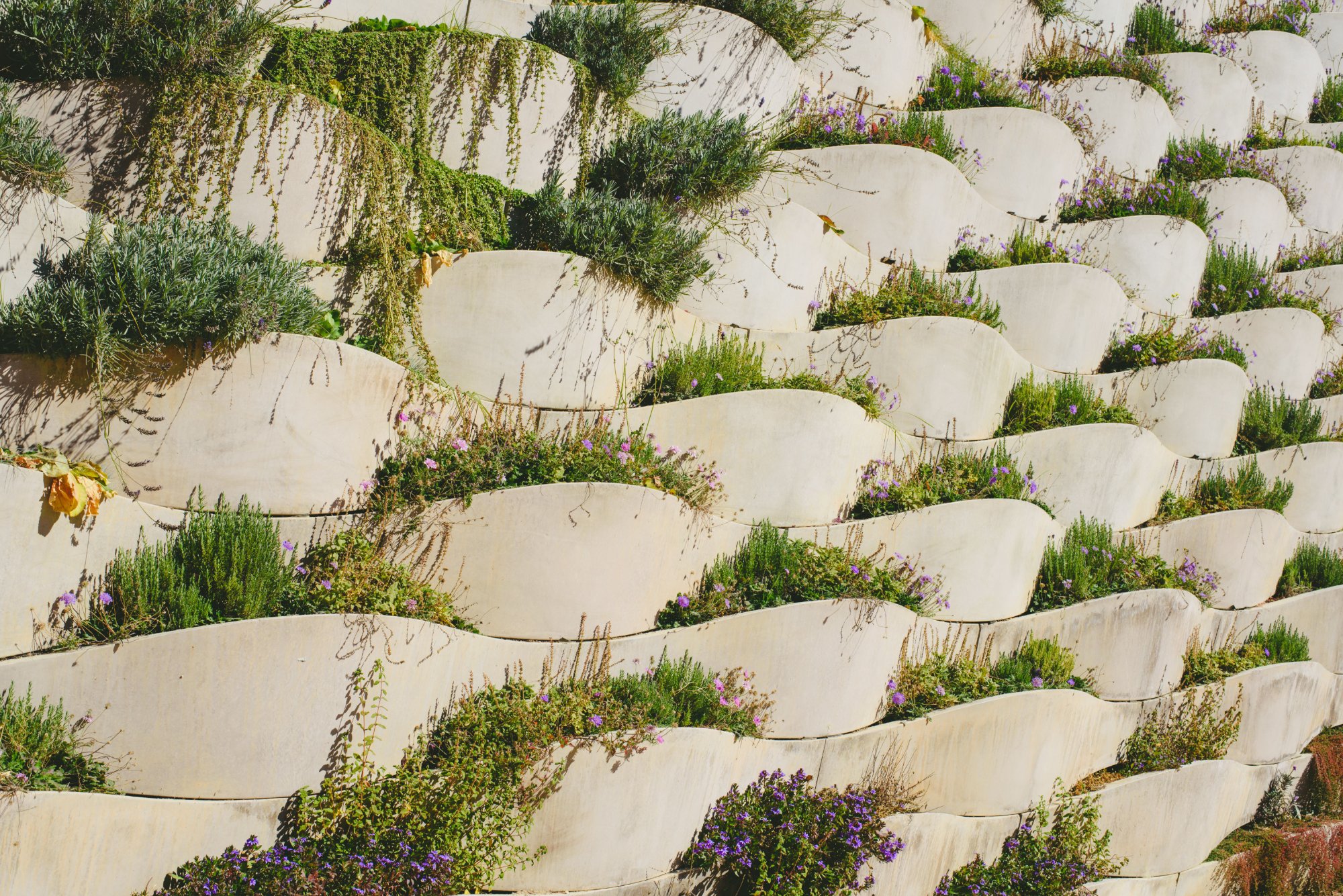
Cast stone architectural elements on a luxury residence — consistent color and profile across every element, manufactured in-house. Photo: Mesa Precast.
Choose Cast Stone When…
- Budget is a constraint. On a $3M project, a 35% savings on stone cladding is $150,000–$300,000 that either returns to the owner or funds other specifications. That’s not a rounding error.
- Custom profiles are required. If the design calls for anything beyond flat panel — cornices, dentils, voussoirs, compound moldings — cast stone is a fraction of the cost of equivalent hand-carved or CNC-cut natural stone.
- Color consistency matters. University campus buildings, multi-phase developments, or any project where visual continuity across multiple structures is critical.
- Freeze-thaw performance is specified. For any project in USDA hardiness zones 5 and colder (Midwest, Northeast, Mountain West), cast stone’s controlled absorption specification provides a more reliable freeze-thaw performance guarantee than quarried stone of variable porosity.
- Replacement parts may be needed. Any building with a 50+ year design life in a harsh climate should factor in the ability to reproduce damaged elements identically from the original mold.
- Schedule is tight. 6–8 week lead times vs. 14–22 weeks for imported natural stone. On compressed schedules, this is often the deciding factor before cost is even discussed.
Choose Natural Stone When…
- Historic restoration requires it. Many historic preservation projects — governed by SHPO review or historic tax credit requirements — specify natural stone to match original material. Cast stone may not satisfy the preservation standard even if visually indistinguishable.
- The project brief explicitly calls for it. Some institutional, civic, and high-profile private clients specify natural stone as a program requirement. Budget and performance arguments are secondary to client intent.
- The natural variation is a feature. Highly veined marble, dramatic travertine, bookmatched stone slabs — these are product features that cast stone’s controlled manufacturing cannot replicate.
- Weight is irrelevant to the structural system. For projects where the structure is already sized for heavier loads and stone is applied at modest scale, the weight penalty of natural stone may add nothing to cost.
The bottom line for most commercial and luxury residential projects: Cast stone and GFRC deliver comparable aesthetics at 30–50% lower cost, with better quality consistency, shorter lead times, and superior lifecycle performance in freeze-thaw climates. The cases where natural stone wins are specific — historic preservation, explicit client requirements, or designs where geological variation is an intentional design value. For everything else, the specification argument has shifted decisively toward manufactured stone.
For more on the differences within manufactured stone options, see our GFRC vs Cast Stone architect’s decision guide. For product-specific guidance, the complete residential elements guide covers every application from fireplaces to pool coping. For Gulf States and Southwest projects specifically, our regional guide covers climate-specific performance considerations.
Get Instant Cast Stone Pricing for Your Project
Select your element type, size, and quantity — our estimator gives you a rough budget range in under 2 minutes. No drawings required, no sales call needed.