In This Guide
- Why Precast & GFRC, Not Natural Stone
- Structural & Architectural Elements
- Fireplaces & Fireplace Surrounds
- Water Features & Fountains
- Pool, Patio & Outdoor Living
- Trim, Detail & Ornamental Elements
- Wall Cladding & Textured Panels
- Interior Luxury Elements
- Landscape & Site Elements
- Address Blocks & Signage
- Cost Summary by Category
- Mesa Precast: Full-Spectrum Manufacturer
A homeowner building a custom home in The Woodlands, Scottsdale, or Baton Rouge can spec every stone element on the exterior and interior — columns, fireplace surrounds, pool coping, entry arches, balustrades, range hoods, outdoor kitchen countertops, custom planters, water features — and not a single piece needs to be quarried natural stone.
Every element on that list can be manufactured in architectural precast concrete, cast stone, or GFRC (Glass Fiber Reinforced Concrete). The result is visually indistinguishable from natural limestone or travertine at residential viewing distances. The cost savings run 40–60%. And the climate performance in Gulf States humidity and Southwest heat often exceeds what natural stone delivers.
This guide covers every product category in detail — what each element is, how it's used, how it performs, and what to expect on cost. By the end, you'll have a complete picture of what's possible for a residential project anywhere from Tampa to Tucson.
Why Precast & GFRC — Not Natural Stone
Before diving into individual elements, a brief primer on why manufactured architectural materials dominate new construction in the Gulf States and Southwest at this price point.
Cast stone is produced by casting a refined concrete mix — fine limestone or quartz aggregate, Portland cement, mineral pigments — into precision molds. Compressive strength typically exceeds 6,500 psi. It holds fine detail exceptionally well and can be produced in any profile.
Architectural precast covers larger structural and decorative panels cast under controlled factory conditions. Where natural stone slabs would require cranes and specialized installation, precast panels are engineered for efficient installation over standard framing.
GFRC (Glass Fiber Reinforced Concrete) incorporates alkali-resistant glass fibers that allow panels to be made dramatically thinner and lighter. A GFRC panel that looks identical to a 3-inch cast stone element may be only ¾-inch thick. This enables applications over wood-frame construction where natural stone would require structural reinforcement.
GFRG (Glass Fiber Reinforced Gypsum) is the interior equivalent — used for coffered ceilings, interior columns, ornamental cornices, and decorative niches where moisture resistance isn't required.
The Gulf States & Southwest advantage: Both regions have climatic profiles that favor manufactured stone over natural — Gulf Coast humidity and saltwater exposure stress natural stone's absorption characteristics; Southwest thermal cycling stresses natural stone's expansion properties. Cast stone and GFRC are manufactured to address both challenges specifically.
Structural & Architectural Elements
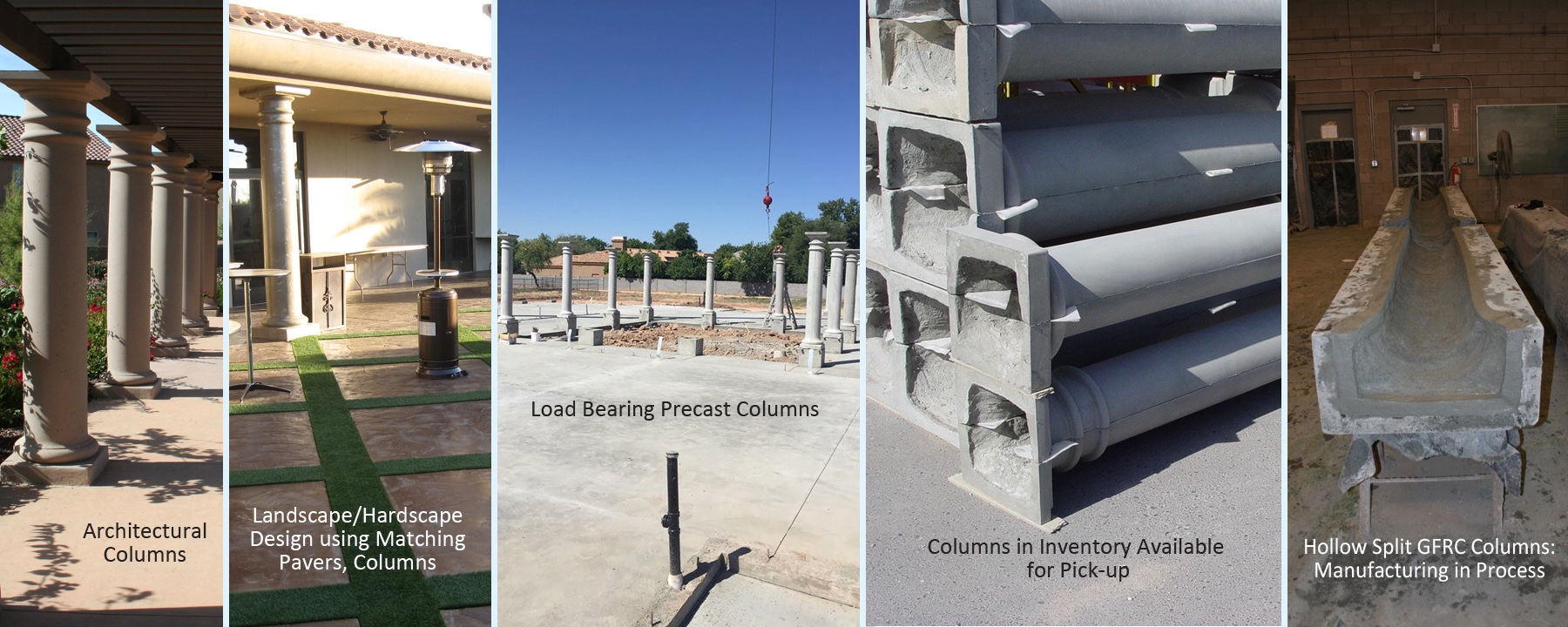
Columns, pilasters, cornices, keystones, and entryway surrounds — the structural and architectural elements that define a home's facade. Mesa Precast manufactures in cast stone and GFRC with precision mold-making for any profile.
Columns and Pillars
Columns are among the highest-impact architectural elements on a residential facade. Cast stone and GFRC columns are available in every classical order — Doric, Ionic, Corinthian, Tuscan, Composite — as well as smooth-faced contemporary profiles for Desert Modern and California Modern homes.
Full-round columns can be produced in sections (shaft drums, capital, base) for any height, with consistent detail across every column in a colonnade. Square and rectangular pilasters for facade articulation are equally achievable. GFRC column covers over wood or steel framing are a common application in production luxury homes — the structural work is done by the framing, and the column cover delivers the visual mass and texture of solid stone.
In Texas residential construction, cast stone columns at entries and porticos are increasingly standard. In Arizona and New Mexico, smooth-face GFRC columns with clean-line capitals define the Desert Modern aesthetic. In Florida and Louisiana, classical Corinthian and Ionic profiles replicate the grand plantation and Mediterranean Revival tradition.
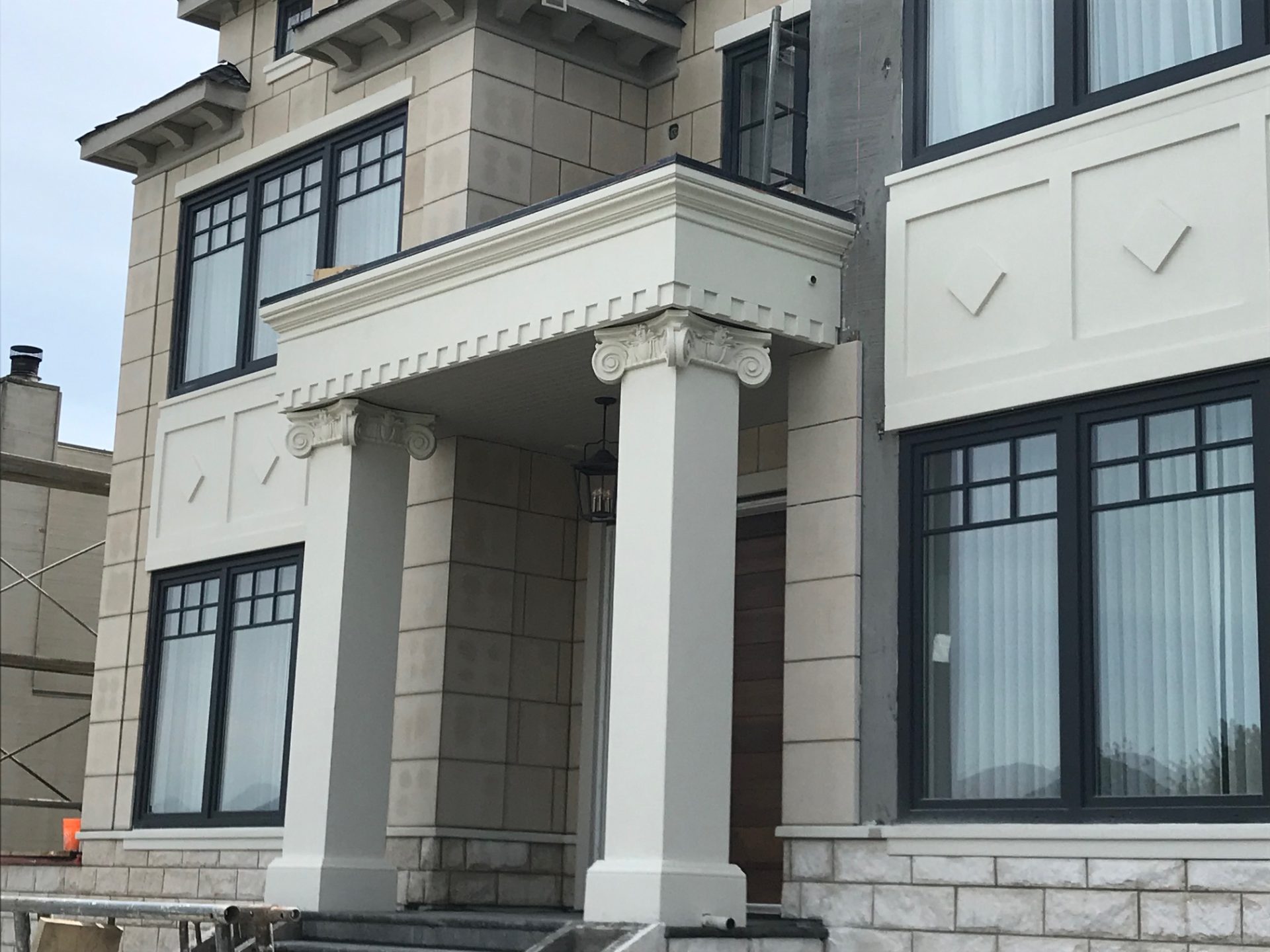
Entryway Archways
The entry arch is the single most powerful architectural statement on a home facade. Precast and cast stone arches — flat, segmental, semicircular, or full elliptical profiles — frame entries with the weight and formality that vinyl or stucco details cannot replicate. A complete entry arch system typically includes the arch voussoirs (the wedge-shaped arch stones), a keystone, flanking pilasters, and an entablature or cornice above.
In Georgian-influenced Texas Hill Country homes, formal full-arch entries with decorative keystones are signature features. In coastal Florida Mediterranean Revival, the heavy round-arch entry defines the architectural character of the entire facade.
Cornices
The cornice — the projecting horizontal band at the top of a wall — is one of the most cost-effective ways to elevate a home's architectural character. A well-proportioned cornice reads as high-end from the street, but in natural stone the material and labor cost is significant. Cast stone cornices are produced from standard catalog profiles or custom profiles matching any historic precedent, and installed efficiently by masonry contractors.
In traditional Gulf Coast and Southeast architecture, the cornice line is a critical design element. Multi-part cornices combining bed mold, fascia, and crown mold can be reproduced in cast stone from detailed architectural drawings.
Parapets and Cap Stones
Parapet walls — the low walls at roof level on Mediterranean, Mission, and contemporary flat-roof homes — are finished with cast stone or precast cap stones that protect the wall assembly from water infiltration while adding an architectural finish line. In Arizona and New Mexico, the parapet cap is a defining feature of the regional aesthetic.
Cap stone profiles range from simple sloped wash caps (directing water away from the wall face) to elaborate projecting caps with drip edges and decorative faces. All profiles are available in cast stone, and larger-format caps are efficiently produced in precast.
Sills and Lintels
Window sills and lintels (the horizontal element over window and door openings) are among the most common cast stone applications in residential construction. They provide the water-shedding function (sills slope outward to direct water away from the wall) while adding the visual weight and finish of natural stone details.
Cast stone sills and lintels are produced to match window schedules exactly, with appropriate bearing lengths for masonry integration. In brick-clad Gulf Coast homes, cast stone sills and lintels are standard spec on high-end construction — the visual contrast between the warm brick and the buff or limestone-tone cast stone is a classic combination.
Quoins
Quoins — the alternating large and small stones at building corners — are among the most recognizable traditional architectural details in Southern residential design. The quoin pattern signals quality construction and architectural intention from the street.
Cast stone quoins are produced as individual units bonded to the exterior wall or cladding. The standard pattern alternates larger and smaller units (the "long and short" pattern), but custom spacing and profiles can replicate any historical reference. In Louisiana, Georgia, and South Carolina plantation architecture, prominently projecting quoins in off-white or buff limestone tone are a regional signature.
Keystones
The keystone — the central wedge-shaped stone at the crown of an arch — is architecturally and symbolically the most prominent element in arch construction. In residential applications, keystones appear over windows and doors (even in flat "blind arch" configurations), at entry arches, and in fireplace surrounds.
Cast stone keystones are produced in hundreds of profiles from simple flat-face wedges to elaborate carved profiles with acanthus, scrollwork, or figurative relief. Fleur-de-lis keystones are a Louisiana regional preference. Shell and fan profiles are common in Florida and coastal Georgia.
Balustrades and Railings
The balustrade system — baluster (or spindle), top rail (cap rail), and bottom rail (plinth or base rail) — is one of the highest-visual-value elements in traditional residential architecture. Balustrades appear on front porches, second-story balconies, bridge elements, and as transitions between terraces and landscape.
Cast stone balusters are produced in dozens of profiles from simple tapered spindles to elaborate baroque profiles with multiple vase shapes, rings, and decorative fillets. The full system — balusters, rails, and corner newels — is designed to work together dimensionally and aesthetically.
For a 4,000 SF Gulf Coast estate home with balustrades on the front porch, second-floor balcony, and pool terrace, a cast stone system might run $22,000–$40,000 installed. The natural stone equivalent: $60,000–$90,000.
Fireplaces & Fireplace Surrounds
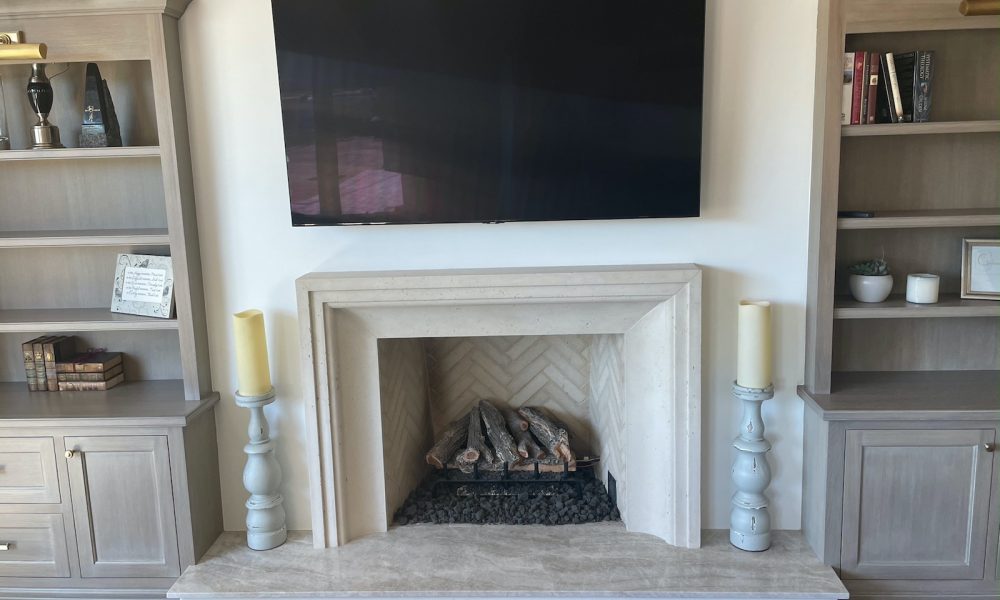
The fireplace surround is the architectural centerpiece of the primary living space. In residential projects from Houston to Palm Beach, cast stone fireplace surrounds are the material of choice at the luxury end of the market — and the reason is the combination of authentic stone aesthetic, design flexibility, and cost control.
Interior Fireplace Surrounds
A complete interior fireplace surround typically includes: the mantel shelf, the overmantel (the panel above the firebox), pilasters or legs flanking the firebox, a frieze or entablature, corbels supporting the mantel shelf, and an inner surround or slip lining the firebox opening itself.
Cast stone interior surrounds range from simple flat-panel designs (appropriate for transitional or contemporary homes) to elaborate multi-part classical surrounds with full entablatures, carved frieze panels, and ornate corbel brackets. Custom profiles to match existing millwork or architect's drawings are available from manufacturers like Mesa Precast.
Exterior Fireplaces and Outdoor Hearths
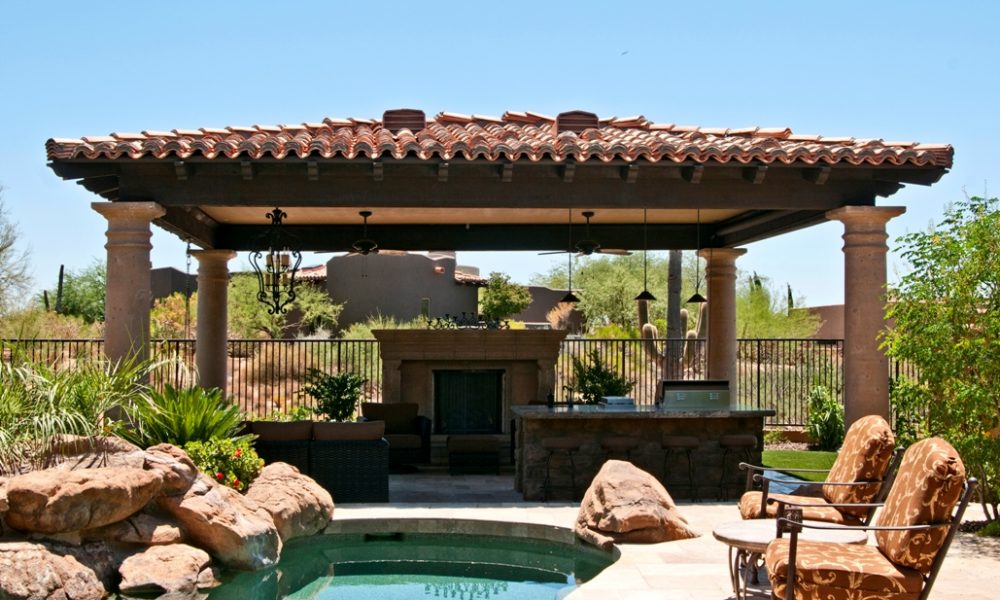
The outdoor living space has become a defining feature of Gulf Coast and Southwest residential design — and the outdoor fireplace or fire feature anchors that space architecturally. Cast stone outdoor fireplaces are a major Mesa Precast application category, with products designed specifically for exterior exposure: weather-resistant mix designs, appropriate detail scales for exterior viewing, and profiles that complement both the home's architecture and the landscape design.
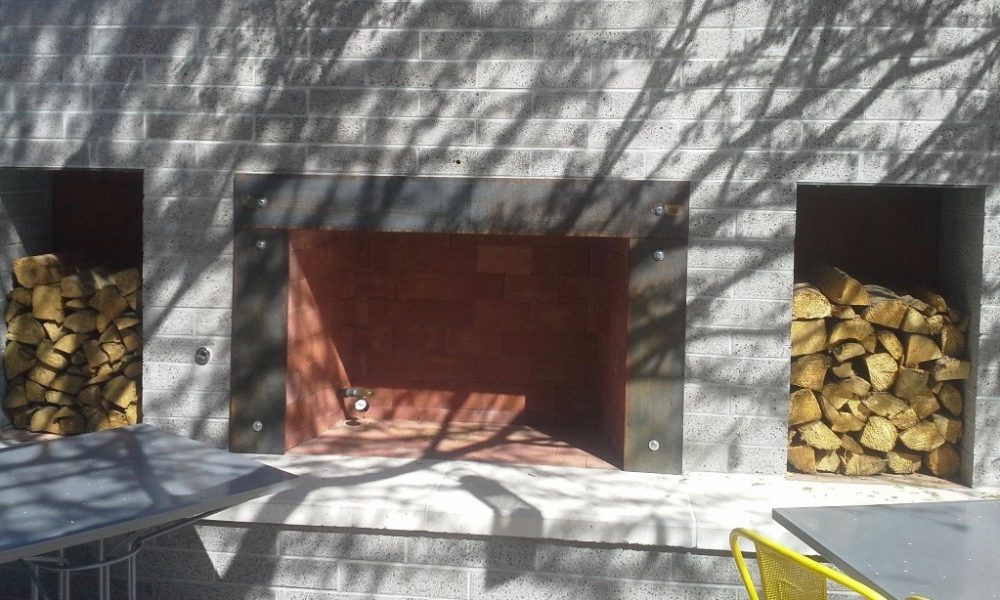
Exterior Patio Fireplace
Custom color architectural precast — Tempe, Arizona
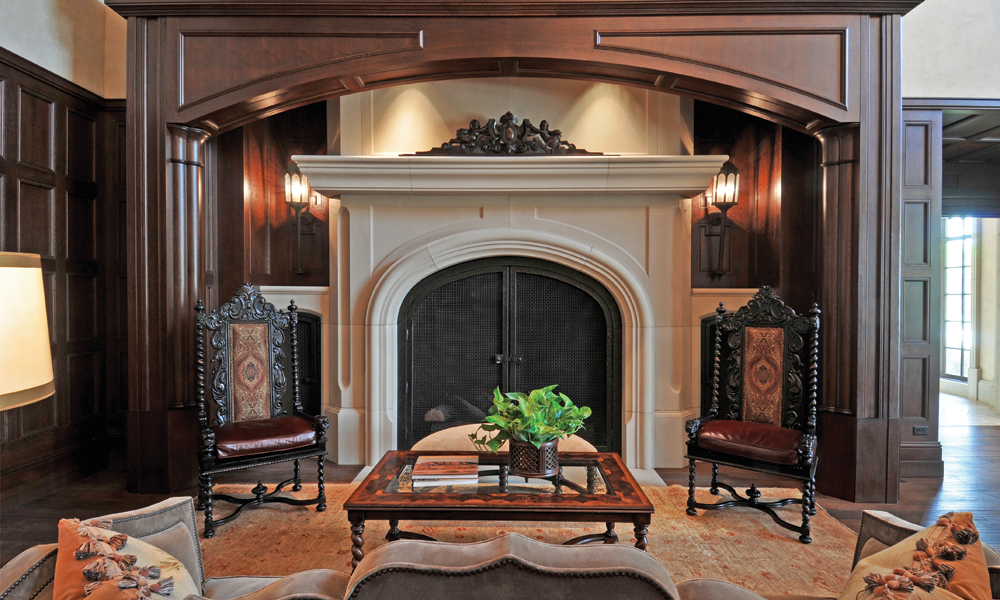
Ornate Fireplace — Dallas Country Club
Custom architectural cast stone panels with classical detailing
Range Hoods
The kitchen range hood is one of the most distinctive interior architectural statements in a luxury home, and cast stone range hoods have become a signature element in upscale Texas, Florida, and Arizona kitchens. A cast stone range hood surround frames the functional hood insert with the visual weight and texture of natural stone — corbels, a projecting shelf, decorative panels, and a shaped hood body that rises to the ceiling.
The design flexibility of cast stone allows range hoods to be matched to any kitchen aesthetic: heavy classical profiles with large corbels and decorative friezes for traditional kitchens; clean-face smooth stone for transitional designs; or textured rough-face panels for rustic or Spanish Colonial kitchens. Custom color matching to tile, cabinet, or countertop selections is standard.
GFRG range hood surrounds are the interior alternative — lighter weight, equally detailed, and finished to the same visual standard. Both are produced to match the specific hood insert dimensions and kitchen ceiling height.
Water Features & Fountains
Architectural water features — fountains, reflecting pools, wall water features, and cascade elements — are among the most expressive design opportunities in residential landscape design. Cast stone and architectural precast have been the primary materials for custom water features for decades, and the reasons are straightforward: durability in wet conditions, design flexibility, and weather resistance.
Freestanding Fountains
Classical tiered fountains in cast stone are an enduring feature of formal courtyards and entry forecourts across Gulf States and Southwest residential design. The Mediterranean Revival homes of Coral Gables and the Spanish Colonial estates of Santa Fe both look to cast stone fountains as essential landscape anchors.
Modern fountain designs — clean geometric basin forms in smooth-face precast, wall-mounted sheet-fall features in GFRC — serve contemporary homes equally well. The material is the same; only the profiles and surface treatments change.
Wall Water Features
Wall-mounted water features — typically a cast stone face with an outlet (often a lion's head, mask, or simple spout) falling into a basin — integrate water into the architecture itself. They appear on garden walls, courtyard boundaries, and entry sequences. In Texas and Louisiana, cast stone wall fountains with classical references are common in traditional homes; in Arizona and New Mexico, smooth geometric versions suit the Desert Modern palette.
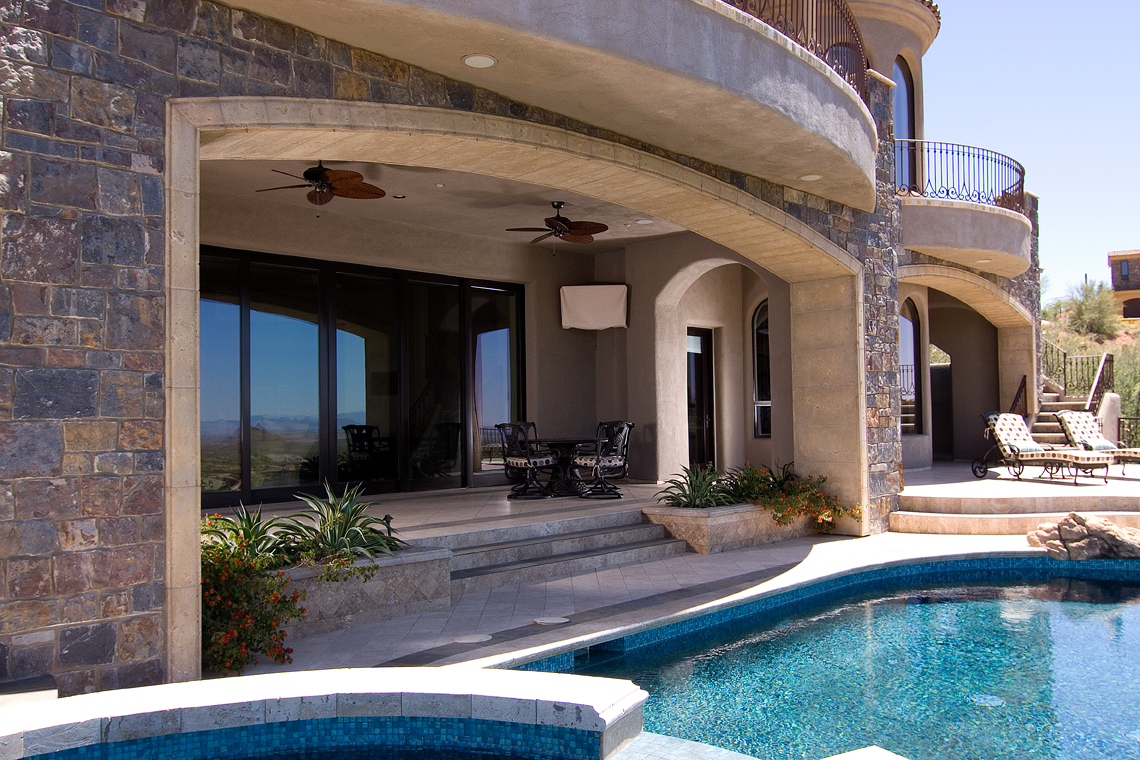
Architectural cast stone wall fountain — integrating water into the architecture of garden walls, courtyard boundaries, and entry sequences. Mesa Precast manufactures wall fountain faces, spout elements, and basin surrounds in any profile and finish.
Decorative Basins and Cascades
Custom water basins, spillway elements, and cascade channels are fabricated in precast concrete to any geometry. Large-format precast basins can serve as formal reflecting pools or contemporary negative-edge elements in landscape design. The controlled manufacturing of precast ensures consistent wall thickness, proper drainage slopes, and clean arris edges that field-poured concrete cannot reliably achieve.
Pool, Patio & Outdoor Living
Pool Coping
Pool coping — the cap element that finishes the edge of the pool shell — is one of the highest-volume cast stone and precast applications in Gulf Coast and Southwest residential construction. The pool edge is constantly wet, subject to pool chemistry, UV exposure, and heavy foot traffic, and must be slip-resistant while providing a clean architectural finish.
Cast stone and precast pool coping is produced in bullnose, flat-top, and cantilevered profiles in any width from 6 to 18 inches. Color matching to the home's exterior stone, patio tile, or hardscape material is straightforward with integral pigmentation. In Florida, the use of cast stone pool coping in lieu of natural travertine (which is porous and can harbor pool chemistry damage) is an increasingly common specification choice.
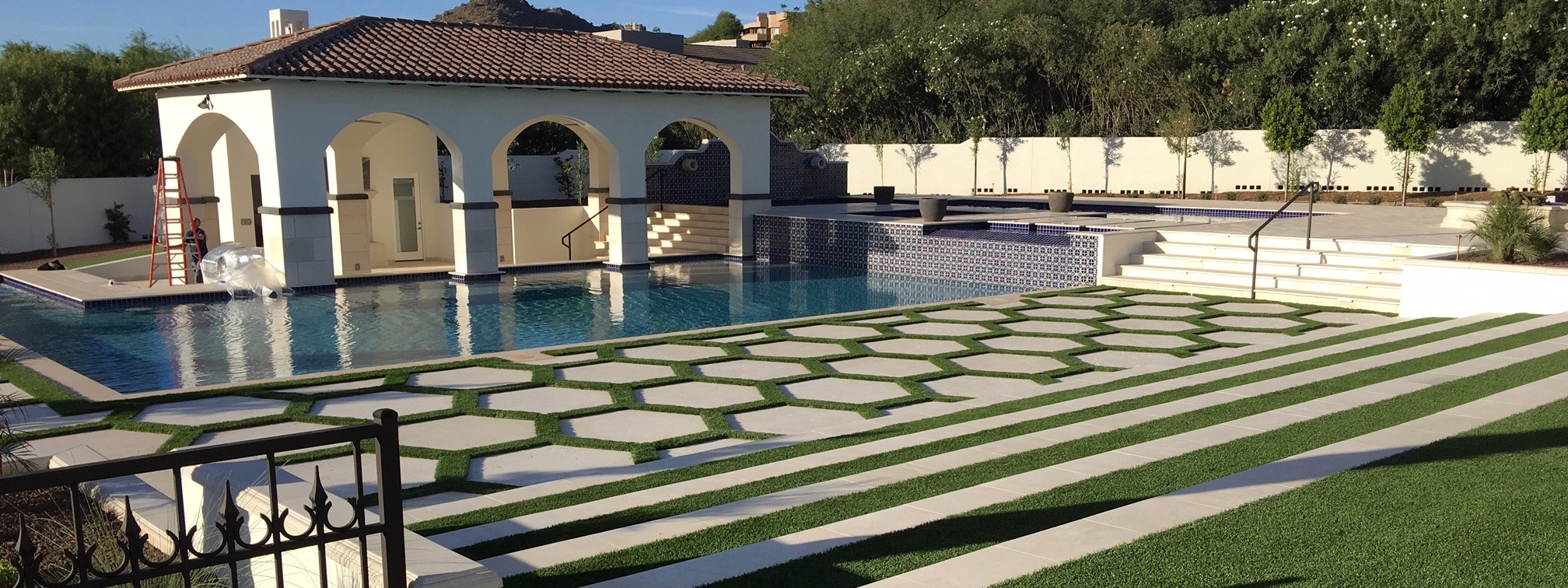
Geometric precast paver pool deck with architectural cast stone coping and arched pool house surround. The full outdoor living system — pool coping, deck pavers, and architectural surround elements — manufactured by Mesa Precast in a coordinated material and color palette.
Wall Coping and Patio Coping
Wall coping — the cap stone finishing the top of a masonry wall — serves both a waterproofing function (protecting the wall assembly from water infiltration) and an architectural finish function. Cast stone wall coping is produced in sloped-wash, saddleback, and flat profiles, with drip edges to keep water off the wall face.
In outdoor living areas, cast stone patio coping transitions between paved surfaces and raised planters, seating walls, or grade changes. The ability to color-match coping to adjacent pool coping, hardscape, or stone veneer makes cast stone the preferred choice for architects who want unified outdoor material palettes.
Stairs and Stair Treads
Precast concrete stair treads are a workhorse product in residential exterior design — durable, slip-resistant, and available in any width, depth, and profile. More architecturally, cast stone stair treads with bullnose profiles, carved nosings, or decorative risers bring the same stone character to circulation elements that columns and cornices bring to the facade.
Formal entry stair systems — treads, risers, landing elements, and balustrade bases — can be fully integrated in cast stone for a unified stone entry sequence from the drive approach to the front door. In traditional Gulf Coast and Southeast residential design, a formal stone stair with balustrade is a defining exterior feature.
Custom Planters
Cast stone and precast planters are among the most versatile landscape accessories — available in sizes from small accent pieces to large landscape anchor elements, in profiles from simple square and rectangular boxes to elaborate classical urns, balustraded planter boxes, and sculptural vessels.
Large estate planters in cast stone — flanking an entry drive, anchoring terrace corners, or marking site transitions — have the visual weight and permanence that concrete and fiberglass planters cannot replicate. Properly designed cast stone planters are weather-resistant, frost-proof (important in northern Gulf States), and maintain their color without the fading and degradation of non-mineral materials.
Bench Seating
Precast bench elements — seating for garden courts, terrace edges, entry forecourts, and pool surrounds — integrate stone into the landscape in a functional way. Standard bench forms include flat bench tops on bracket or leg supports, integrated bench-and-planter combinations, and circular bench arrangements for formal garden spaces.
In formal Gulf Coast landscape design, cast stone bench seating around fountain features or in garden rooms creates outdoor living spaces with the permanence and character of Old World gardens. In Arizona and New Mexico, clean-line precast bench seating suits contemporary desert gardens.
Outdoor Kitchen Surrounds and Countertops
The outdoor kitchen has become a standard feature in Gulf States and Southwest luxury residential construction, and cast stone is increasingly specified for both the structural surround and the counter surface.
Outdoor kitchen surrounds — the framing element that encloses the appliances and storage — in cast stone provide a high-end stone aesthetic that weathers gracefully in exterior conditions. Smooth-face cast stone surrounds suit contemporary outdoor kitchens; textured or coursed-stone finishes suit Mediterranean or Spanish Colonial designs.
Cast stone countertops for outdoor kitchens and bars are an exceptional application. Cast in white or gray cement with quartz or limestone aggregate, the countertop surface has the visual character of natural limestone or concrete while being manufactured to consistent thickness, flatness, and surface quality. Unlike natural stone countertops, cast stone outdoor countertops are integral-color throughout — there's no surface coating to fail under UV or weather exposure.
Trim, Detail & Ornamental Elements
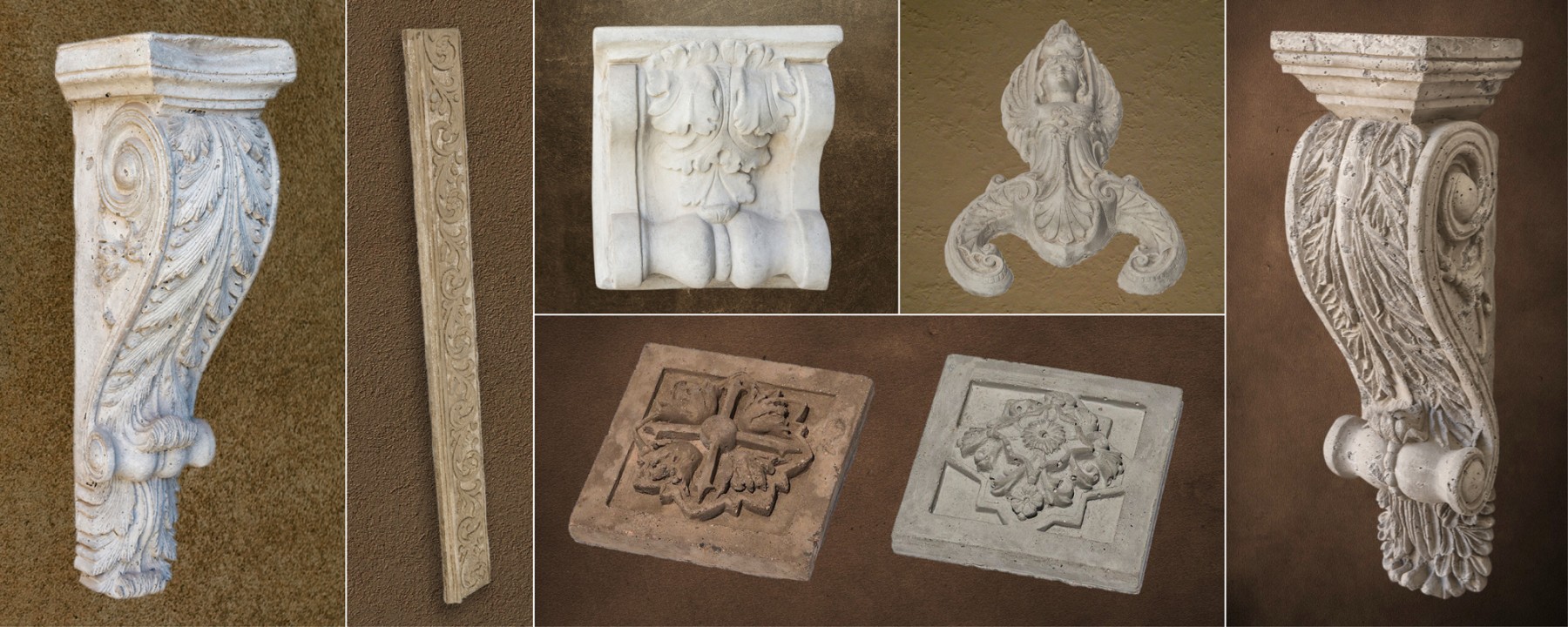
Corbels, window trim, door surrounds, medallions, rosettes, and finials — ornamental elements that define the character of a home's exterior and interior. Standard and custom profiles available.
Corbels
The corbel — the projecting bracket supporting a shelf, beam, or overhang — is one of the most expressive small-scale architectural elements in both traditional and contemporary design. In traditional homes, carved corbels support mantel shelves, kitchen range hoods, exterior eaves, and veranda beams with organic, sculptural forms. In contemporary homes, clean geometric corbels provide structural-looking transitions between wall and beam or shelf.
Mesa Precast's corbel catalog includes dozens of profiles in multiple sizes — from small accent corbels for interior shelving to large exterior structural-appearance corbels supporting deep overhangs. The ability to custom-manufacture corbels from architectural drawings means any profile is achievable, including replication of historic corbels for renovation projects.
Door Trim and Window Trim / Surrounds
Cast stone door and window trim is the articulation system that transforms flat openings into architectural compositions. A complete window surround might include: a sill at the bottom, jamb returns on the sides, a lintel or flat arch at the top, and an optional keystone or decorative header above.
The level of elaboration is entirely adjustable to budget and design intent — a simple sill-and-lintel combination at an economy budget, a full surround with pilasters, entablature, and broken pediment at the premium end. Both are manufactured from the same process; the cost difference is the number of distinct elements and mold complexity.
Medallions and Rosettes
Cast stone medallions and rosettes are decorative accent elements — round or elliptical relief panels positioned at the crown of arches, at column intersections, on gate piers, or as focal points in garden walls. Classical medallion subjects include floral rosettes, sunbursts, shells, acanthus compositions, and figurative reliefs.
In Florida Mediterranean Revival architecture, prominent decorative medallions at entry arches and in courtyard walls are a signature feature. Custom medallion molds can reproduce any specific relief from drawings or historical reference.
Finials
Finials — the ornamental terminal elements at the tops of gate piers, roof gables, chimney tops, and garden elements — are a refinement detail that marks quality architecture. Cast stone finials range from simple square pyramid and ball forms to elaborate urn, torch, and sculptural profiles. On formal entry gate piers, matched cast stone finials complete the vertical composition that frames the approach to the home.
Scuppers
Scuppers — the through-wall drainage outlets that allow water to exit a parapet or terrace — are a functional element that can also be architecturally detailed. Cast stone scuppers project from the wall face and route drainage water away from the building in a controlled, visually finished way. In Spanish Colonial and Southwest architecture, the projecting scupper is an expected design element; plain pipe penetrations are an afterthought. Cast stone scuppers with appropriate detailing match the architectural character of parapet walls, terrace edges, and planter walls.
Wall Cladding & Textured Panels
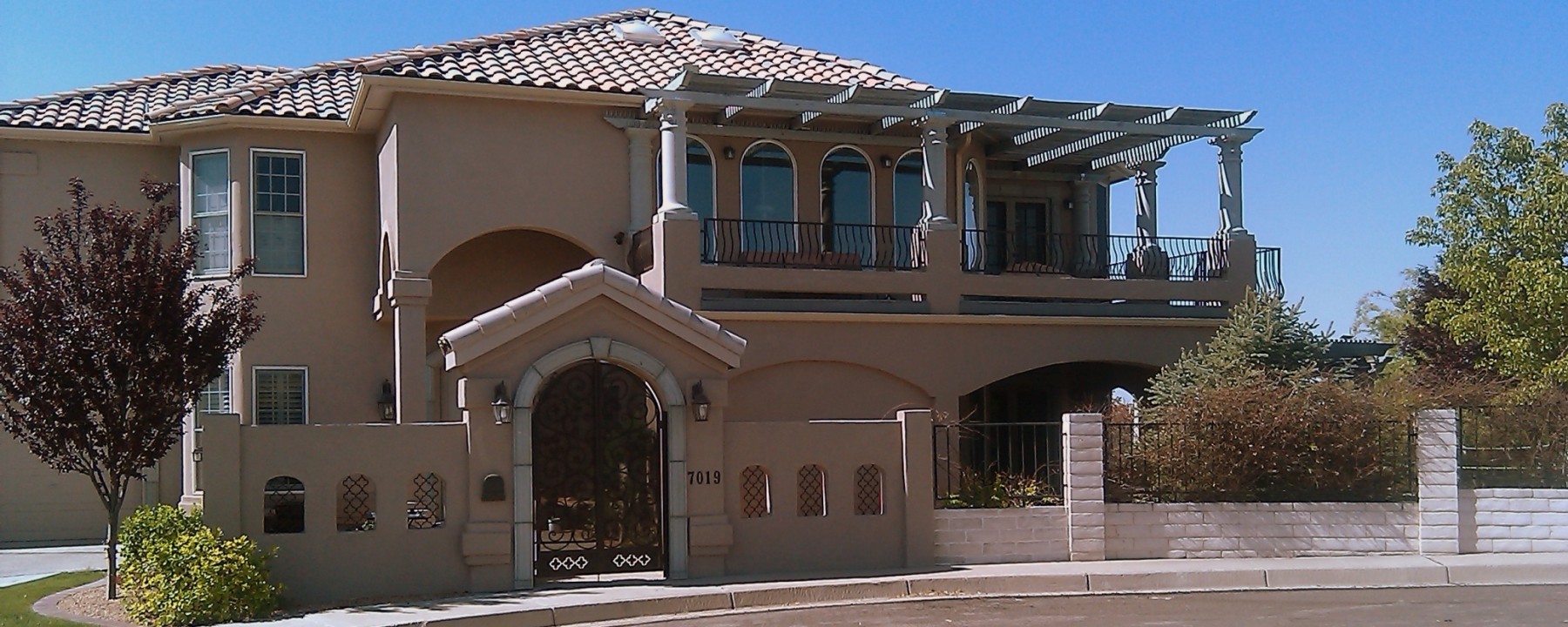
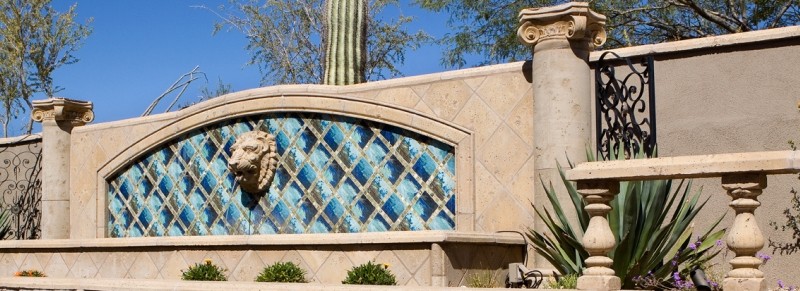
GFRC wall cladding panels enable complex textures, patterns, and profiles at a fraction of natural stone weight — ideal for full-facade applications where load and cost constraints rule out heavier materials.
Exterior Wall Cladding
Architectural precast and GFRC cladding panels transform the exterior of a home from a flat, featureless surface into a rich, textured stone facade. Panel cladding systems are produced in any surface texture — smooth, sandblasted, bushhammered, ribbed, raked joint, ashlar coursed, or random-coursed stone patterns — and can be installed over wood or steel frame construction.
In Southern California luxury residential construction, large-format GFRC panels with smooth or lightly textured faces are used to achieve the California Modern aesthetic: large planes of apparent stone or concrete that read as solid and weighty from the street but are actually thin-panel systems over standard framing.
In Texas and Florida, coursed and textured precast veneer panels simulate limestone and sandstone cladding with the pattern and color consistency that natural stone veneer cannot reliably provide at scale.
Custom Textured Walls
Custom textured wall panels — feature walls at interior courtyards, entry sequences, pool cabanas, and outdoor living spaces — are a specific cast stone and precast application where the material's manufacturing flexibility is most apparent. Specialty texture options include: rough-faced ashlar, board-formed patterns (simulating wood-formed concrete), exposed aggregate finishes, ribbed and fluted surfaces, and completely custom relief patterns cast from original artwork or historic references.
In Desert Modern architecture, custom textured precast feature walls — sometimes with integrated lighting reveals or water features — have replaced the painted stucco walls of earlier generations. The material has the thermal mass and visual weight that defines the Desert Modern palette.
Wainscot and Plinths
Stone wainscot — a band of stone material at the base of an exterior wall, typically from grade to window sill height — is one of the most common ways to add architectural quality to a residential facade without committing to full stone cladding. Cast stone wainscot panels and plinths provide the visual grounding of a masonry base while leaving upper walls in stucco, siding, or brick.
Interior Luxury Elements
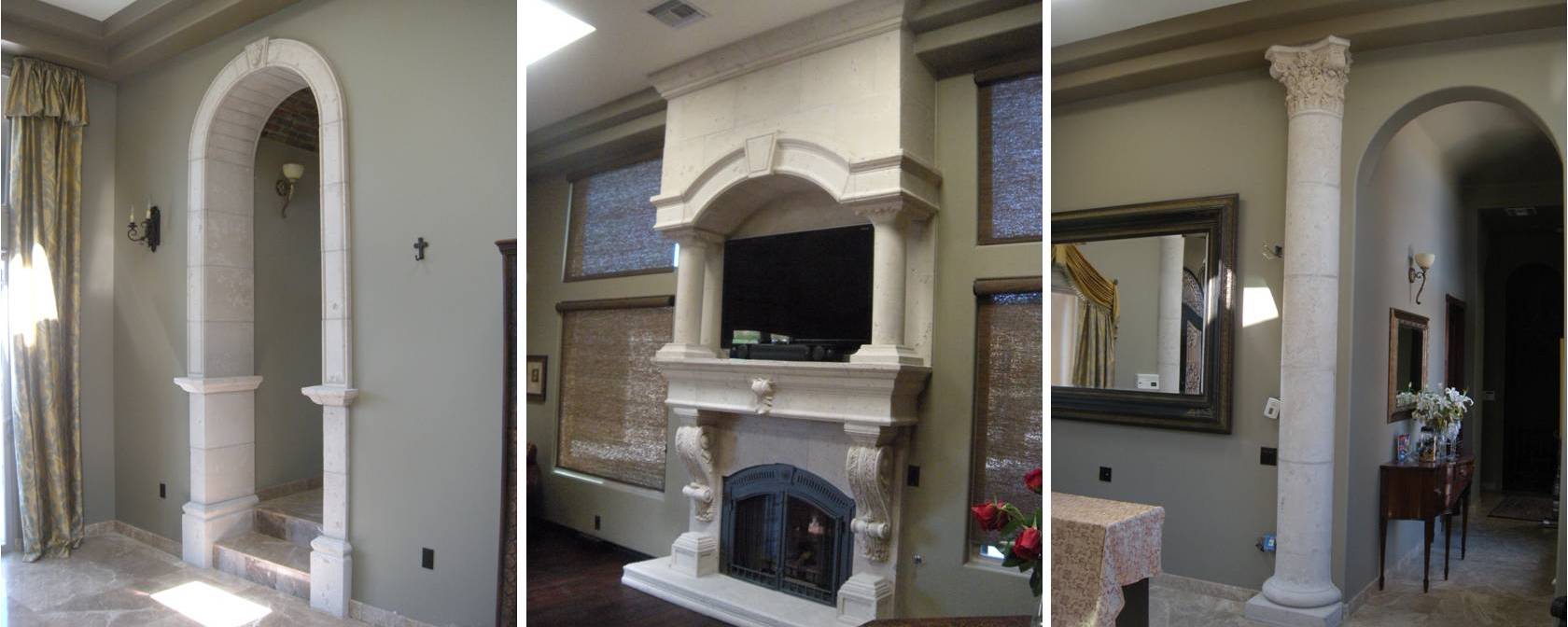
Interior luxury elements: cast stone door surrounds, fireplace mantels, corbels, and decorative columns bring architectural quality to every room. Same material, color, and texture as the exterior — inside and out.
Bathtubs
Cast stone and solid-surface stone bathtubs have emerged as a dramatic interior design element in master baths. A cast stone freestanding tub — heavy, warm, tactile, and unmistakably permanent — is architecturally in a different category from acrylic or porcelain tubs. The visual weight reads as spa-quality hotel design in a residential setting.
Cast stone tubs are produced in smooth or lightly textured finishes, in any color achievable with mineral pigmentation, and in freestanding or drop-in configurations. Wall-mount faucet integration is designed from the casting, not an afterthought. For residential projects in Palm Beach, River Oaks, or Paradise Valley, a cast stone tub is an increasingly specified luxury feature.
Indoor Countertops
Cast stone and precast countertops for interior vanities and bars carry the same material character as outdoor kitchen countertops into interior applications. The visual and tactile quality of a poured mineral surface — dense, cool, and permanent — has a distinctive character that differentiates it from quarried stone or engineered quartz.
Interior cast stone countertops are produced in standard thicknesses (1.5 to 2 inches) with integrated edge profiles, undermount sink cutouts, and consistent surface quality. Custom pigmentation allows matching or complementing any tile, fixture, or design palette.
Interior Columns
Interior architectural columns — in entry halls, dining rooms, and great rooms — are a defining feature of grand residential design. GFRG (Glass Fiber Reinforced Gypsum) is the standard material for interior decorative columns: lightweight enough for installation over any floor structure, fine enough in detail for interior viewing distances, and available in every classical and contemporary profile.
Full-round interior columns in Corinthian, Ionic, and Doric orders; square or rectangular pilasters; and custom profiles are all achievable in GFRG with the same detail quality as high-end plaster work — at significantly lower cost.
Coffered Ceilings and Interior Cornices
GFRG panel systems allow coffered ceiling designs — the recessed panel grid that characterizes grand formal rooms in traditional architecture — to be manufactured and installed efficiently in residential construction. A coffered ceiling in traditional plaster is an expensive, lengthy process requiring skilled artisans. A GFRG coffered ceiling system achieves the same visual result with factory-consistent detail quality and faster installation.
Interior cornices — the decorative transition between wall and ceiling — in GFRG range from simple coved profiles to elaborate multi-part classical cornices with dentils, egg-and-dart, and modillion details. For the traditional Gulf Coast and Southeast home, an elaborate GFRG cornice in the formal rooms is an appropriate architectural feature.
Landscape & Site Elements
Pier Caps
Masonry gate piers — the freestanding columns flanking a driveway entrance or property boundary — are finished with cast stone pier caps. The cap protects the pier from moisture infiltration while providing the sculptural finish that completes the vertical element. Pier cap profiles range from simple sloped wash caps to elaborate pyramid, hip-roof, and ball-top configurations.
In formal residential entries, matched pier caps with finials on substantial piers define the property boundary with the same material character as the home's cast stone architectural details.
Custom Site Elements
Custom architectural precast elements for site and landscape include: garden columns, pergola elements, trellis supports, decorative gate hardware (cast stone gate posts with metal hardware), garden room elements (low walls, seating walls, niches), and site furniture. Any element that benefits from the permanence, weather-resistance, and visual character of stone can be manufactured in precast.
Address Blocks and Signage
Cast stone address blocks and property signage panels are a finishing detail that distinguishes high-end residential properties. A carved or relief-cast address panel in cast stone — mounted to a gate pier or entry wall — communicates quality and permanence in a way that metal house numbers or aluminum signage cannot.
Address blocks are produced with relief-cast or incised numerals and letters, in any font and size appropriate to the property's scale and character. Decorative borders, family crests, or simple geometric frames can be integrated. Color matching to adjacent gate piers or entry walls is standard.
For named properties, estate gates, and community entries in Gulf Coast and Southwest residential developments, cast stone sign panels on substantial masonry piers are the specification of choice.
Cost Summary by Category
Pricing ranges for Gulf States and Southwest markets, installed, 2025–2026:
| Element Category | Natural Stone | Cast Stone / Precast | Savings |
|---|---|---|---|
| Columns (8 ft, full round) | $2,200–$4,800 ea. | $800–$1,800 ea. | 50–70% |
| Balustrade system (per LF, installed) | $220–$380/LF | $90–$160/LF | 55–60% |
| Entry arch / keystone feature | $4,500–$9,000+ | $1,800–$3,500 | 50–65% |
| Window sills & lintels (per LF) | $85–$140/LF | $35–$65/LF | 45–60% |
| Pool coping (per LF, installed) | $65–$120/LF | $28–$55/LF | 50–60% |
| Fireplace surround (interior) | $8,000–$18,000 | $3,200–$7,500 | 55–65% |
| Range hood surround | $4,500–$9,500 | $1,800–$4,000 | 55–60% |
| Wall cladding / veneer (per SF, installed) | $45–$90/SF | $18–$40/SF | 45–60% |
| Exterior cornice (per LF) | $110–$200/LF | $45–$90/LF | 50–55% |
| Corner quoins (full home set) | $15,000–$25,000 | $5,000–$9,000 | 55–65% |
| Custom fountain (freestanding) | $12,000–$35,000 | $4,500–$14,000 | 55–65% |
| Outdoor countertops (per SF) | $85–$150/SF | $35–$70/SF | 50–60% |
Full-project perspective: A fully-detailed 5,000 SF custom home in Houston or Scottsdale with stone columns, entry arch, window trim, balustrades, fireplace, range hood, pool coping, fountain, and landscape elements might run $300,000–$500,000 in natural stone. The same complete specification in cast stone, GFRC, and precast: $110,000–$200,000. The curb view is essentially identical.
Mesa Precast: Full-Spectrum Manufacturer

Mesa Precast, based in Tempe, Arizona, manufactures the full spectrum of architectural stone products described in this guide — under one roof, for projects across the Gulf States and Southwest.
The capability breadth matters. Most manufacturers specialize: this one does balustrades and coping, that one does fireplace surrounds, another does cladding panels. Mesa Precast covers all of it — which means a single shop drawing package, a single lead time coordination, and a single quality standard across every element on a project.
What Mesa Manufactures
Architectural Cast Stone
Columns, balusters, sills, lintels, keystones, quoins, corbels, cornices, caps, coping, medallions, chimney pots, finials, address blocks, bench seating, and custom profiles
Architectural Precast Concrete
Wall cladding panels, large entry features, outdoor kitchen surrounds, stair systems, water features, site elements, and custom large-format pieces
GFRC Panels
Lightweight facade panels, column covers, pool coping, countertops, custom textured wall elements, and large-format cladding for wood-frame construction
GFRG Interior Elements
Interior columns, coffered ceiling systems, interior cornices, fireplace surrounds, range hoods, decorative niches, and ornamental trim
Custom Mold Capability
If your architect specifies a profile that doesn't exist in any standard catalog — a historic molding profile, a unique keystone shape, a custom medallion relief — Mesa Precast builds the mold in-house. This in-house mold capability is the differentiator that makes fully custom residential projects achievable without the cost and lead time of natural stone carving.
Regional Service: Gulf States & Southwest
Mesa Precast ships to projects across Texas, Louisiana, Alabama, Georgia, Florida, Arizona, New Mexico, and Southern California. The production and logistics are calibrated to these markets. The product mix — pool coping options, UV-stable color offerings, moisture-resistant mix designs — reflects the specific requirements of Gulf Coast and Southwest climates.
Product line availability and lead times should be confirmed directly with Mesa Precast for your specific project. Visit mesaprecast.com for the full product catalog and current specifications.
Getting Started
The process is the same whether you're specifying one element or an entire home's stone scope: share your project drawings, get a preliminary scope and pricing, review shop drawings before production starts, and coordinate delivery with your construction schedule. For production builders with repeat projects, standard catalog profiles can be ordered on rolling schedules.
The bottom line, across all 25+ product categories in this guide: if you can describe it in natural stone, Mesa Precast can manufacture it in cast stone, precast, or GFRC — at 40–60% less cost, with faster lead times, and with climate performance that matches or exceeds natural stone in Gulf Coast and Southwest conditions.
Ready to Specify Stone for Your Project?
Tell us what you're building — columns, fireplace, pool coping, full facade, or the complete package. We'll come back with material recommendations, scope, and pricing.
Request a Quote →