Drive through any luxury neighborhood in Arizona, Texas, Florida, Southern California, Georgia, or Colorado and the homes that stop you — the ones that read as estates rather than houses — have one thing in common: architectural detail at the facade and entry. Columns flanking the front door. A balustrade running the length of a raised terrace. Quoins articulating corners. A broken pediment above a grand entry arch. A cornice line that gives the elevation weight and finish.
These elements define luxury residential architecture. And for the past several decades, the most practical way to achieve them — at any scale, in any classical or transitional profile — has been cast stone. Mesa Precast manufactures cast stone facade elements and entry details for luxury homes across the Sun Belt and beyond, with a portfolio that ranges from grand French estate columns to clean transitional surrounds on contemporary homes in Scottsdale and Houston.
This guide covers everything: products, design directions, cost data, regional market context, and how to get from concept to installed material.
The Facade Is the First Impression
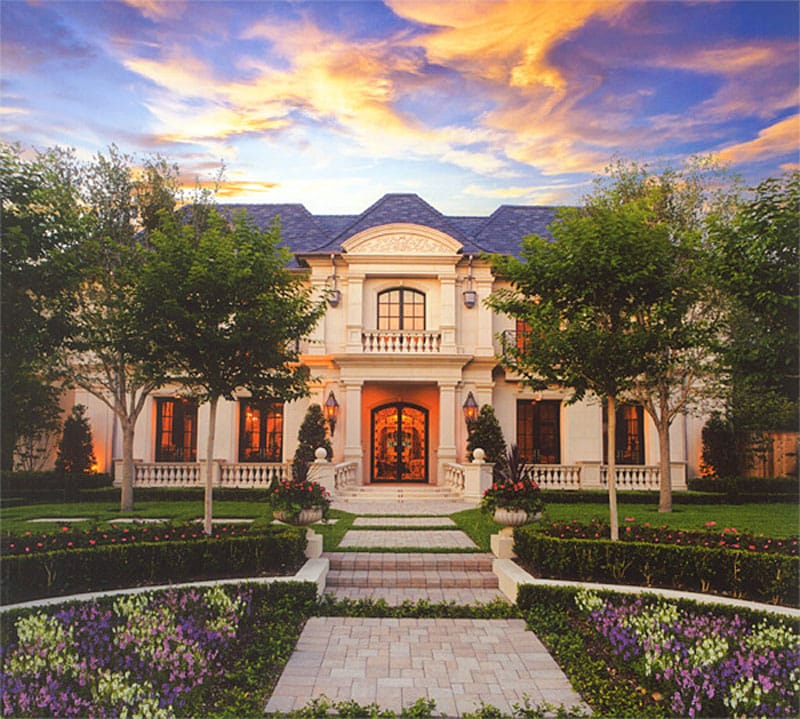
Grand French estate facade at twilight. Full-height cast stone columns, balustrade terraces, arched window surrounds, and classical pediments. Mesa Precast manufactures every element shown — columns, balustrades, cornices, keystones, and entry surrounds.
In residential architecture, curb appeal isn't cosmetic — it's structural to perceived value. Appraisers, buyers, and neighbors read the facade in the first ten seconds. An elevation with cast stone columns, a detailed entryway surround, and balustrades at the terrace communicates a level of investment and permanence that smooth stucco or painted brick simply cannot replicate.
The economics are no longer prohibitive. Natural limestone and carved stone remain options — but they come with weight penalties, structural engineering costs, quarry delays, and hand-carving lead times that stretch a project by months and inflate budgets by hundreds of thousands of dollars on a full-facade application. Cast stone solves every one of those constraints without sacrificing the visual result.
The key insight: cast stone is manufactured stone. It's a precisely formulated mix of Portland cement, fine aggregates, and mineral pigments, cast in custom molds under controlled conditions. The result is dimensionally exact, structurally consistent, available in any profile, and deliverable in 8–12 weeks. For a full facade application — columns, balustrades, quoins, cornices, entryway pediment — that difference in lead time versus natural stone is often the difference between finishing on schedule and a six-month delay.
The design rule: Facade architectural detail is permanent. It outlasts every other finish decision on the home. Specifying cast stone at the facade, entry, and terrace is one of the highest-return investments in luxury residential construction — in perceived value, in resale, and in lasting architectural character.
Columns: Ionic, Corinthian, Tuscan & Custom Profiles
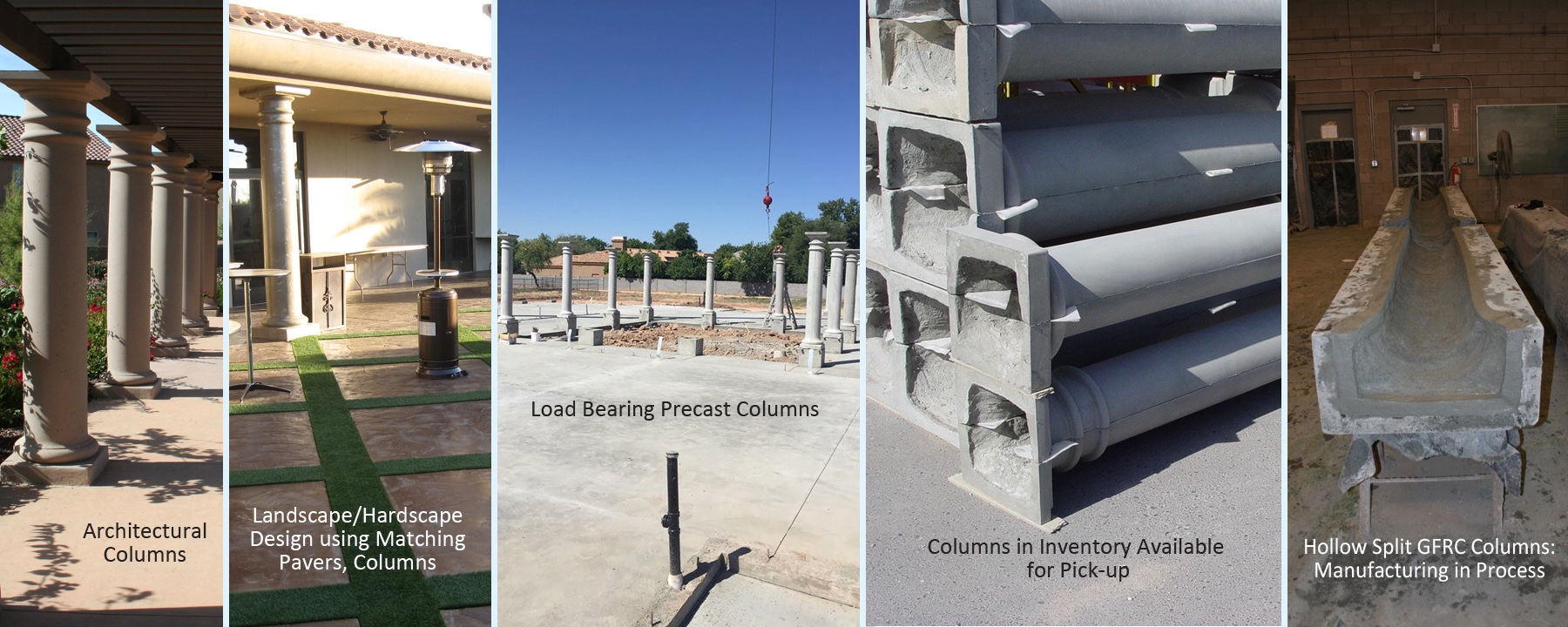
Mesa Precast manufactures all classical column orders in cast stone and GFRC: Doric, Ionic, Corinthian, Tuscan, and Composite. Any diameter, height, and capital profile. Shipped nationwide.
Columns are the defining element of classical and transitional facade architecture. No other single detail communicates permanence and quality as immediately as a well-proportioned column flanking an entry or supporting a covered porch. Mesa Precast manufactures columns in every classical order — and in fully custom profiles for transitional and contemporary applications.
Classical Column Orders
- Tuscan — Simplest of the Roman orders. Plain shaft, minimal capital, no fluting. Clean and masculine. Ideal for farmhouse-estate transitions, Texas Hill Country homes, and transitional Georgia or Alabama estates where ornament is restrained but proportion matters.
- Doric — Slightly more refined than Tuscan, with a simple echinus-and-abacus capital. Common in Greek Revival-influenced homes across Louisiana, Alabama, and Georgia where antebellum traditions remain architecturally present.
- Ionic — The scroll-capital order. Recognizable, proportionally elegant, and highly versatile across Southern Colonial, Federal, and Mediterranean Revival styles. Popular in Florida, Southern California, and the Carolinas.
- Corinthian — The most ornate of the classical orders, with acanthus-leaf capitals. The definitive choice for grand estate entries in Texas, Arizona estate communities, and French-inspired residences across Colorado's mountain communities and Southern California's coastal luxury neighborhoods.
- Composite — Combines Ionic scrolls with Corinthian acanthus leaves. Used where maximum ornament is desired, often on the grandest residential projects.
Column Specifications
Mesa Precast manufactures columns in any diameter and height, with options for:
- Shaft form: Smooth, fluted (concave), reeded (convex), or tapered
- Entasis: The classical slight taper that prevents optical illusion of concavity on tall shafts — specified per classical proportion rules
- Bases: Attic base, Tuscan base, or custom profile to integrate with plinth and step detail
- Capitals: Cast from CNC-machined or hand-carved master patterns — Ionic volutes, Corinthian acanthus, custom figural details
- Construction: Solid cast (smaller diameters), hollow column shell (larger diameters), or cast to wrap a structural steel or CMU column
Cast Stone Columns for Luxury Homes: Texas & Arizona
The highest volume markets for cast stone entry columns in residential are Texas and Arizona. In Texas, estate homes in Dallas, Austin, Houston, and San Antonio routinely specify Corinthian or Tuscan columns at covered entry porticos — both for visual scale and because the covered entry reduces direct solar gain on front doors. In Arizona, covered entry columns are near-universal in luxury residential, where the front entry portico is as much a functional sun shade as it is an architectural statement. A luxury home facade in Arizona without defined entry columns reads as incomplete to luxury buyers accustomed to the market standard.
Balustrades: Grand Staircases & Elevated Terraces
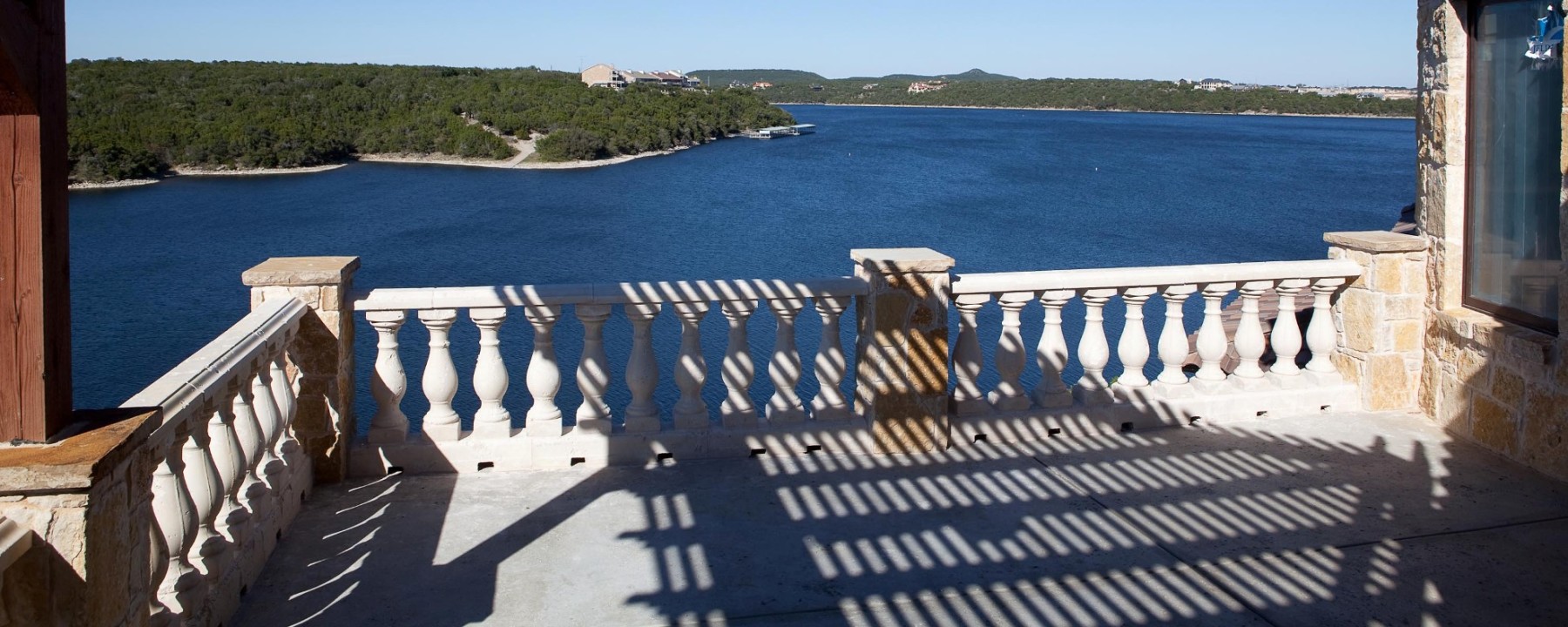
Mesa Precast balustrade systems: baluster, cap rail, and plinth — all cast stone, delivered as a matched system. 200 LF of perimeter balustrade in cast stone runs $18,000–$30,000 installed vs $50,000+ in natural stone.
A balustrade — the railing assembly of balusters, bottom rail, and top rail — is one of the most visually rich facade elements in classical residential architecture. At a raised front terrace, it creates a formal transition between the public street and the private entry sequence. At a second-floor balcony or roof terrace, it extends the estate character of the home vertically. At a grand entry stair, it frames the approach with architectural weight that makes the entry event feel ceremonial.
Balustrade Components Mesa Precast Manufactures
- Balusters: Turned profiles in any classical or custom section — from simple double-taper to ornate Baroque vase profiles. Any height, any spacing, any finish.
- Bottom rail / plinth course: The horizontal base that carries the balusters and transitions to paving or terrace finish
- Top rail / coping rail: The cap rail with classical profile — flat with ogee edge, double ovolo, cyma recta, or custom
- Newel posts: Monumental posts at stair head and foot, often with vase cap or urn finial, in any scale appropriate to the stair width
- Piers and pilasters: Structural mass elements at intervals in long balustrade runs, capped with urns, ball finials, or flat caps
Stone Balustrades in Southern California
In Southern California, cast stone balustrades appear most frequently on Mediterranean Revival and Spanish Colonial Revival residences — where the raised terrace and front balustrade are integral to the architectural vocabulary. A house without them reads as incomplete to buyers in those styles. In coastal markets — Malibu, Laguna Beach, Montecito — stone balustrades in Southern California also serve a practical function: they read as permanent luxury material in a landscape where the outdoor-indoor connection is emphasized and the front elevation is visible from the street or below on hillside sites.
Planning a balustrade for a terrace or entry stair? Get budgetary pricing by project type — baluster profile, linear footage, and newel post configuration.
Use the Estimator →The Entryway: Surrounds, Pediments & Keystones
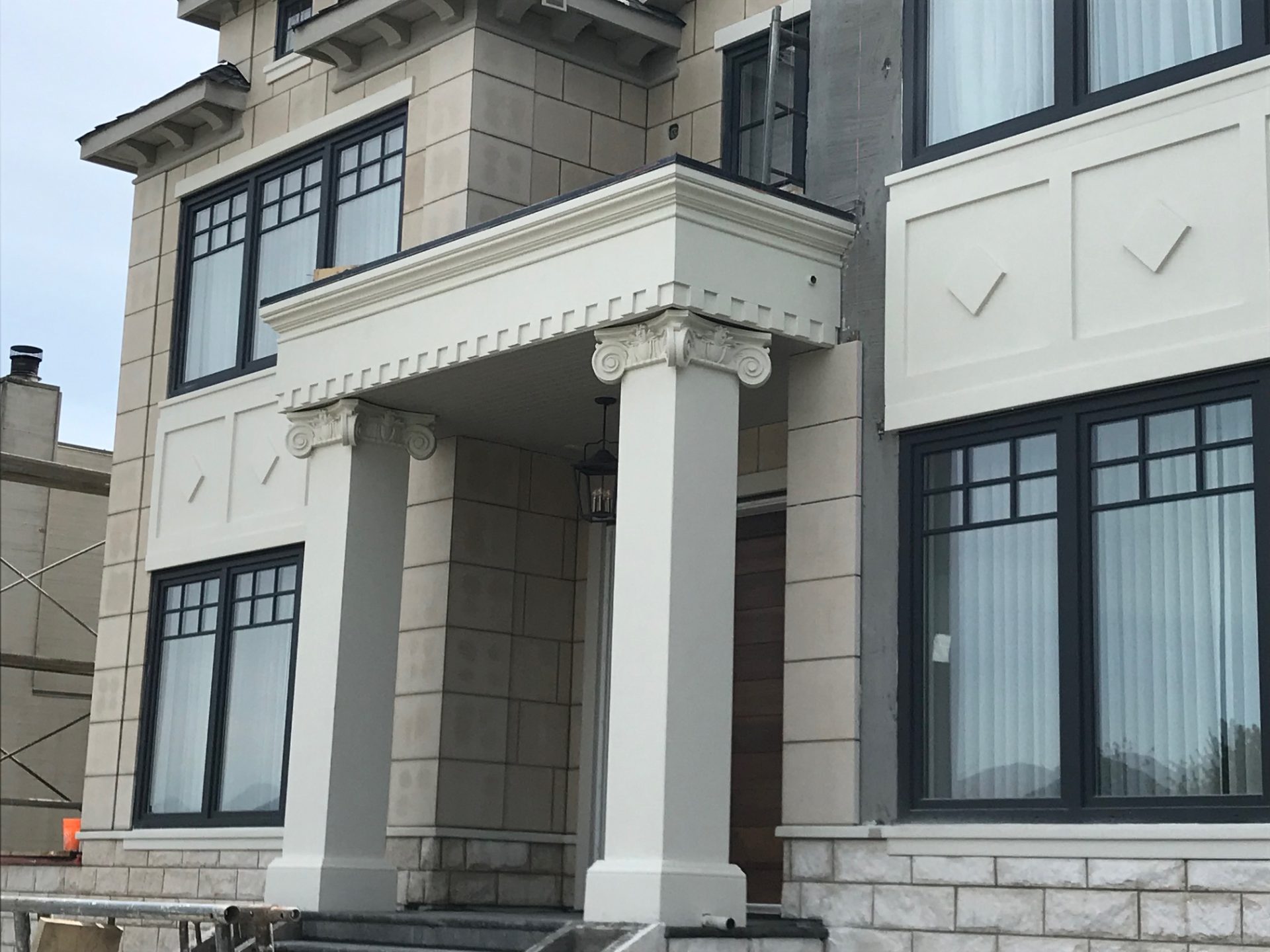
Classical entryway with Ionic columns, dentil molding cornice, diamond-panel pilasters, and arched door surround. This level of entryway detail is achievable in cast stone at a fraction of the cost of carved natural limestone — and in a fraction of the time.
The entryway is where the facade becomes personal. It's the transition point — the moment where the visitor moves from public to private space. In luxury residential architecture, that moment is designed, not incidental. The best entryways are sequences: the approach along a path or drive, the arrival at a covered portico or stair, the door itself framed by an architectural surround that communicates investment and welcome simultaneously.
Entryway Elements
- Door surrounds: Pilasters or half-columns flanking the door opening, with an entablature above (architrave + frieze + cornice). Can be flat pilasters for a transitional look or full-round engaged columns for classical grandeur.
- Pediments: The triangular or curved (broken, swan's neck) crowning element above the door surround. Triangular pediments read as Federal or Georgian; broken pediments are Baroque or Palladian; curved pediments are softer and appear in Mediterranean and Spanish Colonial Revival contexts.
- Keystones: The central voussoir of an arch — often projecting, often with carved detail (boss, cartouche, face mask, or simple chamfered profile). A keystone above an arched entry or window opening is one of the simplest ways to add visual richness to a facade.
- Transom surrounds: Molded frames around transom windows above entry doors — architrave molding, flat or bolection profile
- Sidelite surrounds: Pilasters or casings framing sidelite windows flanking the door
- Hood moldings: A projecting label mold above windows or doors — creates shadow line, sheds water, and adds Gothic or Tudor character when used selectively
- Fanlight surrounds: Radiating molded profiles framing a semi-circular fanlight — Federal and Georgian in origin, universally legible as luxury residential detail
Cast Stone Entryways in Florida
In Florida, the dominant luxury residential styles — Mediterranean Revival, Old Florida, Spanish Eclectic, and Tuscan-influenced new construction — all rely on entryway detail to establish architectural character. A cast stone entryway in Florida is often the primary differentiation between a production luxury home and a custom estate. The arch-and-keystone entry, the Ionic column portico with dentil cornice, the pilastered door surround with broken pediment: these are the elements that get photographed, that drive comps, and that buyers remember.
Facade Details: Quoins, Cornices, Sills & Window Surrounds
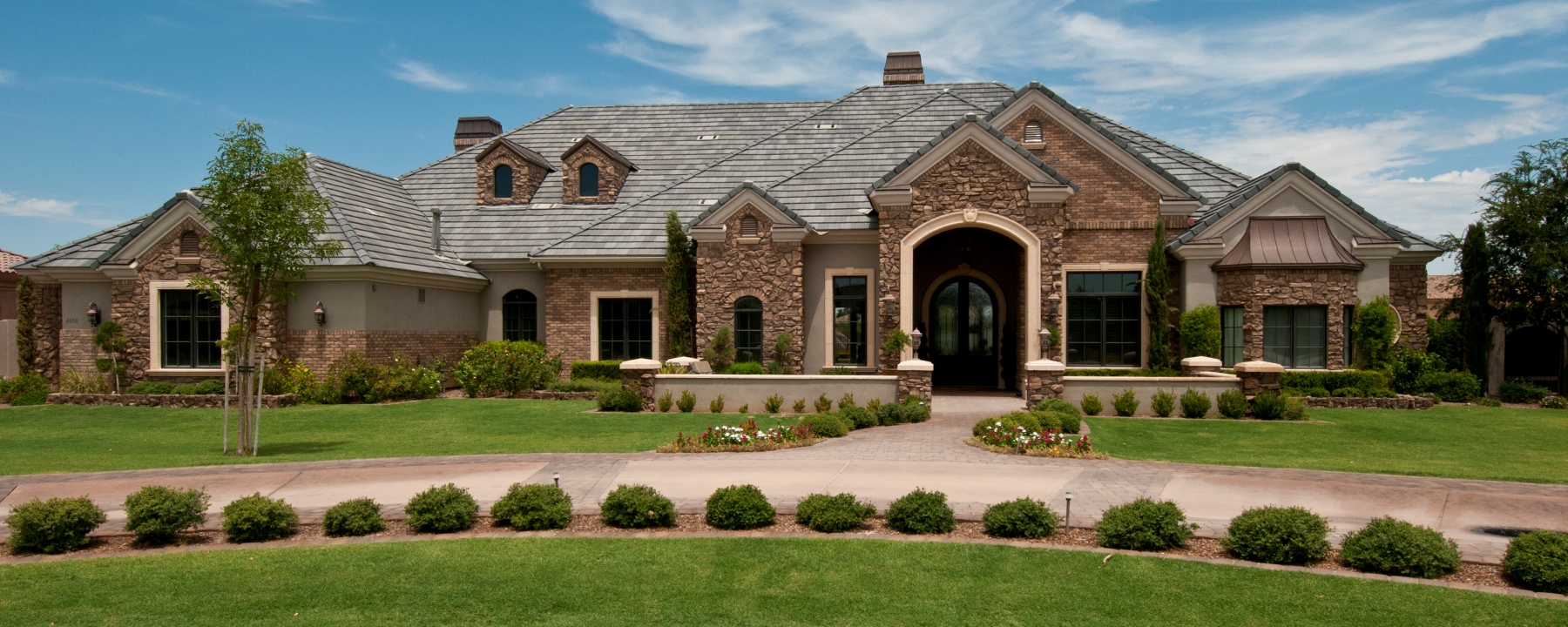
Window surrounds, entry trim, pier caps, quoins, and wall coping — the full facade detail package from a single manufacturer ensures consistent color, profile, and quality across every element.
Beyond columns and entryways, a full cast stone facade program includes the supporting vocabulary of architectural detail that gives the elevation composition and hierarchy. These elements are less prominent individually — but their absence is immediately felt. A facade with columns and no cornice line looks unfinished. A facade with quoins but no window surrounds looks incomplete. The full program is a system.
Quoins
Corner quoins — alternating large and small stone blocks at building corners — are one of the oldest and most legible signals of quality construction. Originally used in masonry buildings to reinforce corners, quoins in cast stone are a design element that communicates solidity and permanence. They're highly effective at adding architectural character to what would otherwise be a flat stucco corner.
Cast stone quoins in Louisiana are a near-universal feature on classical and colonial-influenced estate homes, where the French Creole and antebellum traditions make corner articulation architecturally expected. In Georgia, cast stone quoins appear on both formal classical homes and more casual farmhouse-estate hybrids where the quoin provides a material contrast point against board-and-batten or lap siding.
Cornices
The cornice is the crowning horizontal element at the top of a wall — the transition between facade and roof. A cast stone cornice with classical profiling (bed molding, fascia, corona, and cymatium) gives the entire elevation a finished, architectural quality that no painted trim can approximate. For luxury homes in Arizona and Colorado, cast stone cornices also serve a practical weathering function — projecting beyond the wall face, they protect the facade surface from direct precipitation and sun degradation.
Window & Door Surrounds
Window surrounds — the molded casing around a window opening — are the repetitive vocabulary that gives a facade rhythm and depth. A simple flat architrave adds shadow and framing. A full surround with pilasters, a small entablature, and a crowning element (pediment, cornice, keystone) transforms each window into a compositional unit with its own visual hierarchy.
For precast stone facades in Georgia and across the Southeast, window surrounds in cast stone are increasingly standard on new luxury construction — replacing the painted wood trim that degrades in humidity and requires constant maintenance.
Sills & Lintels
Cast stone window sills and lintels are functional as well as decorative. A projecting sill with a drip-cut underside sheds water away from the wall face — critical in humid climates like Florida, Louisiana, Alabama, and Georgia. A flat stone lintel above a window opening reads as heavier and more permanent than a stucco return or wood lintel.
Banding & Belt Courses
Horizontal bands of projecting cast stone at floor-line or between stories articulate the elevation vertically, creating clear compositional zones and adding shadow that enriches the facade at distance. Belt courses and string courses are among the simplest cast stone elements to fabricate and among the most effective at elevating a flat facade to estate quality.
Classical European vs. Transitional Modern
The most common question from architects and builders specifying cast stone facade elements: Can the same manufacturer produce both a grand French classical elevation and a clean transitional modern one? The answer is yes — and it's one of cast stone's greatest strengths. The manufacturing process is identical. Only the mold geometry changes.
| Design Language | Classical European | Transitional Modern |
|---|---|---|
| Column Profile | Corinthian or Ionic with full classical capital, entasis, and base | Square or simplified round pier with minimal capital or none; clean shaft with reveals |
| Entryway | Full pediment, dentil cornice, pilasters with capitals, arch with keystone | Flat surround with clean reveals, rectilinear hood molding, no pediment |
| Balustrade | Turned Baroque vase balusters with classical top rail | Rectilinear panel inserts or simple square balusters with flat coping rail |
| Quoins | Alternating large/small rusticated blocks, deep reveals | Flat-face flush quoins with shadow-reveal only, or omitted |
| Cornice | Full classical profile: bed molding, corona, cymatium, dentil course | Simple fascia with single cove or ogee, projecting cap |
| Finishes | Limestone-tone, smooth or honed, weathered edge detail | White, light gray, or warm white; acid-washed or sand-blasted for texture |
| Regional Market | Louisiana, Georgia, Alabama, Florida, Texas estate communities | Arizona, Southern California, Colorado, Utah, New Mexico |
The manufacturing cost for classical versus transitional is essentially the same at Mesa Precast. Classical profiles require more complex mold geometry — but complex molds are a standard capability. What drives cost is linear footage and element count, not complexity of profile. A transitional surround is not cheaper than a classical one; it just looks different.
Cost Comparison: Cast Stone vs. Natural Limestone Facade
The cost differential between cast stone and natural limestone for residential facade applications is significant — and well-documented across projects that Mesa Precast has provided pricing for over the past decade.
| Element | Natural Limestone | Cast Stone (Mesa Precast) | Savings |
|---|---|---|---|
| Corinthian Column (12’ height, 16” dia.) | $8,500–$18,000 | $2,800–$5,500 | 55–65% |
| Entry Pediment (full assembly) | $12,000–$28,000 | $4,200–$9,500 | 50–65% |
| Balustrade (per linear foot, installed) | $380–$650/lf | $145–$280/lf | 45–60% |
| Quoin Set (per corner, full story) | $4,500–$9,000 | $1,600–$3,200 | 55–65% |
| Window Surround (full, with keystone) | $2,200–$4,800 | $780–$1,850 | 50–60% |
| Cornice (per linear foot) | $95–$185/lf | $38–$75/lf | 50–60% |
Note: Pricing ranges reflect typical complexity and finish levels. Custom profiles, larger scales, and complex assemblies vary. Use the estimator or request a quote for project-specific pricing.
On a full luxury residential facade program — columns, balustrade, entry surround, quoins, cornice, and window surrounds across a 6,000 sq ft estate home — the total savings versus natural limestone typically range from $85,000 to $220,000+. That difference funds landscaping, a pool, upgraded interior finishes, or simply protects the project pro forma.
Important note on value: Cast stone at these price points is not a compromise — it's a rational material choice. The visual result at normal viewing distances (which is 100% of the time anyone ever sees the facade) is indistinguishable from natural limestone. The only buyers who insist on natural limestone for facades are a small segment of the ultra-luxury market where material authenticity is part of the brand. For every other luxury project, cast stone is the correct spec.
Regional Markets: AZ, TX, FL, SoCal, CO, GA & Beyond
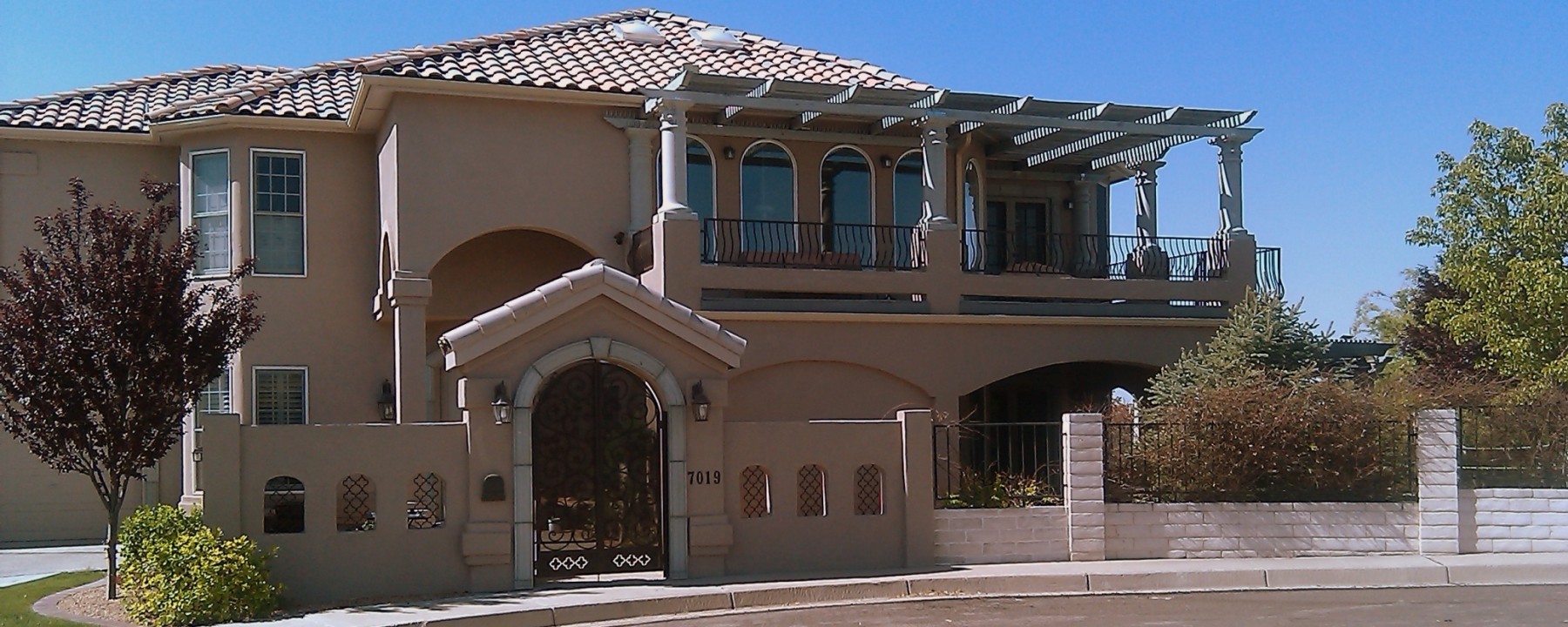
Across Arizona, Texas, Florida, Southern California, Colorado, and Georgia — luxury residential architects specify cast stone and GFRC facades for the same reason: authentic stone quality at a price that fits custom home budgets.
Cast stone facade elements perform differently in different climates — and the architectural traditions that drive demand vary significantly by region. Here's how the major markets for cast stone residential facades break down.
Arizona
Luxury home facades in Arizona are defined by the covered entry portico — almost universal in the market above $2M. Cast stone columns at the entry are the dominant specification for portico construction in Phoenix, Scottsdale, Paradise Valley, and Sedona luxury communities. The desert climate is ideal for cast stone: minimal freeze-thaw cycling, low humidity, and direct sun that actually improves the stone's visual character over time. Custom stone entry columns in Colorado and Arizona are among the highest-volume products Mesa Precast ships to the Mountain West.
Southern California
The dominant luxury residential styles — Mediterranean Revival, Spanish Colonial Revival, Tuscan, and Contemporary Coastal — all have strong cast stone components in their traditional vocabulary. Stone balustrades in Southern California are most prominent in coastal Malibu and Laguna Beach architecture, where the raised terrace with balustrade is both aesthetic and functional (framing views while managing grade transitions). The premium Los Angeles and Orange County markets regularly spec full cast stone facade programs.
Colorado
Colorado's luxury residential markets — Vail, Aspen, Denver's Cherry Creek, and mountain communities like Telluride — mix classical influence with contemporary mountain aesthetics. Custom stone entry columns in Colorado appear most frequently in transitional-classical profiles: simplified Tuscan columns supporting timber-framed covered entries, cast stone balustrades on mountain decks, and entry surrounds that bridge the gap between formal classical and contemporary mountain vernacular. Freeze-thaw cycling is a real consideration in Colorado; Mesa Precast's mix design is engineered for high-altitude winter conditions.
Texas
The Texas luxury residential market is enormous and diverse. Cast stone columns residential Texas projects span everything from full classical Corinthian porticos in Dallas and Houston estate neighborhoods to clean transitional entry columns on Hill Country compound-style homes in Austin and San Antonio. Texas is also one of the strongest markets for cast stone balustrades — primarily at entry staircases and raised front terraces on formal estate homes. The Texas market's scale and construction volume make it one of Mesa Precast's highest-volume residential states.
Florida
Florida's luxury residential facade market is dominated by Mediterranean and Spanish Colonial-influenced architecture, where cast stone is the defining material. Cast stone entryways in Florida — column porticos, arched surrounds with keystones, pilastered door frames — are standard on new luxury construction in Palm Beach, Naples, Miami Beach, and Sarasota. The humidity and salt-air environments of coastal Florida require careful material specification; Mesa Precast's cast stone is formulated for these conditions and has extensive Florida project history.
Georgia & the Southeast
Georgia, Alabama, Louisiana, and the broader Southeast have the strongest traditions of classical residential architecture in the country. Precast stone facades in Georgia tend toward the formal — full Corinthian or Ionic column porticos, classical entryway pediments, quoins at corners, and balustrades at raised terraces. Atlanta's luxury markets in Buckhead, Vinings, and East Cobb have long specified cast stone facade elements on new classical estates. In New Orleans-area Louisiana, the Creole plantation tradition drives demand for cast stone balustrades and classical entry details on historic-influenced new construction.
Utah & New Mexico
Utah's Wasatch Front luxury residential market — Park City, Salt Lake City's Avenues, and St. George — and New Mexico's Santa Fe and Albuquerque luxury segments represent emerging strong markets for cast stone residential facades. The Southwest vernacular (adobe, Spanish Colonial, Territorial) doesn't call for classical columns — but it does call for cast stone entry surrounds, sills, lintels, and decorative corbels that integrate with the regional aesthetic. Mesa Precast works with Utah and New Mexico architects to adapt classical profiles to regional vernacular requirements.
How Architects & Builders Specify Cast Stone for Residential
The specification process for cast stone facade elements at Mesa Precast follows a straightforward workflow that's designed to integrate with residential project timelines.
Step 1: Concept Review & Budgetary Pricing
Early in design development — or even in schematic design — the architect or builder provides Mesa Precast with elevation drawings, profile sketches, or reference images. We review the program and provide budgetary pricing within 48 hours. This early-stage pricing is essential for proforma accuracy — facade element costs can be significant, and late-stage redesigns to reduce spec cost are expensive and time-consuming.
The fastest way to get budgetary pricing: use the online estimator, which generates instant rough pricing by product type, quantity, and profile complexity.
Step 2: Shop Drawing Development
Once the project proceeds to design development and the cast stone scope is confirmed, Mesa Precast produces shop drawings — detailed dimensional drawings of every cast stone unit, with elevations, sections, and installation notes. Shop drawings are submitted for architect review and approval. This phase typically takes 2–4 weeks and is where the final detail profiles, joint locations, and anchor conditions are resolved.
Step 3: Manufacturing
With approved shop drawings, Mesa Precast begins mold fabrication and casting. For standard profiles from the existing mold library, manufacturing begins immediately. For custom profiles, mold fabrication adds 2–3 weeks before casting starts. Total manufacturing lead time from approved shop drawings: 8–12 weeks for most residential programs.
Step 4: Delivery & Installation
Mesa Precast ships via flatbed freight to job sites across the Sun Belt and continental United States. The company provides installation guides and technical support for GCs and masons unfamiliar with cast stone. For complex assemblies — tall column stacks, multi-section balustrade runs — a Mesa Precast technical representative can be on-site for critical installation phases.
Residential specifications note: Cast stone facade elements are typically specified in the 04720 (Cast Stone Masonry) CSI section. Mesa Precast provides specification language and submittals formatted to CSI standards for architect use in project specifications. Contact us for section 04720 spec language.
Get Started: From Concept to Installed Cast Stone Facade
The facades that define luxury residential architecture in Arizona, Texas, Florida, Southern California, Georgia, Colorado, Louisiana, Alabama, Utah, and New Mexico don't happen by accident. They're designed, specified, and built with intention — and the material that makes them economically feasible without compromising the visual result is cast stone.
Mesa Precast has been manufacturing cast stone and precast architectural elements for luxury residential and commercial construction for decades. The portfolio spans Corinthian column porticos on Dallas estate homes to classical balustrades on Malibu Mediterranean revivals to transitional entry columns on Scottsdale modern estates. Any profile. Any classical order. Any finish. Any scale.
To start the process:
- Use the estimator for instant budgetary pricing by product type, quantity, and profile
- Request a quote with your drawings or concept images for firm pricing with shop drawing development included
- Our team reviews your project and responds with material recommendations, timeline, and per-unit pricing within 48 hours
We manufacture and ship to Arizona, Southern California, Colorado, Utah, New Mexico, Texas, Louisiana, Alabama, Florida, and Georgia — and across the continental United States.
Ready to Design Your Facade & Entryway?
Get budgetary pricing in 48 hours. Classical Corinthian or clean transitional — any profile, any scale, any finish.
Use the Estimator → Request a Quote →