Search “precast concrete cost” and you’ll find DIY forums and generic contractor guides. Almost nothing from actual architectural precast manufacturers. That gap is deliberate — most of the industry keeps pricing opaque to force architects into quote-request cycles before any number gets disclosed.
This guide changes that. Below is real cost data for cast stone, GFRC, and natural stone facades — broken down by product type, pricing model, and the factors that move numbers up or down.
Who this is for: Architects and project managers building early-stage budgets for facade projects. These are ballpark ranges for planning purposes. Final pricing depends on your specific profiles, quantities, and delivery location — use the instant estimator tool for project-specific numbers.
Why Cost Transparency Matters in Architectural Stone
Facade material decisions get locked in at schematic design — often before any actual pricing exists. Architects specify natural limestone, get into design development, then discover the material costs three times the project budget. By that point, redesigning the facade isn’t just expensive. It’s schedule-breaking.
Precast concrete — cast stone and GFRC — solves the cost problem without solving the information problem. The materials are genuinely affordable compared to quarried stone, but without ballpark numbers at the start, architects can’t use them confidently in concept presentations or owner budget conversations.
The result: architects default to generic stone allowances, owners get sticker shock at bid time, and value-engineering happens under pressure rather than by design.
Precast Concrete Cost Ranges by Product Type
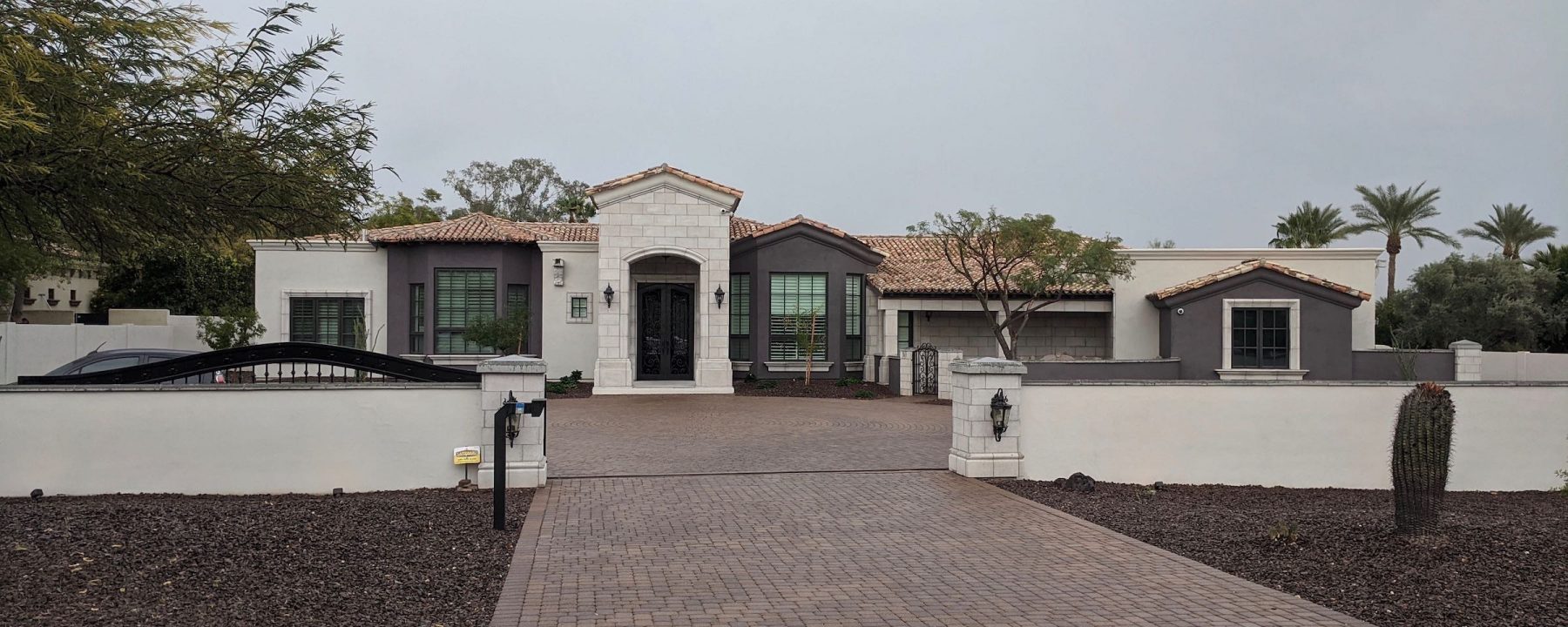
Wall coping, door surrounds, and window surrounds are among the most cost-effective precast applications — typically $18–$45/LF installed, with major visual impact on any facade.
Precast concrete products span a wide range of price points depending on complexity, volume, and whether they’re catalog items or custom fabrications. Here are working ranges for the most common architectural elements:
Columns & Column Wraps
Smooth round columns run lower; fluted or battered columns with capital and base assemblies drive the high end. Standard 12" diameter smooth columns are catalog items; custom large-scale work is quoted separately.
Pool Coping & Coping Trim
Standard 12" bullnose coping in cast stone starts around $28/LF. Custom profiles, wider overhangs, or premium finishes push toward $75. GFRC coping runs slightly higher due to thinner-section tooling costs.
Window & Door Surrounds
Simple flat sills and headers start at $35/LF. Full surround assemblies with jambs, sill, and keystone run $60–$90/LF depending on profile depth and unit sizes. Quantity discounts apply significantly above 50 openings.
Balustrades & Railings
Standard balusters with top and bottom rails land $95–$150/LF for cast stone. Carved or turned profiles and GFRC balustrades for upper-story applications run toward $280. Always confirm structural attachment method with the fabricator.
Cornice & Parapet Cap
Standard cornice profiles in cast stone start around $45/LF. Multi-course assemblies with dentil bands, fascias, and frieze elements built as a system can reach $120/LF installed. Lead time is longer for complex multi-piece assemblies.
Custom Facade Panels
GFRC flat panels with relief patterns: $40–$65/SF. Cast stone coursing and ashlar: $45–$75/SF. Complex relief panels with deep carving or architectural features push to $95/SF. Compare to natural limestone at $150–$400/SF.
Cast Stone vs GFRC vs Natural Stone: Cost Comparison
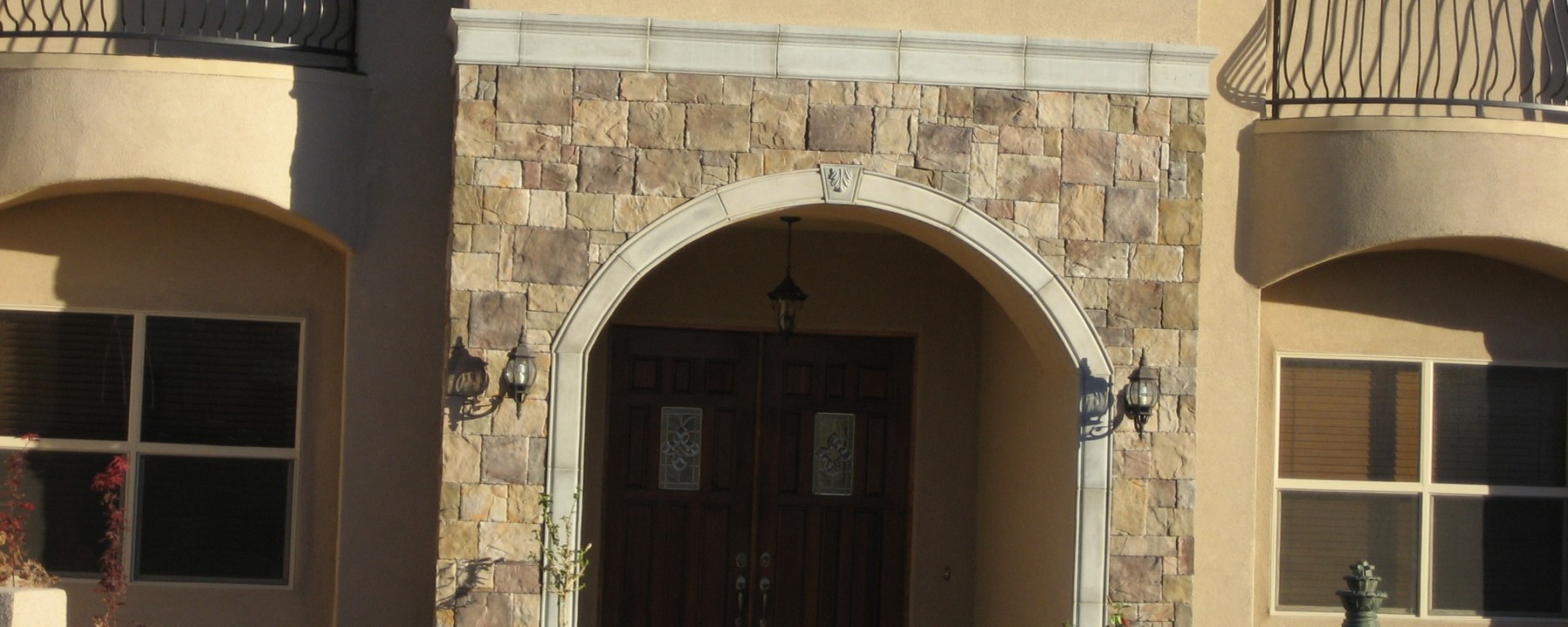
Cast stone, architectural precast, and GFRC — three materials, one manufacturer. Mesa Precast produces all three with consistent color matching, so multi-material projects stay on-budget and on-spec.
The three materials share aesthetic goals but diverge significantly on cost structure. Natural stone pricing is dominated by quarrying, yield loss, and shipping weight. Manufactured products shift cost to tooling and labor — which scales predictably with quantity.
| Material | Typical Cost (per SF) | Installation Premium | Lead Time |
|---|---|---|---|
| Cast Stone | $40–$75 | Standard masonry | 6–10 weeks |
| GFRC | $35–$65 | Lower (50% lighter) | 8–12 weeks |
| Natural Limestone | $150–$300 | Higher (heavier, fragile) | 12–24 weeks |
| Natural Granite | $180–$400 | Higher (heavy equipment) | 14–28 weeks |
| Thin Stone Veneer | $25–$60 | Standard masonry | 4–8 weeks |
These are material-only costs. Total installed cost adds installation labor, structural support (significant for natural stone and heavy cast stone on upper stories), and delivery. On a 5,000 SF facade, the difference between cast stone and natural limestone can exceed $500,000 — in material alone, before installation.
Factors That Affect Precast Concrete Pricing
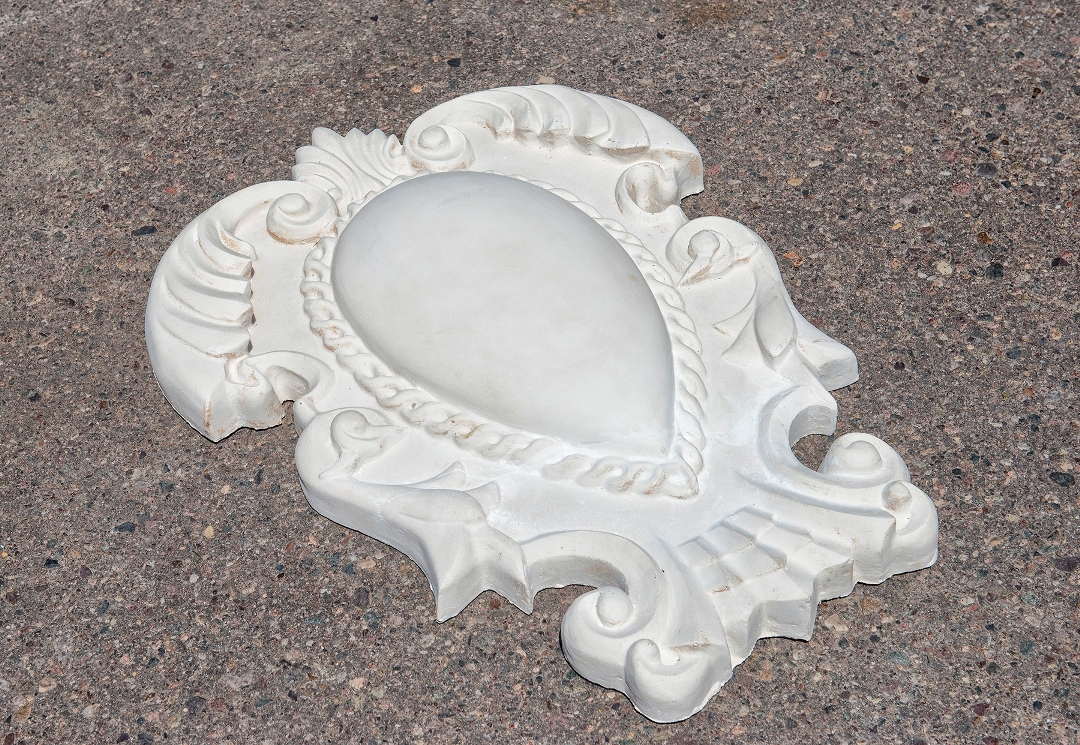
Profile complexity is the biggest pricing lever. Standard corbels and trim run $35–$80/unit; intricate carved ornamentals with deep relief can reach $200–$400/unit. Custom mold setup amortizes over quantity.
The ranges above are starting points. Every project shifts the number based on five key variables:
1. Size and Profile Complexity
Small, intricate profiles cost more per linear foot than large simple ones. A 6" flat sill can run $20/LF. A 6" ogee-profile sill with undercut might be $55/LF — same material, very different tooling and pour complexity. Complex intersecting profiles (corner pieces, miter returns, radius sections) also carry premium pricing because they require custom mold work.
2. Finish Selection
Standard smooth finish is baseline. Architectural finishes add cost:
- Sandblasted: +10–15% — removes form skin, reveals aggregate
- Bush-hammered: +15–25% — mechanical texturing, labor-intensive
- Hand-tooled: +20–35% — replicates hand-chiseled stone character
- Acid wash: +8–12% — opens surface texture, exposes fine aggregate
3. Quantity — The Biggest Lever
Precast pricing is heavily mold-amortized. A custom mold that costs $800 to build spreads differently across 10 pieces vs 200 pieces. At 10 units, you pay $80/unit in tooling. At 200 units, $4/unit. Architects who batch similar profiles — standardizing sill dimensions across a building rather than 8 custom sizes — consistently save 15–30% on total facade cost.
4. Delivery Distance
Precast ships by flatbed truck. Cost is approximately $3–6 per loaded mile for full loads. A project 800 miles from the plant pays $8,000–$15,000 more in freight on a typical mid-rise facade order than a project 100 miles out. Some manufacturers offer regional pricing tiers; always ask about freight included vs FOB plant. Architects working in Texas, Arizona, Louisiana, and the broader Gulf States and Southwest corridor have a structural shipping advantage with Mesa Precast — see the regional guide to architectural precast and GFRC in the Gulf States and Southwest for project-specific context on regional availability and lead times.
5. Rush Lead Times
Standard production slots are priced into the base. Expedited production — compressing an 8-week lead time to 4 weeks — typically adds 15–25% as a rush premium. This is one of the most common unplanned cost adders on fast-track projects.
How to Budget a Precast Project
Architectural precast pricing uses three models depending on product type. Use the right one for each element category:
Per Linear Foot (LF) — Most Common
Used for moldings, trim, coping, sills, headers, cornices, balustrades, and column elements. Take your linear quantity from drawings and apply the LF rate. Best for early-stage budgeting because quantities come directly off floor plans and elevations without detailed take-off work.
Per Square Foot (SF)
Used for flat or near-flat panel work: ashlar coursing, rusticated base, smooth facade cladding, and large GFRC panels. Measure the face area of the scope and apply the SF rate. Be precise about what counts as “face area” — returns, soffits, and reveals are often priced separately.
Per Unit
Used for column capitals, bases, keystones, corbels, ornamental medallions, and other discrete elements. Manufacturers publish catalog pricing by unit; custom pieces get quoted individually. Unit pricing is most accurate but requires the most complete design information.
Budget rule of thumb: For early schematic design budgeting, use $55–$75/SF of facade area for a cast stone envelope with moderate profile complexity. This assumes standard cornice, sill, and trim work — not heavy ornament. Adjust up for high-detail work; down for simple reveals and flat coursing.
Hidden Costs Architects Miss
Understanding the manufacturing process helps you budget accurately. Mesa Precast provides transparent pricing with line-item breakdowns — no hidden fees for standard products and services.
These line items reliably appear at bid time but rarely make it into early concept budgets:
Installation Labor
Precast concrete requires masonry or stone-setting labor. Budget $15–$30/SF for installation on top of material cost. Upper-story work, difficult site access, and winter conditions all push installation cost higher. For projects where a GC is pricing this in early bid stages, add a 20% contingency on installation — it moves more than material pricing.
Structural Support and Anchoring
Precast elements don’t float. They need embedded anchors, support angles, or shelf angles at each floor. This structural work is often scope of the structural engineer and GC, not the precast supplier — but it’s real cost. GFRC is lighter and reduces this cost significantly; heavy cast stone on upper stories can require dedicated structural support that adds $8–$20/SF to the total facade system cost.
Mock-Ups and Sample Approvals
Most specifications require at least one mock-up panel before production. Budget $2,000–$8,000 for a field mock-up depending on complexity and scope. Some manufacturers include sample units in the contract; others price separately. Confirm early.
Lead Time Rush Fees
Already covered above, but worth restating: expedited delivery is a budget item, not a favor. On a $200,000 precast contract, a 20% rush premium is $40,000 you didn’t plan for. Award precast subcontracts early.
Sealant and Joint Materials
Precast joints require high-performance sealant — typically urethane or silicone at $2–$6/LF. On a building with 10,000 LF of joints, that’s $20,000–$60,000. It’s not cast stone cost, but it’s facade system cost that often lives in the same bid package.
The Mesa Precast Advantage: Pricing Without the Runaround
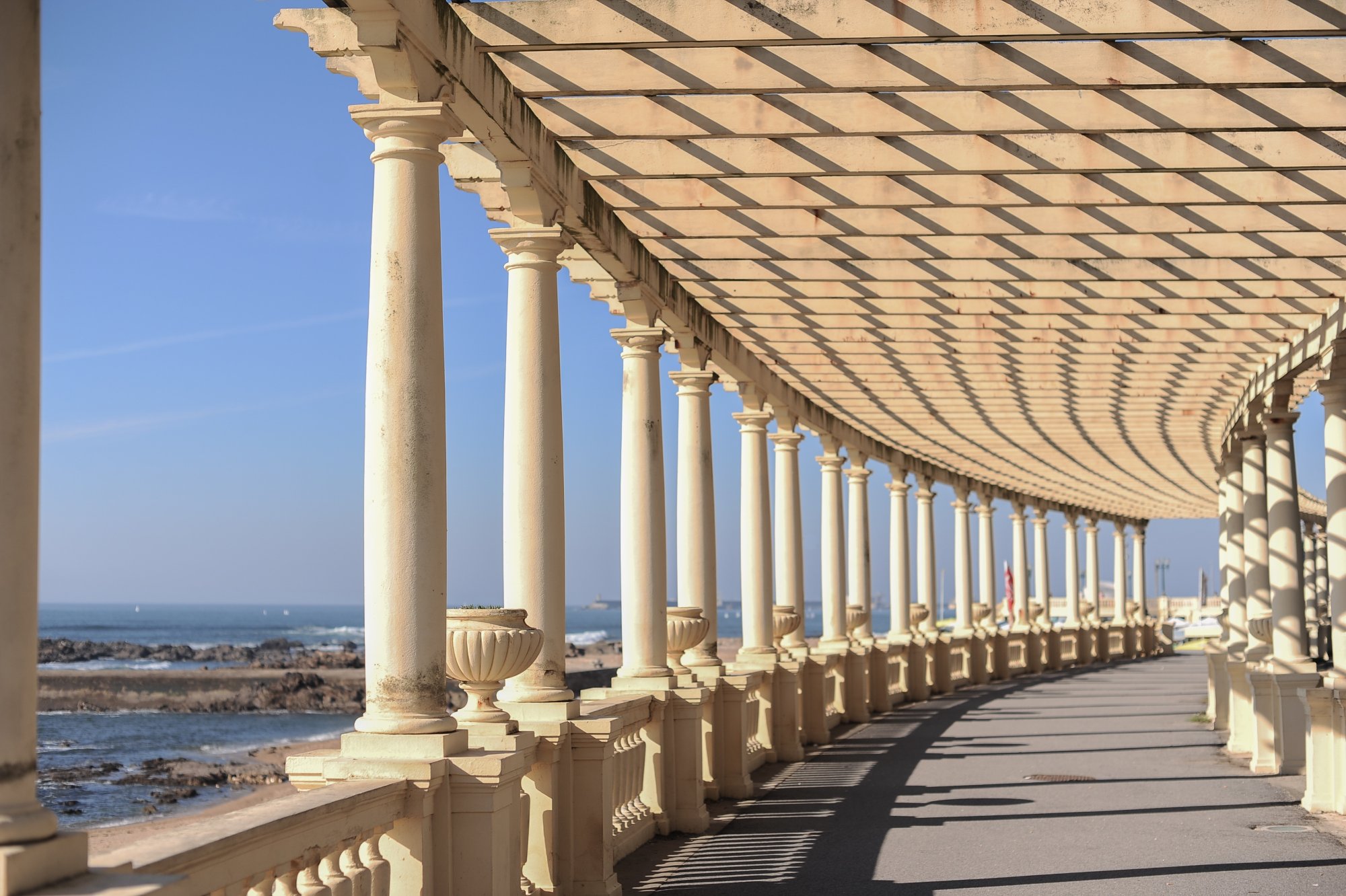
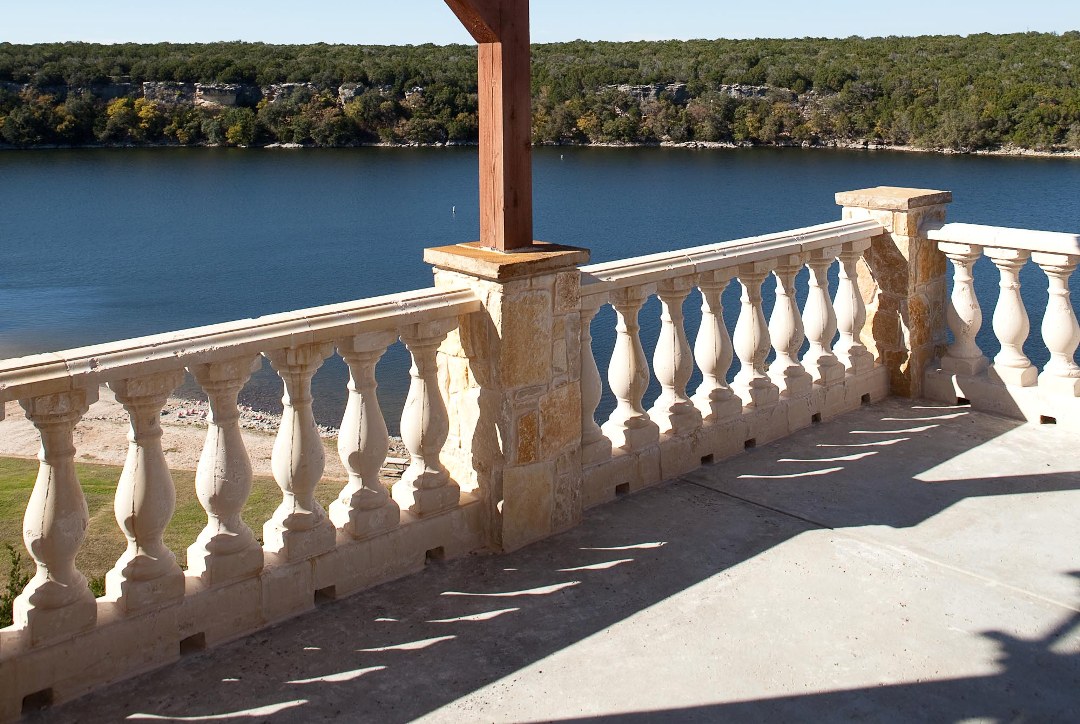
Classical colonnade pergola walkway with cast stone columns, balustrade, and decorative urns along a coastal estate — an example of the full-system architectural precast capability Mesa Precast provides. Projects at this scale involve columns, rails, cap stones, and accent elements all manufactured to a coordinated design and delivered to the site ready to install.
Mesa Precast manufactures GFRC and cast stone for architectural facades, residential custom work, and commercial projects throughout the Gulf States, Southwest, and beyond. Unlike most manufacturers, Mesa publishes working price ranges and provides instant estimates through a self-serve tool — so architects can budget accurately before committing to a spec.
What that means in practice:
- No quote-first gatekeeping — real numbers early in design
- Both materials from one fabricator — GFRC and cast stone with consistent quality standards
- Direct manufacturer pricing — no dealer markup or distributor layer
- Standard catalog + custom capability — fast lead times on standard profiles, full custom for complex work
- Regional shipping advantage — Gulf States and Southwest projects benefit from shorter freight hauls
For architects used to chasing pricing through three calls and a formal RFQ, the difference is significant. You can test scenarios — “what if we shift to GFRC on the upper four floors?” — in minutes instead of weeks.
These are not hypothetical advantages. The Louisiana Museum of Sports Hall of Fame required 1,150 unique curved cast stone panels fabricated with BIM and CNC coordination — the kind of project where early cost clarity defines whether the design survives value engineering. At Reagan Place in Dallas, Mesa Precast and Advanced Architectural Stone delivered cast stone, architectural precast, and GFRC on a single residential project with coordinated color matching across all three materials. At Cook Children’s Hospital in Fort Worth, the challenge was matching 25-year-old existing stone with three custom batch mixes — the kind of multi-material coordination that only works when one manufacturer controls the full scope. Each of these projects started with a budget conversation that the team could have clearly and confidently.
Get an Instant Estimate for Your Project
No drawings required. No sales call. Enter your project scope and get working cost ranges in under 2 minutes.
Use the Free Estimator →