In This Guide
- Why These Materials Are Surging Across the Sun Belt
- Cast Stone, Precast & GFRC: What's the Difference?
- Cost Comparison: What You Actually Pay
- Modern & Clean-Line Designs That Work Beautifully
- Traditional & Classical Architecture Applications
- Built for Gulf Coast Humidity, Hurricanes & Southwest Heat
- Mesa Precast: What We Make & How We Work
- Award-Winning Craftsmanship: Real Projects, Real Results
- How to Get Started on Your Project
Drive through any new master-planned community in The Woodlands, Scottsdale, or Baton Rouge and you'll spot it immediately: the warm, textured weight of stone on homes that would have been stucco-and-paint five years ago. Columns. Lintels. Balustrades. Cornices. Exterior quoins framing front entries. Window surrounds that catch light in a way vinyl trim never could.
Natural stone? Almost certainly not. The economics don't work at this scale. What you're seeing is architectural precast, cast stone, and Glass Fiber Reinforced Concrete (GFRC) — materials that have quietly become the preferred choice of homebuilders and custom home owners who want the luxury aesthetic without the premium material cost.
This guide is specifically for homeowners, custom builders, and developers in the Gulf States (Texas, Louisiana, Alabama, Georgia, Florida) and the Southwest (Arizona, New Mexico, Southern California) — the regions where these materials have seen the fastest growth, and where the regional climate makes them particularly smart choices.
Why Architectural Stone Materials Are Surging Across the Sun Belt
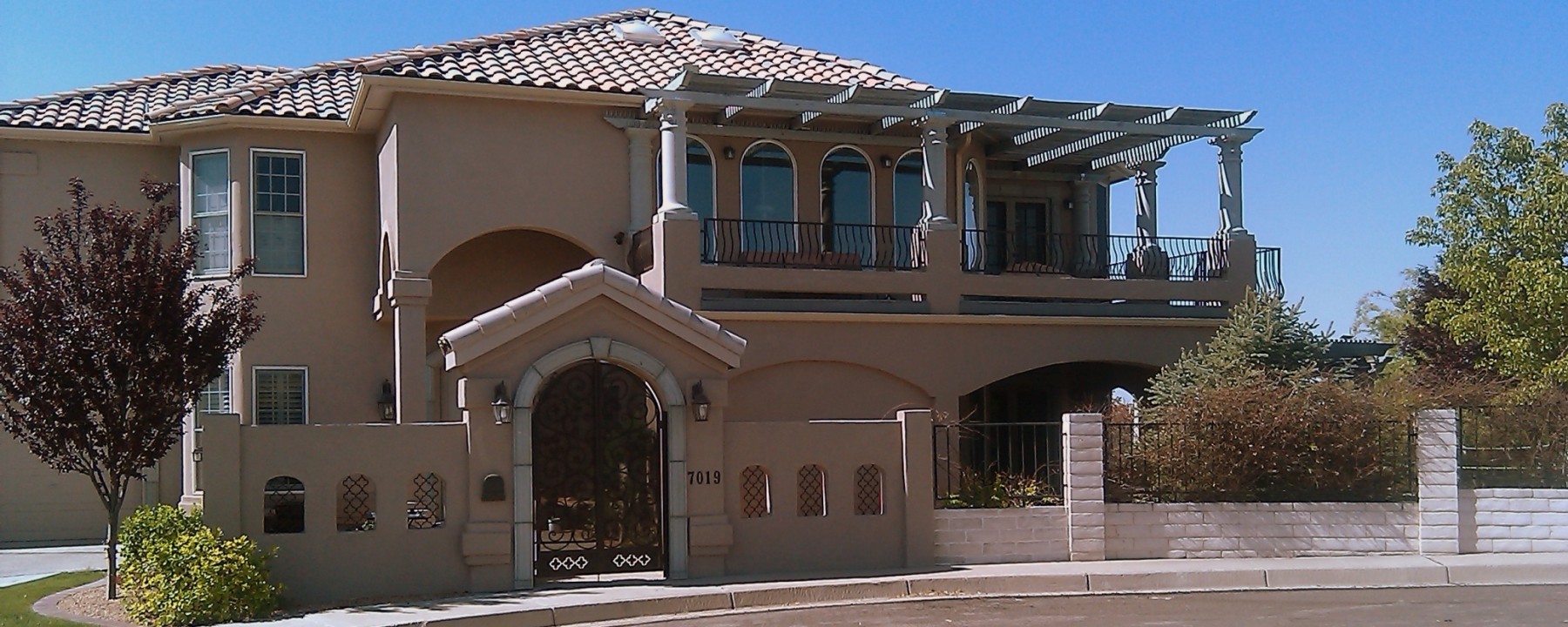
The Sun Belt construction boom is driving demand for architectural stone materials that can deliver authentic stone quality at custom home budgets — cast stone and GFRC fill that gap perfectly.
Three forces are converging in 2026 to accelerate this trend.
First, homebuyers have changed what they expect. The luxury home market in Texas and Florida alone added hundreds of thousands of units over the past decade. Buyers who relocated from the Northeast and West Coast brought expectations for stone and masonry that the local market hadn't historically demanded. A stucco box in Frisco that would have sold easily in 2018 gets passed over today in favor of a competitor with stone accents at the entry, stone veneer on the chimney, and precast sills and headers on every window.
Second, natural stone supply constraints drove prices higher. Turkish limestone, Italian travertine, and domestic granite have all seen significant cost increases due to quarrying limits, shipping disruptions, and labor costs. The price gap between natural stone and high-quality manufactured alternatives has never been wider — or more visible to value-conscious builders.
Third, the quality of manufactured stone has caught up. The architectural precast and cast stone of today is not the poured-concrete-with-aggregate look of the 1990s. Modern manufacturing — precision molds, high-strength mixes, custom color matching, surface texture control — produces results that are genuinely difficult to distinguish from quarried limestone or sandstone at residential viewing distances.
The key insight: In architectural applications, what matters is how the material looks, performs, and ages — not its geological origin. Cast stone, properly manufactured and installed, achieves all three at a fraction of the cost.
Cast Stone, Architectural Precast & GFRC: What's the Difference?
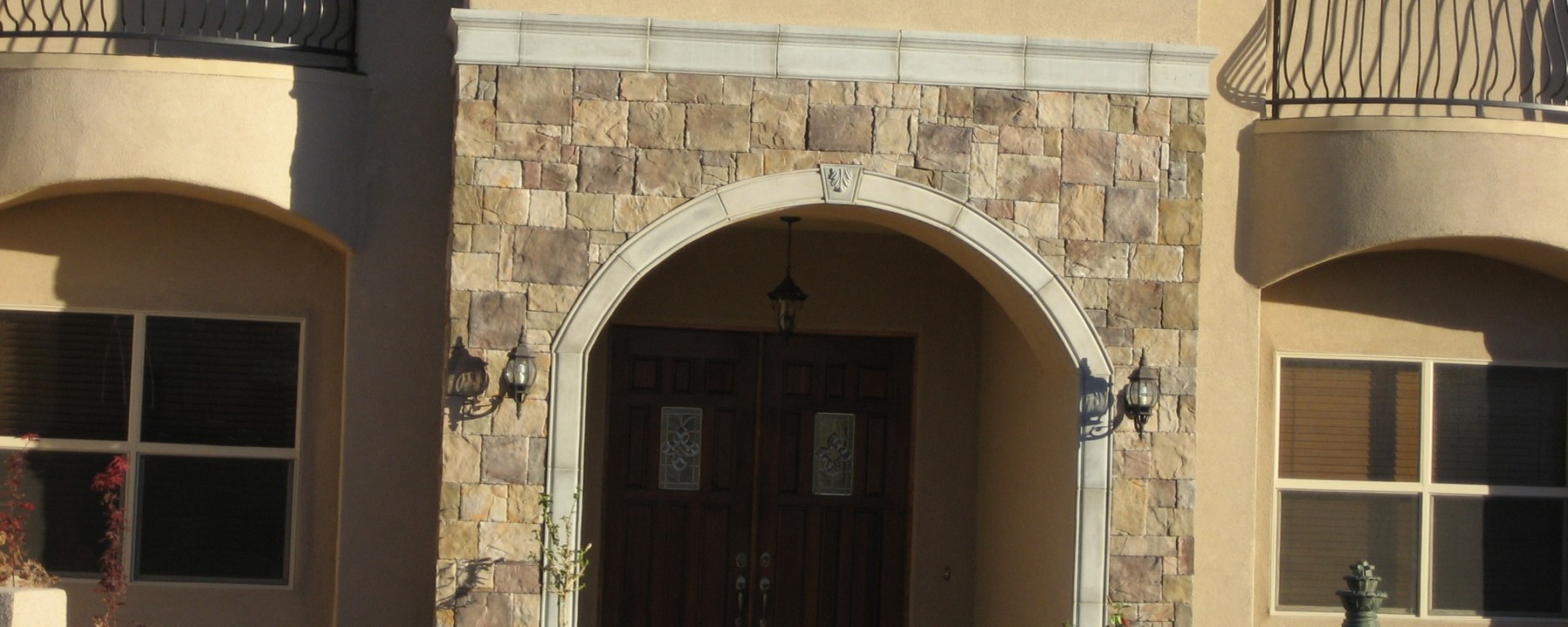
Three materials, one manufacturer: cast stone for classical profiles and heavy ornament, architectural precast for large structural panels, and GFRC for lightweight complex geometry. Mesa Precast produces all three.
These three materials are often grouped together because they serve similar architectural purposes, but they have distinct compositions and ideal use cases. Understanding the differences helps you specify the right material for each application.
Cast Stone
Cast stone is a refined architectural concrete made to simulate natural cut stone. It's produced by casting a precisely proportioned mixture of fine aggregates (typically limestone or quartz-based), Portland cement, and mineral pigments into detailed molds. The result is a dense, homogeneous material with compressive strength typically exceeding 6,500 psi — stronger than most natural limestone.
Cast stone excels at decorative elements: columns, balusters, cornices, sills, lintels, keystones, quoins, and caps. It holds fine detail exceptionally well and can be produced in virtually any profile or shape. Lead times run 4–8 weeks from approved shop drawings, compared to 12–24 weeks for comparable natural stone.
Architectural Precast Concrete
Architectural precast covers a broader category: structural and semi-structural panels, cladding, and large-format elements cast in controlled factory conditions. Unlike cast stone (which is purely decorative), architectural precast can carry load and is frequently used for entire wall systems, window bays, and large feature elements that would be impractical with natural stone.
Large residential applications — prominent entry features, porte-cochères, covered outdoor living pavilions — often combine architectural precast for the major structural elements with cast stone for the refined decorative details.
GFRC (Glass Fiber Reinforced Concrete)
GFRC is an engineered composite: Portland cement reinforced with alkali-resistant glass fibers rather than steel rebar. The fiber reinforcement allows panels to be made dramatically thinner and lighter — a GFRC panel that looks identical to a 3-inch-thick cast stone element may be only ¾ to 1 inch thick and weigh a fraction as much.
This weight advantage makes GFRC the preferred choice for large exterior cladding panels, column covers over wood-frame structures, and any application where load on the substrate is a concern. GFRC is also highly resistant to cracking under thermal expansion and contraction — a critical advantage in the temperature swings of Arizona and New Mexico.
GFRG (Glass Fiber Reinforced Gypsum)
A fourth material worth knowing: GFRG (Glass Fiber Reinforced Gypsum) is the interior equivalent of GFRC. It's used for ornamental ceiling work, interior columns, decorative cornices, and trim elements. If you're building or renovating a home with grand interior architectural details — coffered ceilings, grand foyer columns, elaborate crown molding — GFRG delivers those elements at a fraction of the cost of plaster or carved wood.
Cost Comparison: What You Actually Pay
The cost advantage of manufactured architectural materials over natural stone is real and substantial. Here's how the numbers break down across typical residential applications in Gulf States and Southwest markets (2025–2026 pricing ranges):
| Application | Natural Stone | Cast Stone / Precast | GFRC | Savings |
|---|---|---|---|---|
| Window sills & lintels (per LF, installed) | $85–$140 | $35–$65 | $30–$55 | 45–60% |
| Exterior columns (8 ft, full round) | $2,200–$4,800 | $800–$1,800 | $650–$1,400 | 50–70% |
| Balustrade system (per LF, installed) | $220–$380 | $90–$160 | N/A | 55–60% |
| Exterior coping / wall caps (per LF) | $55–$95 | $22–$45 | $18–$38 | 50–60% |
| Custom entry arch / keystone feature | $4,500–$9,000+ | $1,800–$3,500 | $1,400–$2,800 | 50–65% |
| Exterior facade cladding panels (per SF, installed) | $45–$90 | $22–$40 | $18–$35 | 40–55% |
These figures represent total installed cost — material plus labor. Natural stone installation is significantly more labor-intensive due to weight, irregular sizing, and the skill required to cut and fit quarried material. Manufactured architectural elements are designed for efficient installation with predictable dimensions and lower per-unit weight.
Real-world example: A 5,000 SF custom home in the Houston suburbs with a fully detailed stone exterior — columns, window trim, entry arch, balustrades, chimney cap — might run $180,000–$250,000 in natural limestone. The same specification in cast stone and GFRC: $70,000–$110,000. The visual result is essentially identical from the curb.
Modern & Clean-Line Designs That Work Beautifully
One of the persistent myths about cast stone and precast is that they're only suited for traditional or classical architecture. This is simply wrong. Modern residential design in Arizona, Southern California, and coastal Florida has fully embraced these materials for very different reasons.
Smooth-Face and Board-Formed Precast
Contemporary architecture prizes the tactile weight of concrete-look materials — but with consistent, controlled surface quality that field-poured concrete can't deliver. Architectural precast with a smooth or lightly textured face achieves exactly this: the honest material aesthetic that defines Desert Modern and California Modern design, without the variability of poured-in-place concrete.
In Scottsdale and Paradise Valley custom homes, smooth architectural precast is used for entry portals, interior courtyard walls, pool surrounds, and large exterior feature walls — delivering that monolithic, gallery-quality surface that frames the architecture without distracting from it.
GFRC for Large-Format Clean-Line Panels
The thin-panel capability of GFRC makes it ideal for the large, uninterrupted surface planes that contemporary design demands. A GFRC panel can span 10–12 feet with a consistent face texture and color, installed over wood-frame construction without the structural implications of natural stone. This is how production luxury builders in Southern California achieve the concrete-and-stone aesthetic at project economics that pencil out.
Warm Stone Tones for Mediterranean and Transitional Styles
The transitional style that dominates Florida's high-end residential market — somewhere between Mediterranean and contemporary — calls for warm limestone-toned materials with clean profiles. Cast stone in buff, antique white, or soft beige tones, used for window surrounds, entry elements, and exterior trim, hits exactly this aesthetic. The material reads as authentic stone while the clean-cut profiles keep the design feeling current rather than heavy or dated.

Louisiana Sports Hall of Fame
Cast stone realizing the vision of Cane River channels — Natchitoches, Louisiana

Gulf States Toyota
Architectural cast stone for a landmark Texas commercial project
Traditional & Classical Architecture Applications
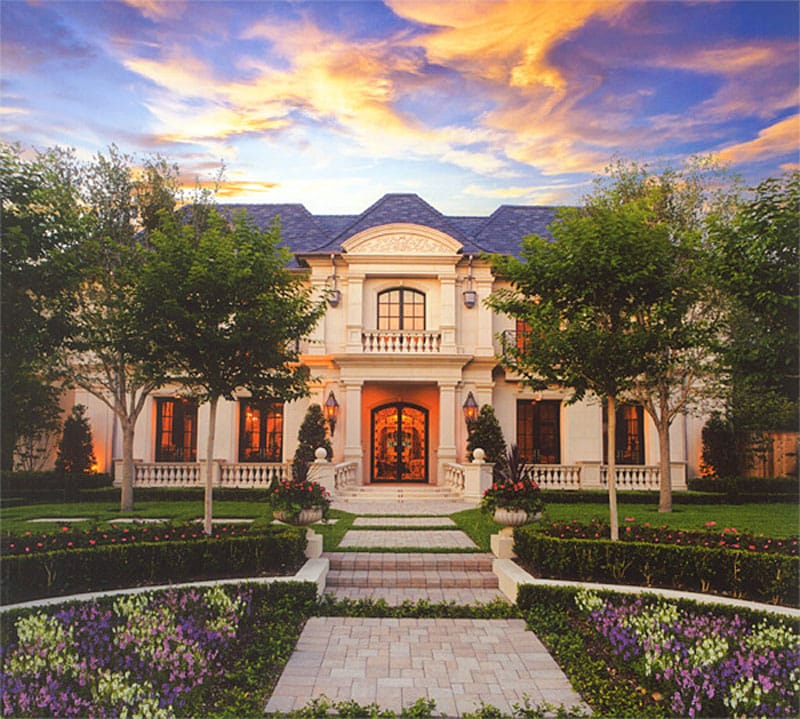
French chateau-style luxury estate with full cast stone facade — balustrades, arched window surrounds, and classical trim throughout. This level of architectural detail is the specialty of Mesa Precast | ArchStone Global, executed in manufactured cast stone at 40–60% below the cost of equivalent quarried limestone.
This is where cast stone has the longest track record — and where the quality advantage over lesser alternatives is most apparent. Georgian, Federal, Mediterranean Revival, French Country, and Classical Colonial architecture all depend on precise, repeatable architectural stone details. Cast stone was designed for exactly this.
Columns and Pilasters
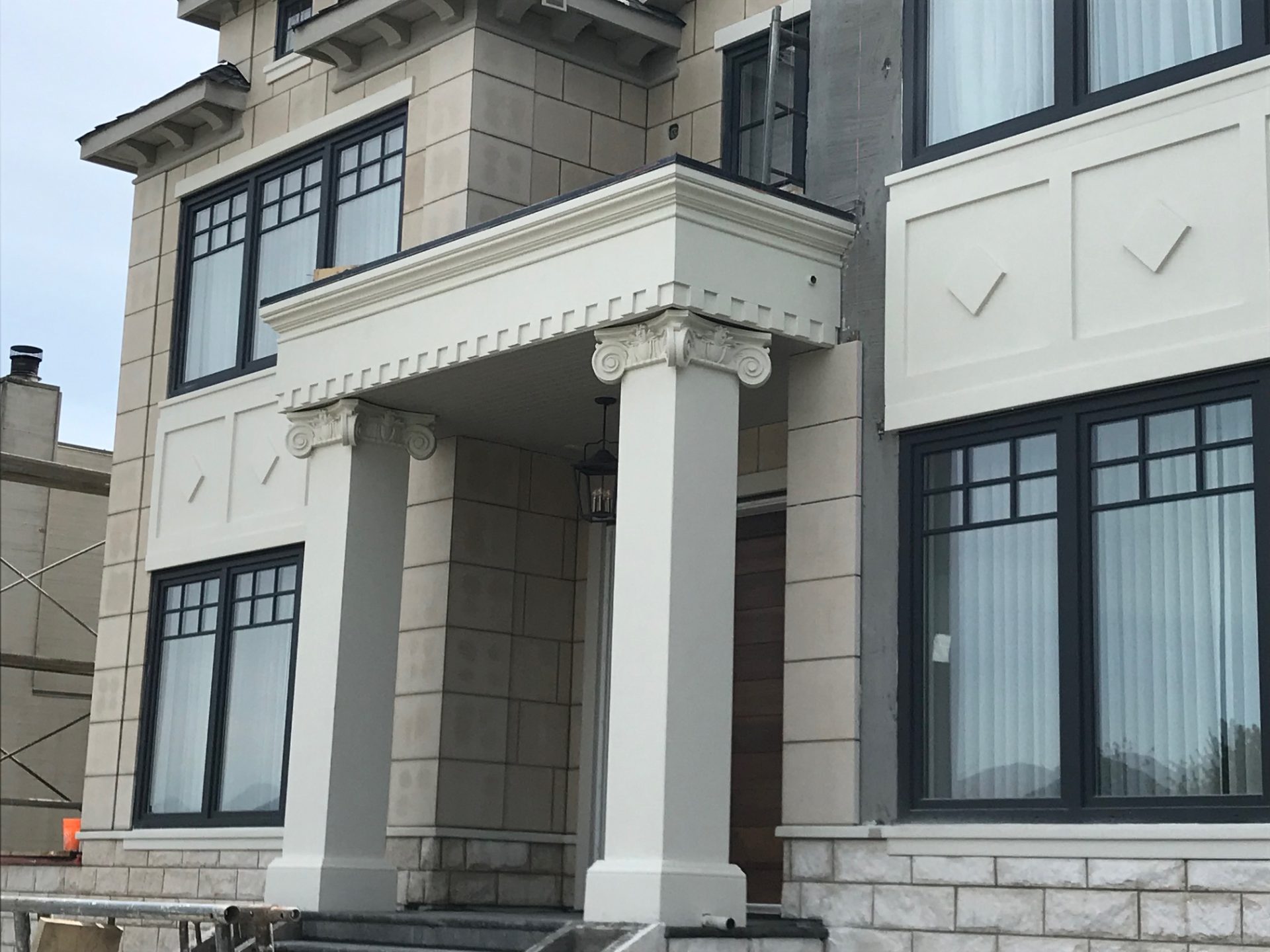
Ionic column portico entrance with full classical entablature and dentil cornice — cast stone manufactured by Mesa Precast. All classical orders available: Doric, Ionic, Corinthian, Tuscan, Composite. Any diameter, height, and capital profile.
Classical column orders — Doric, Ionic, Corinthian — require precise proportioning and consistent detail across every capital, base, and shaft section. Cast stone can reproduce these profiles with the dimensional accuracy that true classical architecture demands, and it does so identically across every column in a colonnade. Natural stone columns at this quality level require skilled hand-carvers and run multiples of cast stone pricing.
Balustrades and Railings
Balustrade systems — baluster, cap rail, and plinth — are among the highest-value visual elements on a traditional home exterior. They're also among the applications where cast stone's cost advantage is most dramatic. A full perimeter balustrade on a 4,000 SF Gulf Coast home might involve 200 linear feet of system; at natural stone pricing, this single element can exceed $50,000 installed. In cast stone, the same specification runs $18,000–$30,000 with no visual difference.
Entry Surrounds, Keystones, and Quoins
The entry sequence sets the architectural tone for the entire home. Elaborate entry surrounds with pilasters, entablatures, and keystone arches are signature features in traditional Louisiana and Georgia plantation-style homes, as well as the palatial Mediterranean Revival homes that define coastal Florida neighborhoods. Cast stone delivers these elements with the crisp detail and appropriate heft the design requires — and can be custom-profiled to match or complement any historical reference the architect specifies.
Quoins — the alternating corner stones that frame facades in traditional architecture — are among the most cost-effective applications. A full set of corner quoins in natural limestone for a two-story home can run $15,000–$25,000 installed; cast stone delivers the same result for $5,000–$9,000.
Chimney Caps and Surrounds
Exterior chimney caps and fireplace surrounds are high-visibility architectural elements on traditional homes. Cast stone chimney caps are a particularly smart investment in the Gulf States, where moisture and wind exposure are severe — more on that in the climate section below.
Built for Gulf Coast Humidity, Hurricanes & Southwest Heat
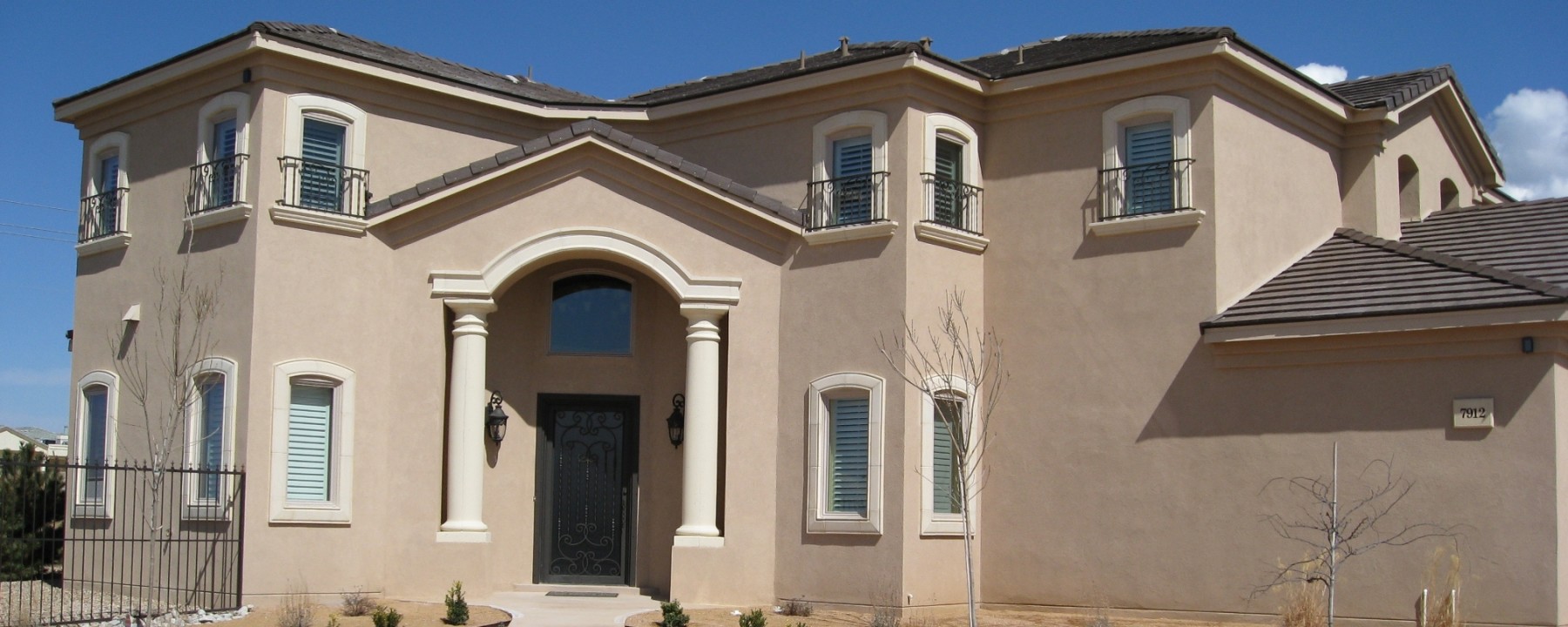
Cast stone and GFRC are engineered for climate performance — dense concrete matrix resists moisture absorption, UV-stable mineral pigments prevent fading, and controlled manufacturing delivers consistent wall thickness that reduces thermal cycling stress.
This is where manufactured architectural materials have a genuine, often underappreciated advantage over natural stone in these specific regions. Climate performance is not cosmetic — it's structural, and it affects long-term maintenance costs significantly.
Gulf Coast: Texas, Louisiana, Alabama, Florida
High humidity (70–90% RH), saltwater air, hurricane-force wind loads, and frequent freeze-thaw cycles in northern zones. The primary risks for natural stone: salt crystallization damage, biologic growth (mold, algae, lichen), and moisture infiltration through natural fissures.
Southwest: Arizona, New Mexico, Southern California
Extreme UV exposure, daily thermal cycling (50°F+ swings), low humidity combined with occasional monsoon moisture. Natural stone risks: thermal spalling, surface finish degradation from UV, and cracking from thermal expansion differential.
How Cast Stone and GFRC Outperform Natural Stone Climatically
Low absorption rates. High-quality cast stone is manufactured to ASTM C1364 standards with water absorption rates below 6% — comparable to dense limestone and significantly better than many sedimentary natural stones. GFRC panels typically achieve absorption rates below 3%. Lower absorption means less moisture infiltration, less freeze-thaw damage, and less biologic growth over the product's life.
Consistent density, no natural fissures. Natural stone has variable density, natural bedding planes, and micro-fissures from the geological formation process. These create unpredictable weak points for moisture entry, salt crystallization, and thermal stress. Cast stone and GFRC are manufactured to uniform density and void-free structure — there are no bedding planes to delaminate and no micro-fissures to propagate.
GFRC thermal stability. The glass fiber matrix in GFRC distributes thermal stress across the panel rather than concentrating it at stress points. This makes GFRC panels extremely resistant to the dramatic daily thermal cycling in Arizona and New Mexico — a performance advantage over natural stone that can crack or spall under repeated thermal stress over years.
Color stability under UV. Mineral-based integral pigmentation in cast stone and GFRC is substantially more UV-stable than surface-applied sealers on natural stone. In high-UV environments like Phoenix or Palm Springs, the maintenance cycle for natural stone sealers can be every 2–3 years; cast stone requires no sealing and maintains color integrity for decades.
Hurricane wind resistance. Properly installed cast stone and precast elements meet or exceed the wind resistance requirements for Florida's coastal building zones, including the demanding standards enforced in Miami-Dade County. The controlled manufacturing environment allows precise specification of compressive strength, density, and anchoring requirements to meet local wind load calculations.
For coastal homeowners specifically: Saltwater spray is the primary long-term threat to stone materials. Cast stone manufactured to ASTM C1364 with appropriate integral admixtures for sulfate and chloride resistance is the specification to request for any project within 5 miles of salt water — whether Gulf of Mexico or Pacific coastline.
Mesa Precast: What We Make & How We Work
Mesa Precast manufactures the full spectrum of architectural stone products under one roof. This matters because it means your project isn't being coordinated across multiple vendors with different production schedules, quality standards, and communication channels.
Products We Manufacture
- Cast Stone — Full range of architectural details: columns, capitals, bases, balusters, rails, sills, lintels, keystones, quoins, cornices, medallions, caps, coping, chimney caps, and custom profiles
- Architectural Precast Concrete — Structural and decorative panels, large entry features, wall systems, site elements, and custom large-format pieces
- GFRC (Glass Fiber Reinforced Concrete) — Lightweight cladding panels, thin-profile decorative elements, large-format faces for wood-frame construction
- GFRG (Glass Fiber Reinforced Gypsum) — Interior architectural elements: coffered ceiling systems, interior columns, ornamental cornices, fireplace surrounds, decorative niches
- Custom Mold-Making — If you have a historic profile to replicate, an architect's detail that doesn't match a standard catalog, or a completely custom design, Mesa builds the mold in-house. This is a significant capability — most manufacturers work only from standard catalogs; Mesa can produce truly unique architectural elements
How We Work
The process starts with your project drawings and specifications. Our team reviews the scope, produces detailed shop drawings showing every piece with dimensions and anchoring details, and gets those drawings approved before a single mold is poured. This front-end investment in coordination prevents field problems and ensures what's manufactured matches exactly what's designed.
For custom profiles, our in-house mold shop creates the tooling from your architect's drawings — no outsourcing, no lag time waiting on a mold supplier. Production runs in our factory under controlled conditions, with quality control at every stage: mix design verification, density testing, visual inspection, and dimensional verification before shipment.
We ship across the full Gulf States and Southwest footprint — Texas, Louisiana, Alabama, Georgia, Florida, Arizona, New Mexico, and Southern California. Delivery is coordinated with your construction schedule to minimize on-site material handling time.
Award-Winning Craftsmanship: Real Projects, Real Results
Quality in architectural precast and cast stone is visible in finished work — and verifiable through industry recognition. Mesa Precast's portfolio includes projects that have earned recognition from three major industry organizations:
CSI (Construction Specifications Institute)
The Construction Specifications Institute's recognition programs evaluate projects against technical specification standards — the rigor with which materials were specified, coordinated, and executed. CSI recognition reflects the professional quality of documentation and execution, not just aesthetics. For homeowners and project owners, it's evidence that Mesa Precast works at the level of demanding institutional and commercial projects — the same rigor applied to residential work.
APA (Architectural Precast Association)
The Architectural Precast Association recognizes projects that demonstrate excellence in the design and execution of architectural precast concrete. APA awards are evaluated by industry peers — architects, engineers, and precast manufacturers who understand what technically excellent precast looks and performs like. Mesa Precast's APA-recognized projects represent the state of the art in precast design and manufacturing.
MCAA (Mason Contractors Association of America)
MCAA recognition reflects excellence in masonry installation — the interface between the manufactured product and its installation in the field. The quality of the material means nothing if it isn't installed correctly. MCAA-recognized projects demonstrate that Mesa Precast products are engineered for real-world installation success.
This triple recognition — from specification professionals, precast industry peers, and installation contractors — represents a rare combination in the industry. It means you're working with a manufacturer that excels at all three phases: design coordination, manufacturing quality, and real-world performance.
How to Get Started on Your Project
The earlier architectural stone is specified in a project's design process, the better the outcome. Here's the typical engagement flow for a residential project:
- Schematic design review. Share early-stage drawings or images of the architectural direction you're pursuing. This early conversation helps identify which materials are right for which elements, and surfaces any profile or detail questions before the design is locked.
- Specification and scope development. Once the design direction is established, Mesa produces a preliminary scope list — every distinct element, quantity, and material specification. This becomes the basis for pricing.
- Quote and schedule confirmation. Pricing is provided as a lump-sum or unit-price schedule. Lead times are confirmed at this stage — typically 4–8 weeks from approved shop drawings for standard profiles, 8–12 weeks for custom mold work.
- Shop drawing approval. Detailed dimensioned drawings for every element are submitted for architect or owner review and approval before production starts. This is the quality checkpoint that prevents field surprises.
- Production and delivery. Elements are manufactured to your project schedule and delivered to site, typically with installation sequencing guidance to coordinate with your masonry contractor.
For production builders working on multiple homes or community entries, Mesa Precast also works with standard catalog profiles that can be ordered on a rolling schedule — removing the lead time from individual unit production.
The bottom line is straightforward: if you're building or renovating a home in Texas, Louisiana, Alabama, Georgia, Florida, Arizona, New Mexico, or Southern California, and you want the premium stone look that adds genuine curb appeal and resale value — architectural precast, cast stone, and GFRC are the smarter path. The cost savings are real. The quality is indistinguishable at residential scale. And the climate performance in Gulf States and Southwest conditions often exceeds what natural stone delivers.
Ready to Price Your Project?
Use our free estimator to get instant pricing for cast stone, GFRC, and precast elements in under 2 minutes. No commitment, no drawings needed.
Try the Free Estimator → Request a Full Quote