Cornices & Band Courses
Cast stone and GFRC architectural cornices, band courses, and entablature systems. Classical profiles from dentil moldings to full entablature. ASTM C1364 certified.
ASTM Standards for Cornices & Band Courses
All Mesa Precast cornice and band course systems are manufactured and tested to current ASTM standards. Compliance documentation, test reports, and mill certifications available on request.
Cornice & Band Course Applications
Roofline Cornices & Crown Moldings
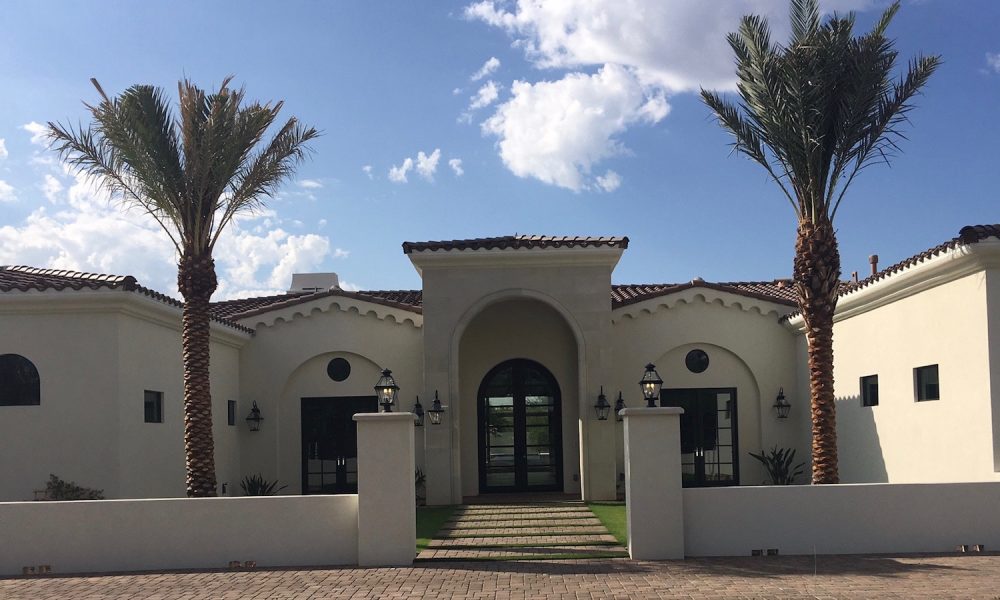
Residential cornices define the transition from wall to roofline and are the signature element of classical Mediterranean, Italianate, Colonial, and Georgian architecture. Mesa Precast produces full classical cornice assemblies: bed molding, frieze, corona, and cymatium — shipped as coordinated unit sets with matching returns and raking cornice profiles for gable ends.
Standard residential cornice depths run 6–18 inches of projection. GFRC cornice sections are available for projections over 12 inches where weight on the wall system is a concern. Dentil block rows, modillion brackets, and decorative enrichments are cast integrally or as separate applied pieces depending on relief depth.
Facade Bands & String Courses
Band courses and string courses provide horizontal articulation on commercial facades — marking floor lines, separating masonry field zones, and providing visual scale on tall buildings. Mesa Precast band courses range from simple 3-inch plain fascia to 12-inch compound molded profiles with ogee or ovolo sections.
Commercial band courses are available in continuous 6- and 8-foot unit lengths with concealed mechanical joints for seamless appearance. Reveal-face and recessed channel designs integrate with curtainwall and brick veneer systems. GFRC is standard for band courses over 8 inches projection to control dead load on the facade backup system.
Entablature Systems
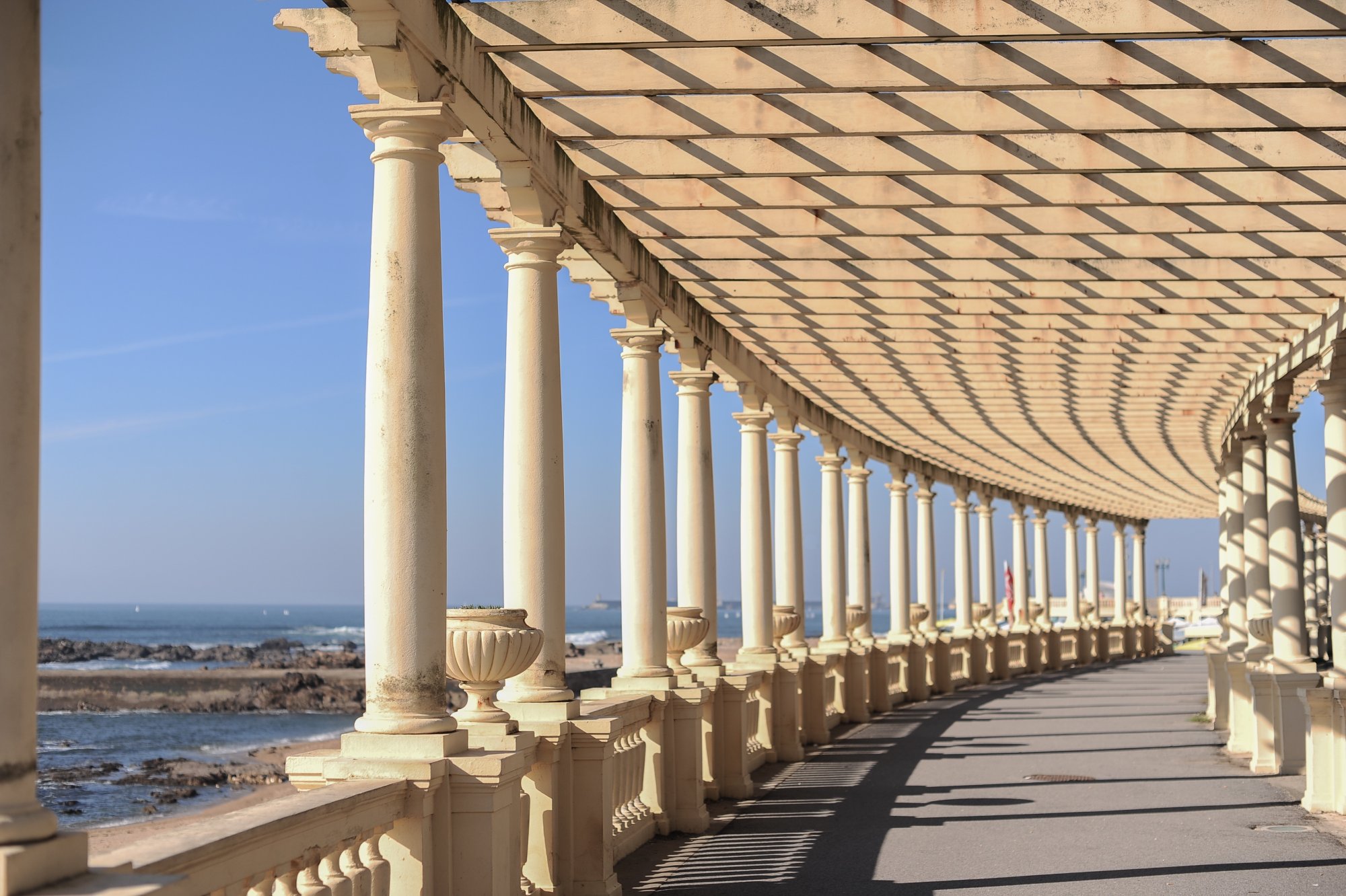
A classical entablature is a three-part system: architrave (beam), frieze (middle band), and cornice (projecting cap). Mesa Precast engineers full entablature assemblies as coordinated unit sets for colonnaded facades, porch entries, and monumental institutional buildings. Standard orders include Doric, Ionic, and Corinthian proportioning.
Entablature systems are shop-drawn with full component schedules: unit counts, anchor points, joint locations, and lifting hardware. Frieze panels accommodate applied ornament: Doric triglyphs and metopes, Ionic continuous frieze relief, or modern simplified plain band. All components cast-in color to eliminate field painting and ensure color continuity across the assembly.
Color & Finish Options
All Mesa Precast cornice and band course units are available in four standard integral colors plus custom matching. Color is cast throughout the full cross-section — chips and abrasions do not expose a different base material.
Custom color matching available. Submit a physical sample or Munsell reference. Minimum 4-week lead for custom color development. Color match samples shipped for approval before production.
Cast Stone vs. Alternative Cornice Materials
Cost comparison for architectural cornices and band courses across typical commercial and residential project profiles. Installed cost per linear foot, 10-year total cost of ownership analysis.
| Material | Installed Cost/LF | Lifecycle | Freeze-Thaw | Maintenance | Fire Rating |
|---|---|---|---|---|---|
| Cast Stone (Mesa Precast) | $45–120 | 50+ years | 300+ cycles | None required | Non-combustible |
| GFRC Cornices | $55–180 | 50+ years | 300+ cycles | None required | Non-combustible |
| Wood Cornices | $15–40 | 15–25 years | Susceptible to rot | Paint every 5–7 yrs | Combustible |
| EPS / Stucco Foam | $8–25 | 10–20 years | Cracks & delaminate | Patch & repaint | Combustible |
| Precast Concrete | $35–80 | 40–50 years | 200–300 cycles | Low maintenance | Non-combustible |
| Natural Stone | $200–500 | 100+ years | Excellent | Minimal | Non-combustible |
Installed cost estimates for US market, 2025. Actual costs vary by region, profile complexity, and project scale. Cast stone typically represents 40–60% savings vs. natural stone with comparable aesthetics and 50+ year durability.
Precast Concrete vs. Cast Stone vs. GFRC
Three material options for cornices and band courses. Selection depends on projection depth, weight budget, and profile complexity. All three meet ASTM durability requirements for exterior exposure.
| Criteria | Precast Concrete | Cast Stone (ASTM C1364) | GFRC (ASTM C947) |
|---|---|---|---|
| Compressive Strength | 5,000 psi min. | 6,500 psi min. | 4,000 psi face mix |
| Water Absorption | <8% (ASTM C642) | <6% (ASTM C642) | <10% face mix |
| Freeze-Thaw | 300 cycles (ASTM C666) | 300 cycles (ASTM C666) | 300 cycles (ASTM C666) |
| Weight | 130–145 pcf | 130–145 pcf | 18–25 pcf (75–80% lighter) |
| Max Projection (unsupported) | 4” | 6” (shelf angle required over 6”) | Up to 18” |
| Advantages | Cost-effective; structural | Classical profiles; natural stone look | Deep projections; lightweight |
| Limitations | Limited profile detail | Projection limits without shelf angle | Higher cost for small runs |
| CSI Reference | Section 03 41 00 | Section 04 72 00 | Section 03 49 00 |
Downloadable Specification Language
Ready-to-use CSI MasterFormat specification language for Section 04 72 00. Copy and paste directly into your project specifications. Three formats available for different spec-writing workflows.
PDF contains Mesa Precast MasterFormat 04 72 00 specification with ASTM C1364, C150, C33, C642, C666, C947, PCI MNL-117 and MNL-128 references. Includes material selection guide. Contact Jess Mason at 480-600-6776 for Word (.docx) format.
Related Specification Pages
Explore our other live specification pages for related architectural cast stone products.

Request a Quote for Cornices & Band Courses
Complete this form and our technical sales team will respond within one business day with pricing, lead times, and project-specific guidance.