Custom-colored cast stone matched to a century-old campus palette — including compound-radius breezeway pieces that required purpose-built mold engineering from scratch.
Location
Fort Worth, Texas
Client
Texas Christian University
Manufacturer
Mesa Precast
Materials
Cast Stone · Precast
Building Type
Residential & Dining
Challenge
Custom campus color match
100%
Exterior cladding in cast stone — brick only accent
4-story
Multi-building residential and dining complex
Custom
Compound-radius molds designed from scratch
Project Overview
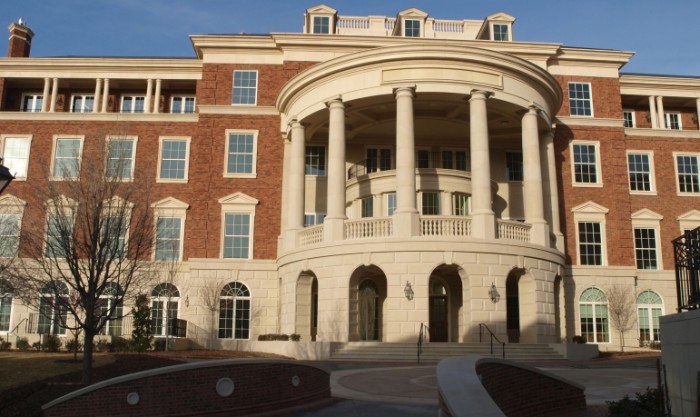
Texas Christian University's Worth Hills development — a multi-building complex housing student residences, dining, and meeting spaces on Fort Worth's west side — needed to read as part of the same campus that has been accumulating limestone and brick since the 1910s. The challenge was not just color: TCU's historic campus uses a distinctive pink-tinted stone that no off-the-shelf cast stone formulation matches.
Mesa Precast developed a custom pigment batch specifically for this project, starting from TCU's existing masonry and working backward through aggregate selection and cement ratio to hit the target. The entire exterior envelope — apart from selective brick accents — is cast stone, making color consistency across every profile and panel a production requirement from day one.
Custom color is only half the problem. The compound-radius breezeways connecting the buildings required curved cast stone elements that no standard mold can produce. Mesa Precast engineered purpose-built forms for the curved walkway profiles — each mold engineered to the specific geometry of the breezeway before a single unit was poured.
Products Specified
Custom-Color Cast Stone
Compound-Radius Breezeway Units
Architectural Precast Panels
Campus-Matched Sill & Lintel Units
The Challenge
Campus color matching is one of the most unforgiving problems in architectural stone fabrication. Unlike a new-build where the stone sets its own reference, TCU's existing campus provides a ground truth that every new piece is measured against — by architects, by the facilities team, and by every student walking past. Variations that would be invisible on a standalone building become obvious next to a hundred-year-old limestone reference.
The compound-radius breezeways added a second layer of complexity. Curved walkway covers require cast stone elements that taper, curve, and meet at non-standard angles — a geometric problem that standard rectangular mold systems aren't designed to solve. Attempting to approximate the curve with straight segments would have created shadow lines and gaps that would have failed approval.
Custom pigment development: Aggregate selection, cement ratio, and pigment load developed against TCU's existing campus masonry as color reference
Purpose-built molds: Compound-radius breezeway elements required engineering new forms — no existing mold in inventory could be adapted
Multi-building consistency: Color batch consistency had to be maintained across the entire construction sequence, not just within a single pour run
Full-envelope scope: Cast stone was the primary cladding material, not an accent — tolerances and appearance standards applied to every visible surface
The Solution
Mesa Precast's approach to the color challenge was systematic: obtain physical samples of TCU's existing campus stone, reverse-engineer the aggregate and pigment profile, and run test batches against the samples before committing to production quantities. The custom formulation was locked before the first production unit was poured.
For the compound-radius breezeways, Mesa Precast engineered each curved element as a purpose-built mold problem — not a modification of existing tooling. The mold geometry was developed from the architect's drawings, verified against the structural templates for the walkway framing, and fabricated before production began. Every curved unit came out of a form that was designed specifically for it.
The result is a complex that reads as TCU — not as a building that tried to match TCU. Visitors who don't know the construction date can't identify the new buildings from the historic campus by color or texture alone. That's the standard a university campus project demands, and it's the standard this project met.
Why Cast Stone Was the Right Choice
Natural limestone at TCU's specific color profile would have required quarrying from a specific regional source — expensive, slow, and subject to natural color variation that custom-batch cast stone eliminates. Cast stone's formulation flexibility is precisely what makes it the right solution for campus matching: you control every variable that affects appearance.
For the curved elements, cast stone's moldability is its structural advantage. A curved limestone piece requires machining from a solid block — wasteful, expensive, and limited in cross-section options. Cast stone can be poured into any geometry the mold can hold, giving architects and mold engineers direct control over the profile.
Project Gallery
Campus-matched cast stone columns and precast elements
Sill and lintel profiles in custom-color cast stone
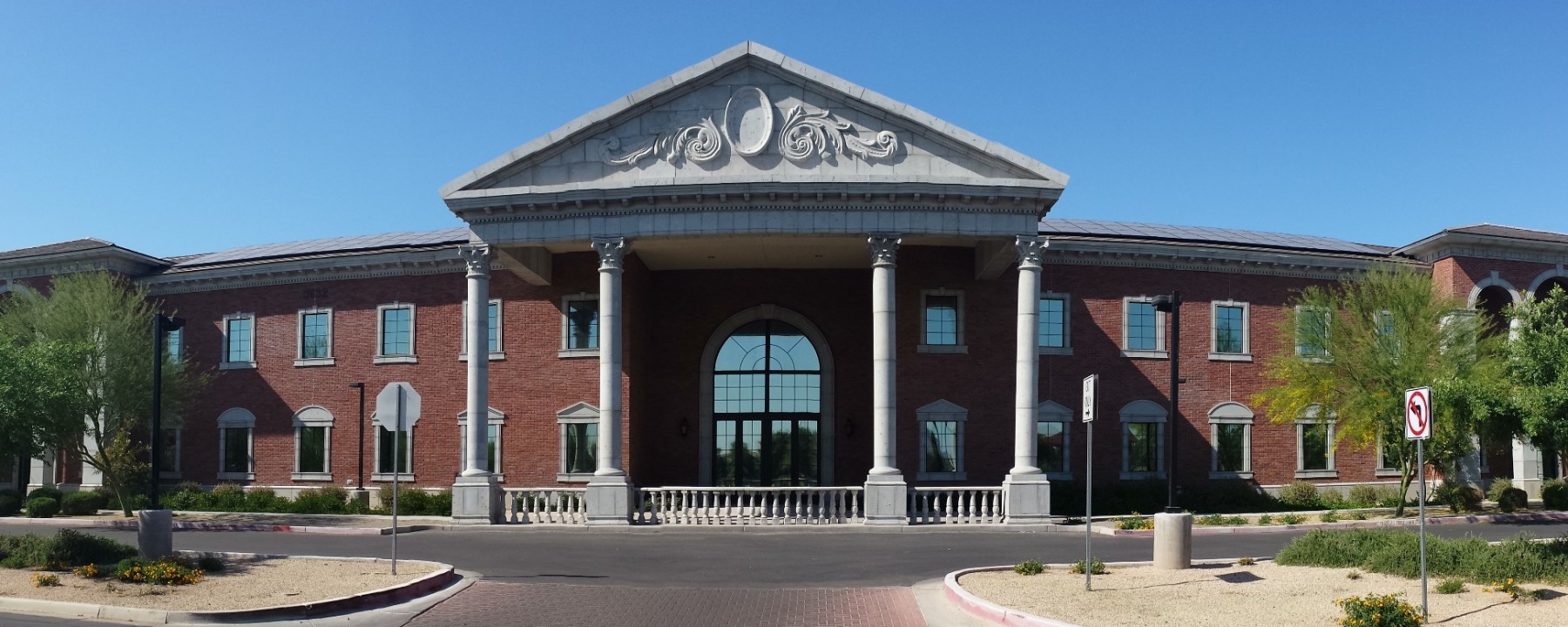
Cast stone facade at educational scale
Compound-radius breezeway units in production
Need custom-color cast stone for a campus project?
Color matching to existing masonry is one of our specialties. Share your reference samples and project scope — we'll build a custom formulation and show you what it looks like before you commit.