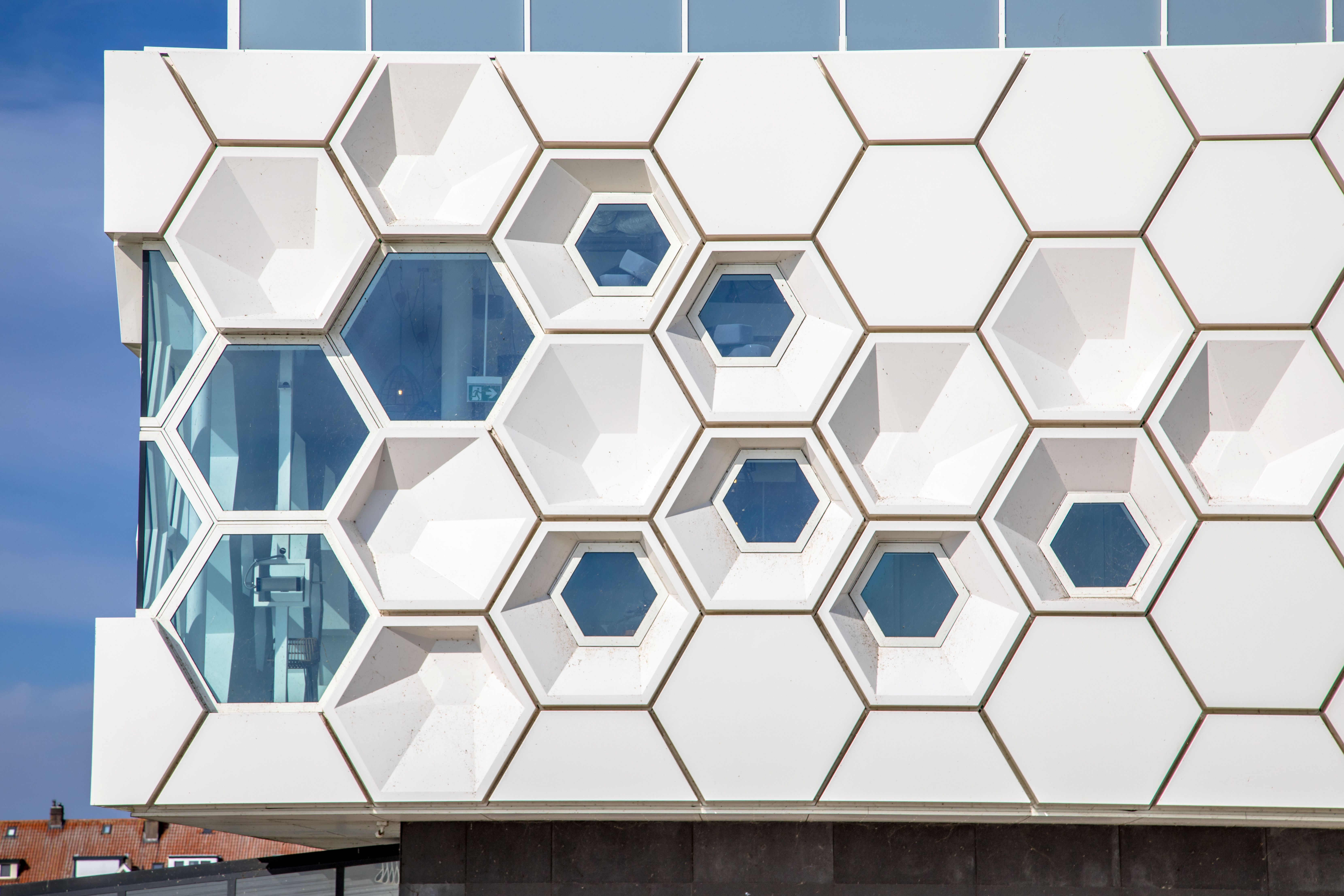
Architects specifying architectural concrete facade systems face a genuinely complex choice: GFRC (Glass Fiber Reinforced Concrete), architectural precast concrete, and cast stone all deliver the visual presence of natural stone — but they diverge sharply on weight, structural capability, design freedom, and total installed cost.
Mesa Precast manufactures all three. That single-source position gives us an unbiased view of which material performs best in which conditions — and where hybrid approaches outperform any single material solution.
The short answer: GFRC wins on weight, complex geometry, and upper-story applications. Architectural precast wins on structural span, large panel format, and load-bearing integration. Cast stone wins on ornamental fidelity, mass, and traditional architectural character. Most significant projects use two or all three.
The Three Materials Defined
GFRC — Glass Fiber Reinforced Concrete
GFRC is a thin-shell composite of portland cement, fine aggregate, water, and alkali-resistant (AR) glass fibers. The glass fiber matrix replaces traditional steel reinforcement, enabling panels cast at 3/4" to 1.25" thickness with excellent structural integrity. GFRC panels typically weigh 8–10 lbs/SF — roughly half the weight of cast stone and a third of natural stone.
Manufacturing uses spray-up or premix methods. Spray-up GFRC layers the fiber and slurry simultaneously for optimal fiber distribution. Premix blends short fibers into the cement matrix before casting. Both methods are covered under ASTM C1116/C1116M and PCI MNL-128.
Architectural Precast Concrete
Architectural precast is factory-cast conventional reinforced concrete meeting ASTM C150 (cement), C33 (aggregates), C642 (absorption below 6%), and C666 (300 freeze-thaw cycles). Panels are typically 3.5" to 6" thick and weigh 40–75 lbs/SF — engineered for load-bearing and structural cladding roles. Architectural precast can span large openings, cantilever, and carry gravity loads that GFRC and cast stone cannot.
It's the material of choice for the primary structural envelope of commercial buildings, parking structures, and institutional campuses — where the architectural finish is integral to a structural element.
Cast Stone
Cast stone is a refined architectural concrete engineered to replicate the look, texture, and color of natural cut limestone, sandstone, or granite. At 6,500+ PSI compressive strength (ASTM C1364), it exceeds many natural stones. Cast at 2,000–4,000 PSI vibration in precision molds, it delivers tight dimensional tolerances (±1/8" on profile, ±1/4" in 10 feet) and a surface that closely mimics quarried stone.
Cast stone is primarily ornamental — sills, lintels, trim, cornices, quoins, columns, balustrades, and coping — where natural stone appearance is the design intent and deep relief is required.
Quick Comparison: GFRC vs Precast vs Cast Stone
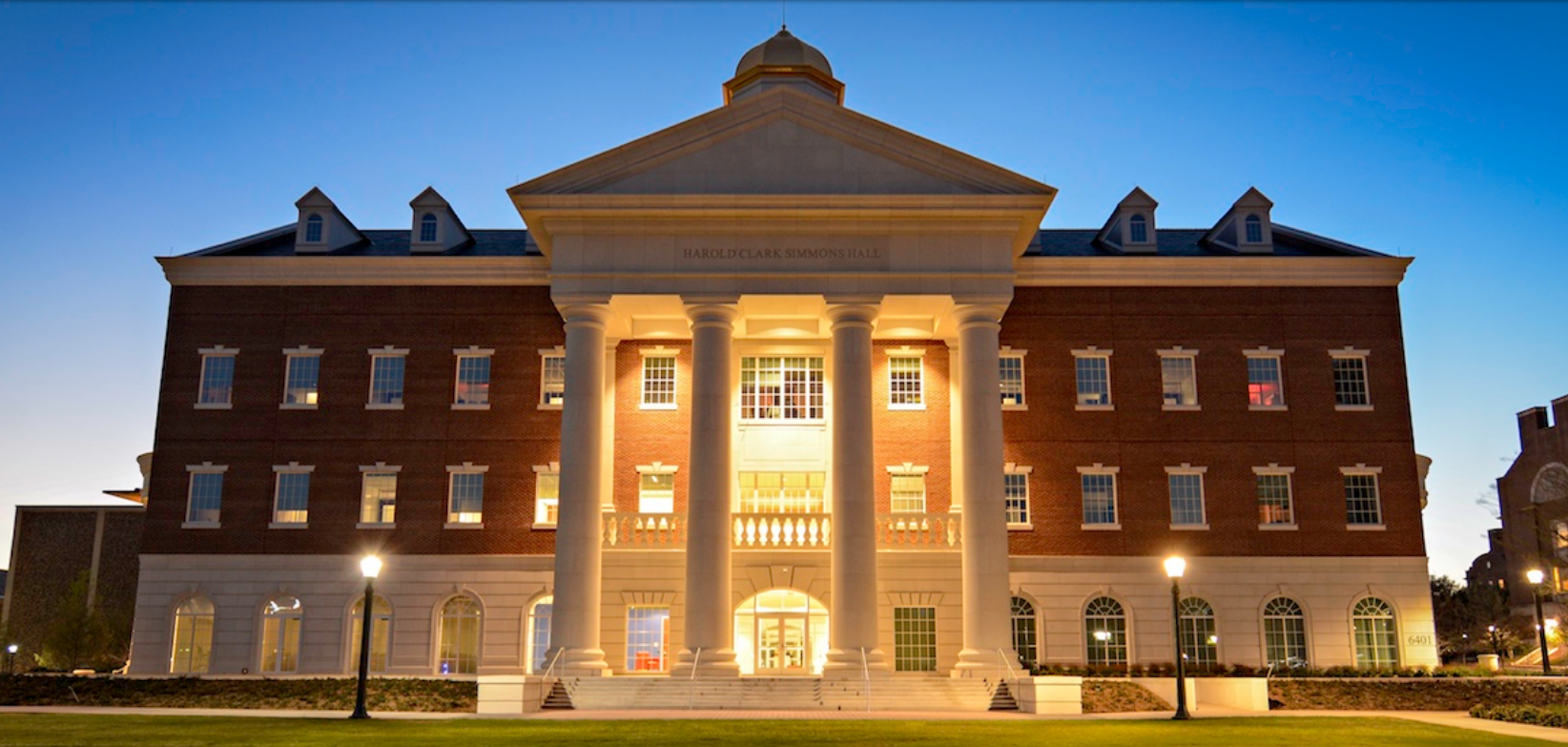
Mesa Precast manufactures GFRC, architectural precast, and cast stone under the same color system. Mixed-material facades maintain visual consistency across all three products.
| Factor | GFRC | Arch. Precast | Cast Stone |
|---|---|---|---|
| Weight (lbs/SF) | 8–10 lbs | 40–75 lbs | 18–22 lbs |
| Thickness | 3/4"–1.25" | 3.5"–6"+ | 1.5"–4" |
| Compressive Strength | 3,000–5,000 PSI | 4,000–6,000 PSI | 6,500+ PSI |
| Detail Fidelity | High (thin edge, curves) | Moderate | Highest (ornamental) |
| Max Panel Size | Up to 40 SF (cladding) | Unlimited (structural) | Up to 20 SF |
| Material Cost (per SF) | $35–$55 | $30–$55 | $40–$65 |
| Installed Cost | Lowest (complex facade) | Lowest (large simple) | Higher (heavy, slower) |
| Freeze-Thaw | Excellent | ASTM C666 certified | Excellent |
| Seismic Performance | Best (lightest) | Good (engineered) | Good |
| Primary Use | Cladding, curves, upper-story | Structural, large format | Ornamental, traditional |
Weight & Structural Load: The Factor That Drives Everything Else
Weight isn't just a logistics number — it determines structural requirements, installation equipment, foundation loading, and seismic performance. It's the first dimension to evaluate on any facade decision.
GFRC at 8–10 lbs/SF is lighter than any other architectural concrete. A 200 SF facade panel weighs 1,600–2,000 lbs in GFRC, 3,600–4,400 lbs in cast stone, and 8,000–15,000 lbs in architectural precast. These aren't cosmetic differences — they cascade through every system:
- Foundation loads: A GFRC facade reduces facade dead load by 50–60% vs. cast stone, critical for podium decks, historic renovations, and soft-story buildings.
- Steel framing: GFRC curtain wall systems can eliminate steel backup framing required for heavier materials. Cast stone and precast typically need angle iron or channel support at each floor line.
- Seismic: Reduced facade mass directly improves seismic performance — less inertia during lateral loading events. In Seismic Design Category C and above, GFRC's weight advantage compounds.
- Installation equipment: GFRC panels are often set by small telescopic handlers or hand-carried for medium panels. Cast stone and precast require crane time, rigging, and larger crews.
Historic renovation rule of thumb: If an existing structure can't accept the additional dead load of cast stone or precast, GFRC is almost always the answer. Many 1920s–1960s buildings were designed for their original cladding mass — adding new stone requires structural intervention. GFRC often fits within existing capacity without modification.
Cost Comparison: Material, Installation & Structural System
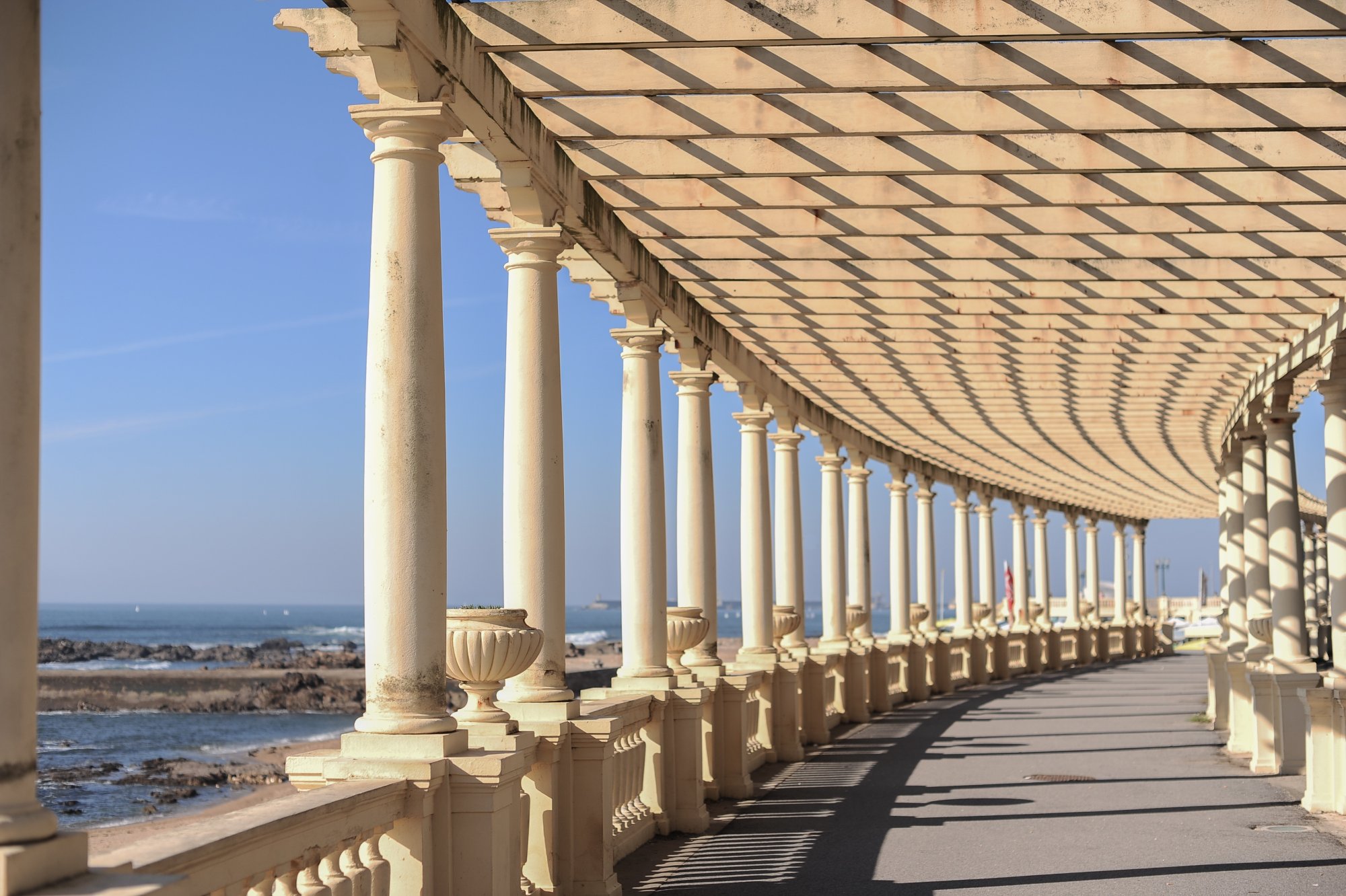
Architectural precast and GFRC columns cost 40–60% less than equivalent natural stone, while delivering equivalent or superior structural performance and design precision.
Material cost per SF is broadly similar across all three materials. Total installed cost diverges significantly based on weight, backup structure, and installation complexity.
| Cost Component | GFRC | Arch. Precast | Cast Stone |
|---|---|---|---|
| Material (per SF) | $35–$55 | $30–$55 | $40–$65 |
| Backup structure | Minimal | Integral or heavy angle | Moderate — angle/shelf |
| Shipping (per mile) | Lowest | Highest (heavy, flatbed) | Moderate |
| Installation labor | Lowest (lighter, faster) | Highest (crane, rigging) | Moderate |
| Crane / equipment | Often not required | Required — project-long | Often required |
| Total installed (complex) | 15–25% below cast stone | Varies (structural value) | Baseline |
For purely ornamental work (window surrounds, sills, cornices, copings) with simple repetitive profiles, cast stone is frequently the most economical choice because standard mold amortization is low, shipping is manageable, and installation is straightforward. For complex facade systems with varied geometry, GFRC's installation advantages typically dominate.
Architectural precast offers the best economics for large, simple structural panels — parking decks, institutional building envelopes, commercial cladding with low profile complexity. When precast is doing structural work in addition to cladding, its value proposition improves dramatically because you're eliminating a separate structural system.
Detail Fidelity & Design Freedom
Each material has a different ceiling on design complexity — and a different floor on minimum feature size.
GFRC: Best for Thin Edges and Complex Geometry
GFRC excels at thin profiles (sharp arris edges as fine as 1/8"), complex compound curves, and freeform geometry that would be structurally impractical in heavier materials. The thin-shell manufacturing process captures mold texture faithfully — smooth board-formed concrete, exposed aggregate, or rusticated stone textures all translate at full resolution. GFRC is the material of choice for parametric facade systems, contemporary commercial buildings with custom profile work, and any design where mass is a problem rather than an asset.
The limitation is depth of relief. GFRC panels typically achieve 1.5"–2" of relief before structural concerns arise. For deep classical ornament — 3"+ cornices, heavy dentils, bold moldings — GFRC requires heavier sections or a steel substrate.
Architectural Precast: Best for Scale and Uniformity
Architectural precast achieves excellent surface texture at scale — board-formed, sandblasted, acid-washed, exposed aggregate, or form-liner patterns all reproduce consistently across large panel runs. Its advantage is uniformity at high volume: a campus building with 500 identical structural panels benefits from precast's precision and factory QC.
Detail fidelity for fine ornament is lower than cast stone — precast mix design optimizes for structural performance rather than ornamental precision. The minimum feature size for architectural precast is larger than cast stone, making it unsuitable for delicate classical molding work.
Cast Stone: Best for Ornamental Fidelity
Cast stone delivers the highest detail fidelity for architectural ornamentation. The vibration-cast process at 2,000–4,000 PSI captures fine mold geometry at tolerances of ±1/8" — equivalent to quarried stone. Deep relief profiles (3"–4" cornices, full-depth columns and pilasters, deeply undercut moldings) are routine. Cast stone reads as natural stone at close inspection in a way that GFRC and precast do not.
This makes cast stone irreplaceable for traditional and classical architecture — historic renovations, institutional buildings with Gothic or Beaux-Arts detailing, and luxury residential facades where the goal is indistinguishable-from-stone quality.
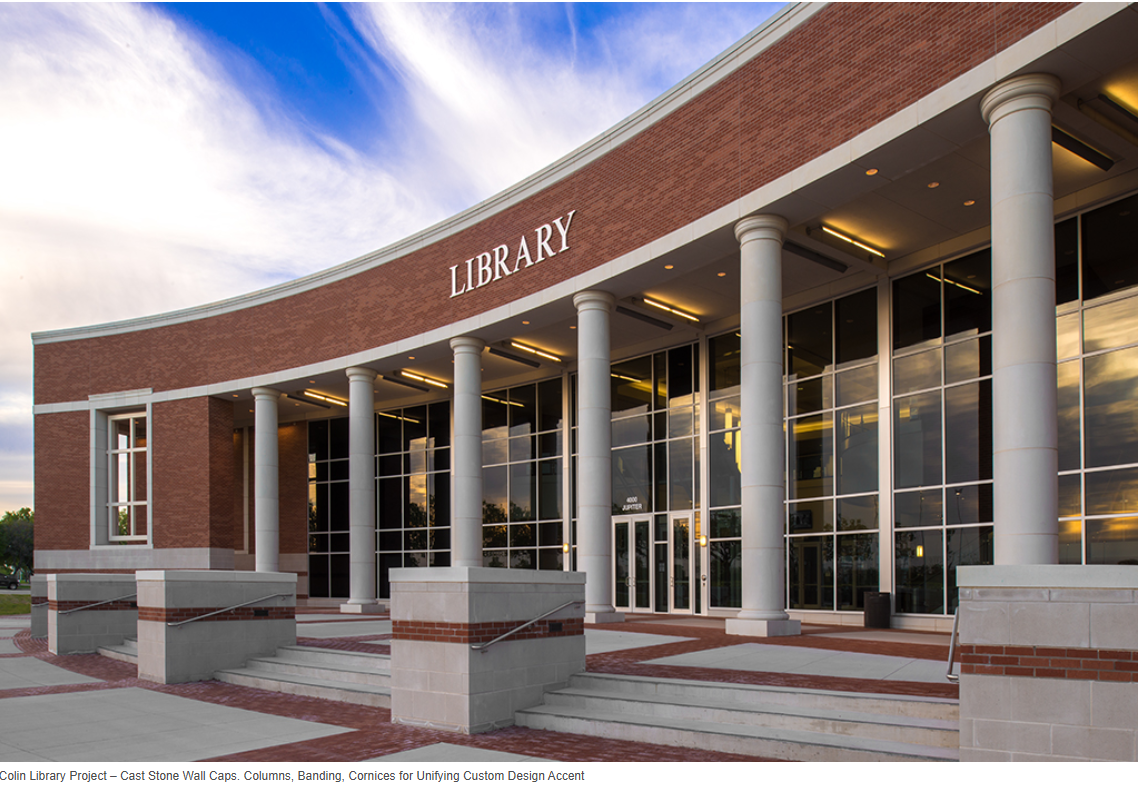
Ornamental cast stone columns, cornices, and banding — architectural concrete achieving natural stone appearance. Mesa Precast manufactures ornamental elements in cast stone or GFRC depending on weight requirements.
Span Capability & Panel Size
Span capability separates architectural precast from the other two materials in a fundamental way. GFRC and cast stone are cladding materials — they require a structural substrate to carry load. Architectural precast is a structural material that also functions as cladding.
Architectural Precast: Unlimited Span (Within Design)
Architectural precast panels can span between structural supports at virtually any distance — 20', 30', 40' spans are common in commercial and institutional construction. Precast can also cantilever, carry gravity loads, and function as the primary structural system. This dual-function value proposition (structure + finish in one product) is what makes architectural precast the specification choice for parking structures, institutional buildings, and large commercial facades.
GFRC: Up to 40 SF per Panel Without Backup
GFRC panels up to approximately 40 SF can be self-supporting with embedded steel studs or a steel armature, attached to the building structure at anchor points. Larger panels — up to 100+ SF — are achievable with a steel frame backup integrated into the panel. GFRC is never structural in the load-bearing sense; it's always a cladding system requiring a separate structural connection.
Cast Stone: Typically Under 20 SF per Unit
Cast stone is designed as individual ornamental units — sills, lintels, copings, column shafts, quoins — rather than large-format cladding panels. Maximum practical panel size is 15–20 SF, above which weight and handling become constraints. Cast stone supports itself on shelf angles, bearing plates, or masonry backup, with mechanical anchors at intervals. It is not a large-format panel system.
Weathering & Long-Term Performance
All three materials are engineered for exterior exposure and outperform natural stone in several durability categories. The key differentiators are salt spray resistance, thermal movement, and maintenance cycles.
| Performance Factor | GFRC | Arch. Precast | Cast Stone |
|---|---|---|---|
| Expected lifespan | 75+ years | 75+ years (structural) | 75+ years |
| Freeze-thaw cycles | Excellent | ASTM C666: 300 cycles | Excellent (low absorption) |
| Salt spray / coastal | Excellent (no steel) | Good (sealed cover) | Excellent |
| Thermal movement | Low (thin shell) | Moderate (requires joints) | Low |
| Color stability | Integral (through-body) | Integral or surface treat | Integral (through-body) |
| Sealant maintenance | Every 10–15 years | Every 10–15 years | Every 10–15 years |
For coastal and Gulf Coast projects, GFRC and cast stone both outperform natural limestone. The key consideration is chloride penetration — both materials achieve low permeability when properly mixed and sealed, blocking the chloride ingress that degrades embedded steel in precast. For precast near coastal environments, specify concrete cover of at least 1.5" over reinforcement and use epoxy-coated or stainless reinforcement.
Thermal movement is a significant consideration for large-format architectural precast. Long panels require movement joints at regular intervals (typically every 20'–25') to accommodate thermal expansion and contraction. GFRC's thin shell and smaller panel format reduce thermal movement to a manageable level without complex joint systems.
Decision Framework: Which Material for Your Project
The best material depends on the project type, design intent, structural context, and budget constraints. Here's a practical framework for each scenario:
Weight Is a Constraint
- Upper-story or podium deck applications
- Historic renovation on existing structure
- Seismic Zone C or above
- Soft-story or post-tensioned slab buildings
Structure and Scale Drive
- Dual-function structural + cladding element
- Large repetitive panel runs (50+ identical panels)
- Span requirements exceed GFRC capability
- Parking structures, institutional envelope
Ornamental Fidelity Matters
- Traditional or classical architecture style
- Deep-relief profiles (3"+ cornices, moldings)
- Historic match or renovation
- Ground-floor high-traffic areas
Design Geometry Is Complex
- Compound curves or organic shapes
- Thin profiles and sharp arris edges
- Contemporary or parametric facade
- Large-format feature panels
Volume and Budget Drive
- Simple profiles, high repetition
- Commercial development with cost targets
- Projects in precast-rich markets (Midwest, SE)
- Tight delivery schedule, local plant
Mixed-Material Facades
- Ornamental elements on a masonry or GFRC field
- Window surrounds, sills, lintels, copings
- Quoins, keystones, balustrades
- Columns and pilasters requiring mass
Hybrid specification insight: The most effective facade systems often mix materials by zone. A typical commercial building might specify architectural precast for the primary structural wall panels, cast stone for all ornamental window surrounds and cornice work, and GFRC for the penthouse level and any complex curved features. One manufacturer, consistent color system, coordinated schedule.
Mesa Precast Portfolio: All Three Materials in Action
Mesa Precast has supplied architectural concrete for over 500 projects across the Southwest, Gulf Coast, and institutional markets. These case studies illustrate how each material performs in practice:
Reagan Place, Dallas — Cast Stone & Precast
Reagan Place specified cast stone for the ornamental facade program — window surrounds, cornice profiles, and entry columns — paired with architectural precast for the primary structural panels. The cast stone delivered the classical residential character the architect required; the precast provided the structural efficiency needed on a market-rate project. Single-source manufacturing ensured color consistency across both materials. See the full case study at /projects/reagan-place-dallas.
Cook Children's Hospital — GFRC Cladding
Upper-story facade work on a healthcare campus required lightweight cladding that could be installed without disrupting the operating hospital below. GFRC panels weighing under 800 lbs each were set by small crew with a telescopic handler — crane-free installation. The reduced structural impact and faster installation timeline were critical to the project schedule. Full project details at /projects/cook-childrens-hospital.
TCU Worth Hills — Institutional Cast Stone
A traditional campus addition requiring close match to existing limestone buildings. Cast stone at 6,500+ PSI, integral iron oxide pigmentation, and tooled surface finish achieved the visual continuity the campus master plan required — at a fraction of quarried limestone cost and lead time. See the full portfolio for additional case studies.
USC Ronald Tutor Campus Center — Architectural Precast
Large-scale institutional facade where structural precast served dual function: primary wall system and architectural finish surface. Sandblasted exposed aggregate finish matched the campus's existing concrete vocabulary. Single source coordination allowed the structural and architectural teams to work from a unified shop drawing package, eliminating interface conflicts at panel connections. See /projects/usc-ronald-tutor-campus-center.
Frequently Asked Questions
What is the main difference between GFRC, precast concrete, and cast stone?
GFRC is a thin-shell (3/4"–1.25") lightweight composite reinforced with AR glass fibers, weighing 8–10 lbs/SF. Architectural precast is structural reinforced concrete (3.5"–6"+), 40–75 lbs/SF, capable of spanning and bearing load. Cast stone is a refined ornamental concrete (6,500+ PSI) cast in precision molds to replicate cut stone. GFRC is lightest and most flexible; precast handles structural span; cast stone delivers highest ornamental fidelity.
When should an architect specify GFRC instead of cast stone or precast?
Specify GFRC when weight is a constraint (upper-story applications, historic renovations), when the design requires complex curves or thin profiles, or when seismic performance is critical. GFRC is also preferred for contemporary facades with large-format cladding panels and for projects where crane-free installation is required.
Is cast stone more expensive than GFRC or precast?
Material cost is broadly similar ($30–$65/SF across all three). Cast stone total installed cost runs higher on large facade areas due to weight-driven shipping and installation costs. For pure ornamental work — window surrounds, sills, copings — cast stone is often the most economical because standard profiles amortize mold costs across high volumes. See our detailed 2026 precast cost guide for per-SF benchmarks.
Can GFRC, precast, and cast stone be used together on the same project?
Yes — this is common practice and often the optimal approach. Use architectural precast for structural panels, cast stone for ornamental elements, and GFRC for complex curved or upper-story features. Sourcing all three from Mesa Precast ensures seamless color matching and a single coordinated delivery schedule.
Which material has the best freeze-thaw resistance?
All three perform well. Architectural precast certified to ASTM C666 (300 freeze-thaw cycles) has the most rigorous testing protocol. Cast stone to ASTM C1364 achieves low absorption that prevents freeze-thaw damage. GFRC with AR glass fiber content (per ASTM C1116) performs well in cold climates but requires careful mix design. All three outperform natural limestone and sandstone in freeze-thaw durability.
How do lead times compare across the three materials?
Lead times are broadly comparable at 6–12 weeks from approved shop drawings for all three. Complex GFRC panels requiring custom tooling may add 2–3 weeks. Standard cast stone profiles (sills, copings, lintels) can often ship in 4–6 weeks. Structural precast with embedded hardware typically runs 8–14 weeks. Single-source manufacturing coordinates all three on a unified delivery schedule.
Not Sure Which Material? Get a Free Consultation.
Mesa Precast manufactures GFRC, architectural precast, and cast stone. We recommend the optimal material — or combination — for your project requirements and budget.
Get Free Estimate →Or call us directly: (480) 600-6776